
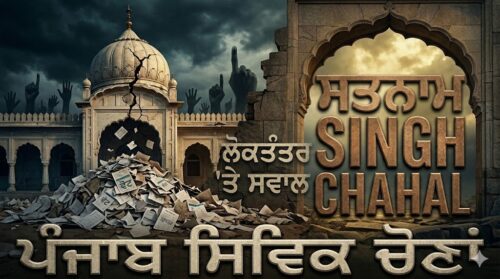
 The results of the civic elections in Punjab are now out, and the political message from the people is becoming increasingly clear. Elections are often described as the voice of democracy, and this time too, voters have shown through their ballots which direction the political wind is blowing in the state. The outcome has provided important signals not only for local governance but also for the larger political future of Punjab ahead of the coming Assembly elections.
For every political party, these civic polls were more than just municipal contests. They became a test of public mood, government performance, organizational strength, and public trust. The results indicate that people are carefully observing every political development, every promise, and every failure. In many areas, voters rewarded local leadership that remained connected with public issues, while in other places they rejected arrogance, inaction, and political infighting.
However, alongside the celebration of victory and acceptance of defeat, serious concerns have also emerged regarding the functioning of democracy during these elections. Allegations of misuse of power, pressure tactics, intimidation of opposition candidates, manipulation, and administrative interference have once again raised troubling questions about the health of democratic institutions in Punjab. Democracy does not survive merely because elections are conducted; it survives only when elections are free, fair, transparent, and fearless.
Many opposition leaders and independent candidates have alleged that the democratic process was weakened through the misuse of state machinery. Complaints regarding nomination disputes, political pressure, biased administration, and lack of equal opportunity created an atmosphere where several people felt democracy itself was under attack. Whether these allegations are fully true or politically motivated is a matter for investigation, but the growing perception among sections of society cannot simply be ignored.
The real strength of democracy lies in allowing every voice to compete equally. When fear, influence, or pressure begin to dominate elections, public confidence in institutions starts weakening. Punjab has already suffered greatly due to political instability, corruption, economic decline, unemployment, the drug crisis, migration, and social polarization. In such circumstances, weakening democratic values can further damage public trust.
At the same time, the civic election results also reflect the political confusion currently visible in Punjab. Traditional parties continue blaming each other, while new political alternatives are also facing growing public scrutiny. Voters appear to be searching for leadership that can move beyond slogans and emotional politics and instead focus on governance, transparency, employment, agriculture, industry, education, healthcare, and law and order.
Another important aspect of these elections is the increasing disconnect between political narratives and ground realities. Political parties often celebrate victories as massive mandates, but the reality at the grassroots level remains more complicated. Many people participated in these elections with frustration rather than hope. Local bodies are supposed to address civic problems such as roads, sanitation, drainage, water supply, street lighting, and urban planning, yet these issues remain unresolved across large parts of Punjab.
The civic elections have therefore delivered two parallel messages. First, the people are actively shaping Punjab’s political direction and are willing to change their preferences when disappointed. Second, there is growing concern about whether democratic institutions are functioning with full fairness and independence. Political parties may claim victory, but the larger challenge is restoring public confidence in democratic governance.
Punjab today stands at an important political crossroads. The results of these civic elections may influence future alliances, leadership battles, and electoral strategies, but the real issue remains whether political leaders are prepared to listen to the deeper message coming from ordinary citizens. People are demanding accountability, honesty, and genuine governance rather than constant political drama.
In the end, democracy is not only about winning elections; it is about protecting the dignity of the electoral process itself. Governments change, parties rise and fall, but if democratic principles are weakened, the damage affects the entire state and future generations. Punjab’s people have given their verdict. Now the responsibility lies with political leaders and institutions to protect democracy, respect public opinion, and work sincerely for the future of the state.