
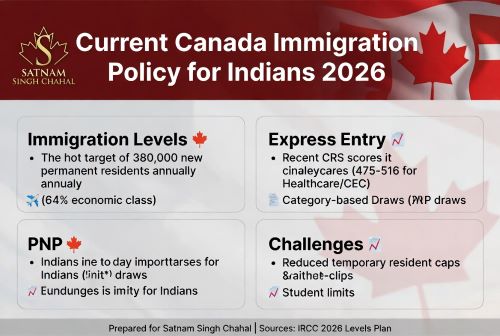
 Canada has introduced several important changes to its immigration policy in 2026, making the system more selective while continuing to welcome skilled immigrants who can contribute to the country’s economy. The government is focusing on reducing the number of temporary residents, including international students and temporary foreign workers, while maintaining strong pathways for permanent immigration. These changes are particularly significant for Indian citizens, who represent one of the largest groups of immigrants and international students in Canada.
One of the major policy changes is the reduction in the intake of temporary residents. The Canadian government has limited the number of new study permits and temporary work permits issued each year in an effort to reduce pressure on housing, healthcare, and public services. As a result, obtaining a study permit or temporary work permit has become more competitive than in previous years.
Despite these restrictions, Canada continues to welcome permanent residents through its economic immigration programs. The government plans to admit approximately 380,000 permanent residents annually over the next few years, with priority given to skilled workers who possess strong educational qualifications, work experience, and proficiency in English or French. Applicants with expertise in sectors such as information technology, healthcare, engineering, skilled trades, and construction are expected to have better opportunities for permanent residence.
International students, many of whom come from India, are also affected by the new policies. Canada has introduced stricter regulations for educational institutions, increased financial requirements for applicants, and placed greater emphasis on enrolling in programs that address labour market shortages. These measures are intended to ensure that international education supports Canada’s long-term economic needs.
In addition, the Canadian government has strengthened its efforts to prevent immigration fraud. Authorities are now conducting more rigorous verification of language test results and supporting documents. Applicants who submit false information or fraudulent documents may face application refusal, bans from reapplying, or other legal consequences. Therefore, honesty and complete documentation have become more important than ever during the application process.
For Indian applicants, these policy changes mean that careful planning and strong qualifications are essential. Achieving high language test scores, selecting recognized educational institutions, gaining relevant work experience, and ensuring that all documents are genuine can significantly improve the chances of obtaining a study permit, work permit, or permanent residence.
In conclusion, Canada remains one of the world’s leading destinations for immigrants, but its immigration system is now more selective than before. Indian applicants who meet the eligibility requirements, possess in-demand skills, and submit accurate applications continue to have excellent opportunities to study, work, and settle permanently in Canada.(Note: Please check with your immigration attorney for updated information)
Disclaimer: This article and accompanying images are for informational and illustrative purposes only. Some visuals may be AI-generated or digitally enhanced and may not depict actual events or persons.Views expressed are based on publicly available information and analysis.