
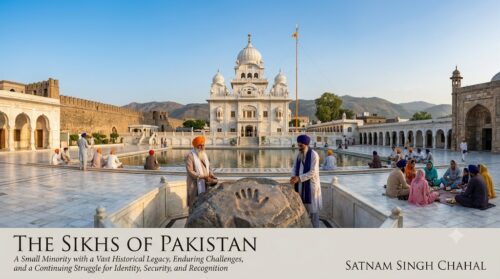
 Pakistan’s Constitution guarantees freedom of religion and the right of every citizen to practice and preserve their faith. In principle, Sikh citizens in Pakistan have the legal right to manage their gurdwaras, celebrate religious festivals, and maintain their religious identity without interference. The state has also made public commitments from time to time to protect minority rights and ensure equal citizenship. Sikh pilgrims from around the world regularly visit major religious sites in Pakistan, especially during important festivals and commemorative occasions, and their access to major shrines has generally been facilitated by official arrangements.
However, despite these constitutional protections, Sikh community representatives often highlight a gap between legal rights and lived reality. In some rural and less-developed areas, Sikhs occasionally report social discrimination, limited institutional awareness of their identity, and difficulties in accessing administrative services. These challenges are not always systematic, but they reflect broader issues faced by many minority communities. Community leaders consistently stress the need for stronger enforcement of constitutional safeguards and greater public education to promote respect for religious diversity and reduce social misunderstandings.
Security has been another major concern for Sikhs in Pakistan, particularly in the Khyber Pakhtunkhwa region. During periods of militancy and extremist violence, several Sikh businessmen, religious leaders, and professionals were targeted, creating fear and instability within the community. These incidents led some families to relocate temporarily within the country, while others migrated abroad in search of safety. Although the overall security situation in Pakistan has improved in recent years, the memory of past violence continues to influence community perceptions, and Sikh families still emphasize the importance of sustained protection, timely investigation of hate crimes, and effective security arrangements for places of worship.
Education is another area where both progress and challenges exist. Sikh children in Pakistan attend mainstream schools and many pursue higher education in universities across the country. At the same time, members of the community have often expressed concern that Sikh history, culture, and religious contributions are not adequately represented in national curricula. As a result, much of the responsibility for cultural and religious education falls on families and gurdwaras, where children learn about their heritage through religious instruction, kirtan, and community gatherings. Community voices increasingly advocate for more inclusive curricula that reflect the full diversity of Pakistan’s historical and cultural landscape.
Economically, the Sikh community has contributed significantly to local society, particularly through small and medium-sized businesses. Many Sikh families operate pharmacies, retail shops, transport services, and trading businesses, while others are engaged in professional fields such as medicine, education, engineering, and law. Despite these contributions, Sikh leaders often argue that representation in government services and senior administrative positions remains limited. They call for more equitable access to public-sector employment and stronger implementation of merit-based recruitment policies to ensure equal opportunity for all citizens.
Political representation for Sikhs in Pakistan exists through reserved minority seats in provincial and national assemblies. Sikh representatives have participated in legislative processes and minority advisory bodies, providing a formal channel for community concerns. However, many within the community feel that their representation remains largely symbolic and that greater participation in policymaking is needed, particularly on issues related to minority rights, education reform, heritage preservation, and local governance affecting Sikh populations.
Pakistan is also home to some of the most important Sikh religious heritage sites in the world. Major gurdwaras such as Gurdwara Janam Asthan, Gurdwara Darbar Sahib, Gurdwara Panja Sahib, and Gurdwara Dera Sahib hold immense spiritual significance for Sikhs globally. In recent years, restoration and maintenance work has improved facilities at several key sites, especially following increased international pilgrimage activity. However, many smaller and historically significant gurdwaras still require conservation efforts, protection from encroachment, and systematic documentation to preserve their historical value for future generations.
A landmark development in recent years has been the opening of the Kartarpur Corridor, which allows Sikh pilgrims from India to visit Gurdwara Darbar Sahib without a traditional visa. This initiative has been widely regarded as an important step in religious diplomacy and cross-border cultural engagement. It has enabled thousands of pilgrims to reconnect with one of Sikhism’s holiest sites and has strengthened people-to-people contact between communities divided by borders.
Migration remains another important factor shaping the Sikh community in Pakistan. Many young Sikhs pursue education and employment opportunities abroad, particularly in countries such as Canada, the United Kingdom, the United States, and Australia. While this migration provides better economic prospects and global mobility, it also raises concerns about the long-term sustainability of the small Sikh population remaining in Pakistan. Community elders often express concern that continued emigration may weaken local institutions and reduce the number of families maintaining historic gurdwaras and community traditions.
At the same time, Sikh women and youth in Pakistan are increasingly active in education, business, healthcare, and community leadership roles. Young Sikhs are also engaging with global Sikh networks through digital platforms, strengthening cultural ties beyond national borders. Many express a strong desire to preserve their identity while fully participating in national development, reflecting a balance between tradition and modern aspirations.
Looking forward, community representatives and advocacy groups have suggested several measures to strengthen the situation of Sikhs in Pakistan. These include better protection for religious sites, improved representation in government institutions, inclusion of Sikh history in school curricula, stronger action against discrimination and hate crimes, and expanded opportunities in education and employment. They also emphasize the importance of interfaith dialogue and cooperation between government authorities and international Sikh organizations to preserve shared heritage and promote mutual respect.
Ultimately, the story of Sikhs in Pakistan is one of deep historical roots, cultural resilience, and continuing challenges. Although the community is small in number, its historical and spiritual significance is immense. Pakistan remains a key center of Sikh heritage, and the preservation of Sikh rights, identity, and sacred sites is essential not only for the community itself but also for the broader values of diversity, tolerance, and shared history in the region.