
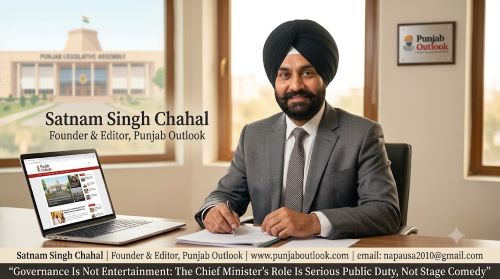
 In a democratic system, the office of the Chief Minister carries the highest responsibility within a state. It is not a platform for comedy, entertainment routines, or light-hearted performances aimed at public amusement. While humour has its place in personal interaction and political communication, governance itself demands seriousness, discipline, and continuous focus on the welfare of the people.
Punjab today is facing a range of complex challenges—rising public debt, unemployment among youth, agrarian distress, drug addiction, environmental degradation, and institutional pressures on education and healthcare. These issues require consistent policy attention and administrative urgency. In such a situation, the expectation from the Chief Minister is clear: prioritize governance over performance.
The Chief Minister of Punjab Bhagwant Mann holds a constitutional responsibility that goes far beyond public appearances or political stagecraft. The people of Punjab are not merely an audience; they are citizens seeking solutions to real-life problems affecting their daily survival and future security.
Public communication is certainly part of leadership. However, when the tone of leadership shifts excessively toward jokes, satire, or entertainment-style engagement, it risks diluting the seriousness of governance. Citizens may begin to question whether their core issues are receiving the attention they deserve inside decision-making corridors.
Punjab’s governance priorities require structured focus: strengthening agricultural support systems, improving industrial investment, creating employment opportunities for youth, ensuring transparency in recruitment processes, and addressing the ongoing fiscal stress of the state. These are not symbolic tasks—they demand detailed planning, administrative monitoring, and policy execution.
At a time when many families in Punjab are struggling with economic uncertainty, inflation, and lack of opportunities, leadership is expected to project confidence through action, not just words or stage performances. People want measurable outcomes: better schools, safer communities, fair recruitment systems, and sustainable development policies.
It is also important to remember that humour in public life can sometimes be misunderstood when it overshadows policy seriousness. Leadership credibility is built not only through popularity but through consistent delivery on promises and responsible governance behaviour.
Punjab does not lack talent, resilience, or cultural richness. What it needs most today is disciplined governance that treats public office as a duty, not a platform for entertainment. The Chief Minister’s role is to resolve crises, not to convert governance into a performance.
Ultimately, the people of Punjab deserve a leadership style that reflects the gravity of their challenges. Public trust is strengthened when leaders are seen working quietly, consistently, and seriously on the issues that matter most—rather than focusing primarily on jokes or entertainment-driven engagement.
Disclaimer: This article and accompanying images are for informational and illustrative purposes only. Some visuals may be AI-generated or digitally enhanced and may not depict actual events or persons. Views expressed are based on publicly available information and analysis.