
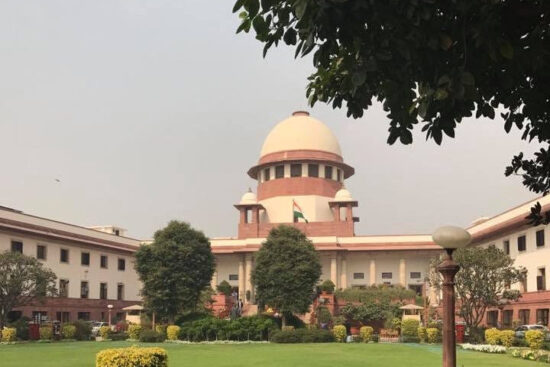
 At 7:54 on the morning of Sunday, 17 May 2026, a police party from the Mataur police station arrested Jaskaran Jeet Singh Deol at his residence in Ludhiana. Mataur falls in SAS Nagar district (Sahibzada Ajit Singh Nagar, whose headquarters most of Punjab still calls Mohali). The First Information Report, No. 73 of 2026, had been registered four days earlier. It alleged sexual assault on a minor girl, about as grave an accusation as the criminal law knows. It was booked under the Bharatiya Nyaya Sanhita, 2023 (BNS) and the Protection of Children from Sexual Offences Act, 2012 (POCSO), for offences that carry a minimum of twenty years on conviction.
He was produced before the duty Magistrate at about noon on Monday, 18 May. That was comfortably beyond the twenty-four hours, journey time excluded, that Article 22(2) of the Constitution allows between arrest and production. He also arrived without written grounds of arrest, the one document the Supreme Court had, since November 2025, made non-negotiable for every arrest in the country. The duty Magistrate did what the law required of her. She held the arrest illegal and ordered his immediate release (he walked out at about three that afternoon). She directed action against the officers at fault. She then added a clarification that the police were not precluded from proceeding in accordance with law.
The same day, the same Station House Officer (SHO, the inspector who heads a police station) whose arrest had just been struck down moved a fresh application for custody and remand. It listed five “grounds”, among them the gravity of the offence, the need to take the accused to the places of occurrence, the recovery of a mobile phone and recordings, and a medical test. These were really reasons for wanting custody, and they had still not been handed to the accused.
On Friday, 22 May, the Additional Chief Judicial Magistrate (ACJM) dismissed the application as not maintainable. No grounds had been supplied, and in any case custody cannot be granted of a man who is neither under arrest nor before the court. The police then obtained arrest warrants from the court, on 23 May and again on 14 July. The State later told the Supreme Court that the accused had been evading arrest.
The accused, for his part, had asked the Punjab and Haryana High Court to restrain the police from re-arresting him “under any circumstances”. On 29 May the High Court refused. His first arrest may have been illegal, it said, but a man accused of grave offences against a child cannot claim blanket immunity from future arrest. If he had been held beyond twenty-four hours, he was free to take his own legal action against the officers.
The Supreme Court protected him from arrest on 27 July and called for an affidavit on what had been done to the erring officers. It heard the appeal on 1 September and allowed it on Monday, 21 September 2026. The case is Jaskaran Jeet Singh Deol v. State of Punjab, reported as 2026 INSC 1022. Justice Ujjal Bhuyan wrote for himself and Justice Atul S. Chandurkar.
The Bench framed a single question. Can an accused who has suffered a breach of both clauses of Article 22 be re-arrested for the same offence, and if so, how? The answer, compressed, is yes, but not by the same hand and not on its own say-so. The Court recorded that it expressed no opinion on the merits of the accusation, and this piece expresses none either. What the accused is alleged to have done is for a trial court. What the police did is what the Supreme Court decided.
The Same Hand, the Same Afternoon
Indian criminal law has always had a revolving door. In 1951 the Madras High Court heard the case of A.K. Gopalan, whose challenge to his preventive detention had produced the Supreme Court’s 1950 judgment in A.K. Gopalan v. State of Madras. This time he had been served a fresh detention order five minutes after his release was ordered. The Madras court set the second order aside because the government had not disclosed it to the court when he was released. Counsel for the complainant cited that case before the Bench in Deol, to show that the law has never barred a re-arrest. It hasn’t. The question has always been who gets to push the door.
In Deol the door was pushed, within hours, by the very officer a court had just found in breach of the Constitution. That is the mischief the judgment is aimed at. Its central sentence reads:
“Once there is a breach of Article 22(1) of the Constitution, the power to re-arrest the accused must not be left to the discretion of the very same authority who had violated the said provision of the Constitution. It must have the judicial imprimatur.”
The groundwork had been laid in Mihir Rajesh Shah v. State of Maharashtra, the Worli hit-and-run case of 2024, decided on 6 November 2025. It had already said that after such a release, fresh custody must be sought from the Magistrate. The Deol Bench built three storeys on that foundation.
As the procedure now stands, the investigating agency must first hand the accused his grounds of arrest in writing. Only then may it apply to the Magistrate, setting out why custody is needed and explaining why the grounds were not supplied the first time. The application must carry the endorsement of the officer’s immediate superior. The Court gave its reason plainly: “to rule out any foul play or collusion”, and so that the superior knows his subordinate has “committed an unbecoming act of violating a constitutional provision”.
The superior, once presented with such an application, must hand the investigation to another officer and order a departmental enquiry. An adverse finding means departmental action and an entry in the erring officer’s service book. The Magistrate, finally, may permit re-arrest only when satisfied on two counts: that the grounds were withheld at first for bona fide reasons, and that the accused genuinely needs to go back into custody. He must decide within about a week, after hearing both sides.
The door still revolves. It no longer revolves at the pleasure of the man who pushed the accused through it the first time.
Two recent rulings had muddied the water, and the Bench cleared them away. In State of Karnataka v. Sri Darshan (August 2025, the Kannada film star’s bail in the Renukaswamy murder case), a Bench had applied a “prejudice” test. It held that missing written grounds do not by themselves make custody illegal unless the accused was actually disadvantaged. In State of Meghalaya v. Sonam Raghuvanshi, the honeymoon-murder case, another Bench observed in passing that the law does not restrain the police from re-arresting.
The Deol Bench disposed of both first by the calendar, since each involved a ruling or an arrest that predated Mihir Rajesh Shah. It then disposed of them by principle: “When there is violation of the Constitution, question of prejudice or demonstrable prejudice does not arise.” The contrary proposition, that lapses in furnishing grounds do not by themselves render custody illegal, it called “not correct at all”.
It also corrected a word that police stations and headlines use loosely. A man released for a breach of Article 22(1), the Court said, “is not enlarged on bail. He is released from illegal and unconstitutional detention.” Bail comes with conditions and a bond, and can be cancelled. Release from unconstitutional custody carries no bond to forfeit. It returns the man to where he stood before the State laid hands on him.
Four Rungs on the Arrest Ladder
Article 22(1) is a spare sentence. No person who is arrested shall be detained in custody without being informed, “as soon as may be”, of the grounds for the arrest. For the better part of seven decades those four words left the police a good deal of room. Over the past decade the Supreme Court has been filling that room case by case. A single constitutional sentence has become something closer to a ladder, each rung set higher than the one below, and Deol adds the top rung. Set out plainly, the ladder has four rungs.
The first rung is the one most citizens will actually meet, and a dowry case gave it teeth. Parliament wrote a notice of appearance into the Code of Criminal Procedure, 1973 as Section 41A, in force from 2010. In Arnesh Kumar v. State of Bihar (2014), the Supreme Court, dismayed at the routine arrest of whole families under the anti-dowry cruelty provision, told the police that for offences punishable with up to seven years, arrest must be the exception.
The Bharatiya Nagarik Suraksha Sanhita, 2023 (BNSS) carries the scheme forward in its Section 35. Where arrest is not necessary, the police must instead serve a notice directing the person to appear. If he appears and cooperates, he is not to be arrested unless the officer, for reasons recorded in writing, decides that he must be. If he ignores the notice, arrest can follow. The BNSS added a refinement of its own. Arresting someone infirm or above sixty, for an offence punishable with less than three years, needs the prior permission of an officer not below the rank of Deputy Superintendent of Police. Haryana Police had allowed such notices to be sent on WhatsApp by a standing order of January 2024. On 21 January 2025 the Court directed every State to serve them only in the manner the law prescribes, and it later refused Haryana’s plea to reconsider.
Two things fall outside this first rung. Offences of the gravity alleged in Deol, carrying twenty years, lie well beyond the seven-year line, so no notice was due. And arrests under the Prevention of Money Laundering Act, 2002 (PMLA) do not use the notice at all. In V. Senthil Balaji, the Court held that the money-laundering law’s own arrest provision lays down a complete procedure, so the ordinary notice of appearance does not apply to it.
The second rung applies to every arrest under every law. Pankaj Bansal (2023, the M3M real-estate directors’ money-laundering case) insisted on written grounds. Prabir Purkayastha (2024, the NewsClick founder) carried that insistence into the Unlawful Activities (Prevention) Act, 1967, and Vihaan Kumar (2025) into ordinary penal offences. Mihir Rajesh Shah made it universal: in writing, in a language the arrested person understands, and at the latest two hours before he is produced for remand. Miss it, and the arrest and every remand built on it fall together. Neither a later chargesheet nor an order taking cognizance can revive them.
Where Bail Is Bolted, the Arrest Is Audited
The third rung is the steepest. Under the money-laundering law, an arrest cannot be made by just any officer on just any suspicion. It must be made by a Director, Deputy Director, Assistant Director or other specially authorised officer of the Enforcement Directorate (ED). That officer must act on material in his possession which gives him reason to believe that the person is guilty of money laundering, and the reason must be recorded in writing. The person must be told the grounds. A copy of the arrest order and the material must go in a sealed envelope to the Adjudicating Authority. He must be produced before the Special Court or a Magistrate within twenty-four hours. When the Supreme Court upheld the law in Vijay Madanlal Choudhary v. Union of India (2022), it described these requirements as stringent safeguards against arbitrary arrest.
They need to be, because the bail provision at the other end is stringent too. Before a person accused of money laundering can be released on bail, the prosecutor must be given a chance to oppose. The court must then be satisfied that there are reasonable grounds for believing the accused is not guilty and is not likely to commit any offence while on bail. A judge is, in effect, asked to half-acquit before the trial has begun. The anti-terror law and the narcotics law carry bail conditions of the same pattern.
Call it the rule of compensating scrutiny. The narrower Parliament makes the road to bail, the more closely the courts inspect the road to arrest. When the statute makes it very hard to get out, the moment of going in is the only point at which a citizen’s liberty is tested against something objective: a document, a signature, a clock. So the courts insist that every step at that moment be performed exactly. Pankaj Bansal said as much. An accused needs the written grounds precisely so that he can try to meet the twin conditions and show there are grounds to believe he is not guilty.
The corollary is that it is often easier to attack the arrest than to ask for bail, and the reason lies in the nature of the two questions. Bail under these laws asks a judge to predict guilt and future conduct from a half-finished investigation, and judges, understandably, lean towards caution. A challenge to the arrest asks something far simpler and far more objective. Was the sheet of paper handed over? Was it in a language the man could read? Was he before a Magistrate within twenty-four hours? A court can answer those questions with certainty, and when the answer is no, the Constitution leaves it no discretion.
In April 2024, when Delhi’s then Chief Minister, Arvind Kejriwal, was challenging his arrest by the ED, Justice Sanjiv Khanna asked his counsel, “Just out of curiosity, why didn’t you file for bail?” The answer, in substance, was that the arrest itself was illegal and that the money-laundering law’s arrest provision offered wider ground than a bail plea.
The Bench went on to hold that the courts’ power of judicial review does extend to arrests under the money-laundering law, since such arrests can be made without a warrant. It released him on interim bail. It also referred to a larger Bench the question whether the “need or necessity of arrest” is a distinct ground on which such an arrest can be challenged. The ED, for its part, had argued that his repeated refusal to present himself justified the need to arrest him. That is the logic of the first rung, the ignored notice, arriving in the money-laundering law by another route.
Twice in early 2025, the Court made the constitutional override explicit. In Directorate of Enforcement v. Subhash Sharma, it upheld the release of a money-laundering accused who had been kept beyond twenty-four hours without production. It held that when an arrest is vitiated, bail cannot be refused merely because the twin conditions are unmet. In Vihaan Kumar, it said that when a violation of Article 22(1) is established, it is the court’s duty to order release forthwith. In its words, “the statutory restrictions do not affect the power of the court to grant bail when the violation of Articles 21 and 22 of the Constitution is established.” The statutory bar yields to the constitutional breach.
Deol is not a money-laundering case, and the child-protection law has no twin conditions. But the principle travels. Where the offence carries a minimum of twenty years and the victim is a child, a regular bail application at the investigation stage is an uphill climb in any court in the country. The defence did not file one. It attacked the arrest, won before the duty Magistrate, lost in the High Court, and won in the Supreme Court. Even so, it won the appeal and not the prayer. Deol had asked for an order that he never be re-arrested. What he got was a procedure the police must follow if they want him back.
Anyone tempted to call this a loophole for the guilty should notice that the fix lies entirely in the State’s hands. An agency that hands over the written grounds on time, and produces the arrested person within twenty-four hours, leaves the defence nothing to attack at the threshold. That pushes the argument back to where the statute wants it: the bail court, where the scales are set in the prosecution’s favour.
Neither Immunity Nor Impunity
Punjab’s Additional Advocate General, Rajat Bhardwaj, argued that release from an illegal arrest does not erase the offence or end the investigation. To hold otherwise, he said, would convert a procedural safeguard into a permanent immunity which no law contemplates.
Senior Advocate Gopal Sankaranarayanan, for the complainant, pointed to a darker possibility. If a defective arrest could never be followed by a lawful one, it would encourage what he called mala fide or illusory arrests. An obliging officer could botch the paperwork on purpose and hand a well-connected accused a lifelong shield, at the cost of the victim’s right to a fair trial.
The Bench accepted the premise of both arguments and the conclusion of neither. The accused can be re-arrested, so there is no immunity. He cannot be re-arrested at the will of the officer who erred, or without a Magistrate’s order, so there is no impunity either. The superior’s endorsement, “to rule out any foul play or collusion”, is aimed at exactly the collusion the complainant feared. Once a botched arrest costs the officer his investigation and exposes him to a departmental enquiry and a service-book entry, it stops being a cheap favour anyone can do anyone.
On gravity, the Court was unbending. Violation of a constitutional provision, it said, “is not dependent on the nature or gravity of the offence”. It reached back half a century to Prabhu Dayal Deorah v. District Magistrate, Kamrup. There a three-judge Bench had held that the gravity of the evil to the community can never furnish an adequate reason for invading personal liberty, except in accordance with the procedure the Constitution and the laws prescribe. Courts must enforce that procedure rigorously, “howsoever, strange this might sound to some ears”.
The first casualty of a slipshod arrest in a child-abuse case is the child’s case. An arrest on 17 May became a release on 18 May, then a refused custody application on 22 May, two sets of warrants, and a stay from the Supreme Court in July. It ended in a judgment in September that still requires the police to go back to a Magistrate before they can question the accused in custody. That took four months. The officers who could not prepare one sheet of paper in twenty-eight hours did more damage to the prosecution than any defence counsel could have. The procedure the Supreme Court has laid down protects the complainant as much as the accused, because it makes that kind of carelessness expensive for the careless.
Twenty-Four Hours Means Twenty-Four Hours
The second half of the judgment, which the first newspaper reports largely passed over, concerns clause (2) of Article 22. Every arrested person must be produced before the nearest Magistrate within twenty-four hours, journey time excluded, and cannot be held beyond that without a Magistrate’s authority. The rule is as old as the Republic. The Supreme Court’s insistence on it dates at least to Khatri v. State of Bihar (1981), the case of the blinded undertrials of Bhagalpur, where it told Magistrates to enforce the rule of their own accord. “We have come a long way since then,” Justice Bhuyan wrote, “but this constitutional mandate continues to remain firm and unshaken, as if engraved in stone.”
The remedy for its breach has a history too. In Bhim Singh v. State of Jammu & Kashmir (1985), a member of the State’s Legislative Assembly was arrested and remanded on paper without ever being produced before a Magistrate. By the time his case was heard he was already free, so the Court could not order his release. It ordered the State to pay him ₹50,000 instead, reasoning that such an invasion of rights is not washed away merely by setting the man free. Justice Bhuyan himself, as a judge of the Gauhati High Court, applied the same principle in Kamal Dutta v. Union of India (2016). He held that a writ court can award compensation as a public-law remedy for unconstitutional detention, without shutting the door on a civil suit for damages.
Measured against this line of authority, the High Court’s view that Deol could take his own legal action against the officers did not hold. The Supreme Court directed that the same re-arrest procedure applies where the release was for a breach of the twenty-four-hour rule. It added that in such cases the High Court may, on the facts, order the State to pay compensation as a public-law remedy, leaving the accused free to sue in the civil courts as well.
It also rejected Punjab’s attempt to borrow from the default-bail cases, Sanjay Dutt (1994, the actor’s TADA case) and Rakesh Kumar Paul (2017). In those cases, an accused released because the chargesheet was late can later be re-arrested. The difference, the Bench said, is where the lapse occurs. Default bail follows a lawful arrest that went stale. Deol involved two breaches of fundamental rights at the very threshold of arrest.
The Service Book Remembers
Most government employees have a service book. It opens on the day of joining and closes on the day of pension, recording postings, increments, leave and penalties in between. An adverse entry in it stays there, to be read when the file goes up for confirmation, for promotion, for a sensitive posting. By tying a botched arrest to the service book, the Bench chose a sanction that a police hierarchy understands far better than any stern paragraph in a law report.
Punjab, to its credit, had moved within two days of the duty Magistrate’s order. On 19 May, a preliminary enquiry found that the investigating officer, an Assistant Sub-Inspector (ASI), had failed to prepare the written grounds, and that the SHO had failed to check the arrest papers before producing the accused. On 20 May the Senior Superintendent of Police suspended the ASI, removed the SHO from his assignment and sent him to Police Lines, and ordered a departmental enquiry with the district’s Superintendent of Police (Investigation) as enquiry officer. The investigation was later given to a new SHO. The procedure the Supreme Court laid down for the whole country on 21 September, a new investigating officer and a departmental enquiry, closely resembles what one district in Punjab had done in May.
The Court has directed that its judgment go to every Director General of Police, every High Court’s Registrar General and every Director of a State Judicial Academy. The academies are where it will change behaviour: the Maharaja Ranjit Singh Punjab Police Academy at Phillaur, where investigators learn to prepare arrest papers, and the Chandigarh Judicial Academy, where the Magistrates who read those papers are trained. The practical remedy needs only two things. One is a printed grounds-of-arrest form in Punjabi, Hindi and English, handed over against a signature with the time written in, with a copy clipped to the remand papers. The other is a duty Magistrate who, as the one in SAS Nagar did on 18 May, looks for that form first and at the clock second.
Two questions remain for another day. The judgment does not deal specifically with the warrants the police obtained on 23 May and 14 July, after the ACJM had refused custody. Its final direction, that any custodial interrogation must follow the new procedure, suggests that a warrant is no longer a way around it. And the judgment is addressed, in the first instance, to the police. But its reasoning rests on Article 22(1), which the Court has said again and again is not statute-specific. The Enforcement Directorate and the other central agencies will find it hard to argue that the Magistrate’s gatekeeping stops at the door of the police station.
There is an old habit in Indian policing of treating the arrest as the work and the written grounds as paperwork. After Deol, missing grounds cost the arresting officer his investigation and expose him to a departmental enquiry and a service-book entry. They also send the police back to a Magistrate, with the officer’s own superior signing his name to the lapse, before the accused can be taken in again.