
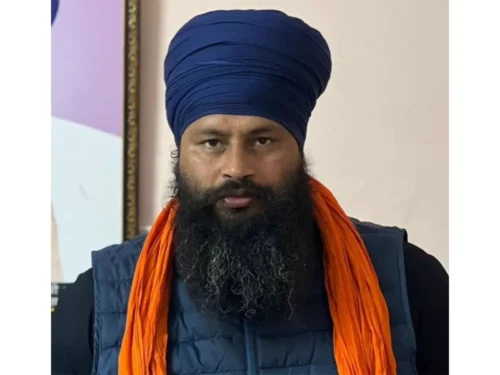
 Chandigarh-The killing of anti-drug activist Parvinder Singh Jhota in broad daylight in Mansa has raised two critical questions for the Punjab Police and the state government: How did a chemist reportedly facing multiple FIRs retain a licensed firearm, and why was security allegedly not provided to Jhota despite his requests for protection? These questions require a transparent, evidence-based investigation rather than political statements or assurances alone.
According to media reports, Jhota was shot dead on Tuesday, October 13, after a confrontation with medical store owner Ashwani Kumar over the alleged sale of addictive substances. Police have indicated that a licensed weapon was apparently used in the shooting. Reports also refer to an earlier case registered against Kumar following a 2023 confrontation with Jhota, while a case was also registered against Jhota in connection with that incident. The full record of FIRs against the accused, the status of those cases and the relevant arms-licence documents must now be examined.
The first question concerns the arms licence. A licensed firearm is not automatically unlawful simply because its holder faces an FIR. However, authorities must establish whether the licence holder’s criminal-case history was properly assessed, whether any legal grounds existed to suspend or revoke the licence, and whether the police or licensing authority took appropriate action in light of any known threats or risk factors. The reported use of a licensed pistol in a fatal shooting makes an examination of the licensing and monitoring process essential.
The second question is equally serious: Did Parvinder Singh Jhota request police protection, when did he make that request, and what action followed? His father has alleged that Jhota faced threats because of his anti-drug activities but was not provided security. If a formal request or credible threat assessment existed, the police must disclose whether it was examined, what risk assessment was conducted and why protection was or was not granted. These details have not been independently established in the reports reviewed so far.
The Punjab government should order a time-bound review of the accused’s FIR history, arms-licence records, any complaints or warnings made against him, and the handling of Jhota’s alleged requests for protection. The inquiry should also establish whether relevant police officers and licensing officials followed the law and departmental procedures. If negligence or misconduct is established, appropriate departmental and legal action should follow.
The government’s anti-drug campaign must be assessed not only by the number of raids, arrests and FIRs registered, but also by whether citizens who report suspected drug-related wrongdoing can approach the authorities without fearing for their lives. Citizens must not be encouraged to take the law into their own hands, but neither should those raising legitimate concerns be left without an effective response from the state.
The central question remains: If the authorities had prior information about threats to Jhota, could timely intervention have prevented this tragedy? A transparent investigation must establish the facts, identify any failures and ensure accountability wherever the evidence leads. The family and the people of Punjab deserve answers, not merely assurances.
Referances-The Times of India,NDTV,The Tribune,Chandigarh News – The Indian Express