
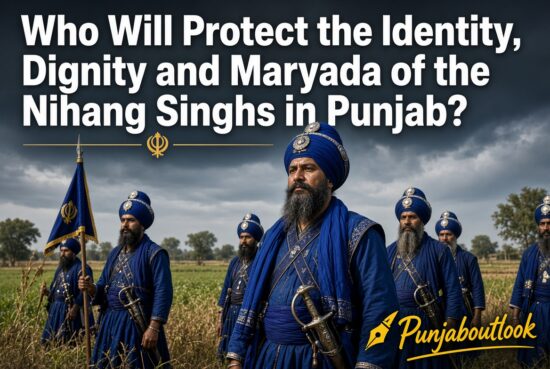
Punjab is facing an important social and religious question that deserves serious discussion, particularly within the Sikh community: who is responsible for protecting the distinct identity, traditions, dignity and maryada of the Nihang Singhs? At the same time, questions are being raised about the increasing presence of people from outside Punjab, the verification of migrants, the political support extended to certain migrant groups and the changing social dynamics in villages, towns and cities. These issues are often discussed separately, but they also raise a wider question about the protection of Punjab’s cultural character and the institutions that preserve Sikh traditions.
There appears to be a contradiction in the public debate. On one side, some people express concern that unverified migration, unauthorised settlements and inadequate administrative oversight are creating social and law-and-order challenges. They question why certain political leaders appear to support migrant populations without first addressing questions of identity verification, employment records, residential status and compliance with local laws. On the other side, some individuals and organisations are seen extending extensive support and services to migrant communities. Providing food, shelter, employment assistance and humanitarian help is not wrong; indeed, Sikh tradition itself teaches service to humanity. However, humanitarian service must not become a substitute for lawful administration, accountability and equal application of the law.
The central issue is not whether someone belongs to Bihar, Uttar Pradesh, Punjab or any other state. Every Indian citizen has constitutional rights, and no community should be collectively blamed for the actions of individuals. The real questions are whether residents are properly documented where legally required, whether employers and property owners follow applicable regulations, whether unauthorised encroachments are addressed, and whether the police and local administration are performing their responsibilities without political interference. These standards must apply equally to everyone.
The Nihang Identity Must Not Become a Costume
An even more sensitive issue concerns the traditional dress and appearance of the Nihang Singhs. Across different parts of Punjab, people are reportedly being seen wearing blue robes, large turbans, traditional weapons and other articles associated with the Nihang tradition. This has raised questions among members of the Sikh community about whether everyone adopting this appearance actually belongs to an established Nihang organisation or follows the discipline associated with the Khalsa warrior tradition.
The Nihang Singhs occupy a distinctive and historically significant position in Sikh history. They are widely associated with the preservation of the martial traditions of the Khalsa, courage, sacrifice, religious commitment and the defence of Sikh institutions. Their identity is not simply a matter of clothing, colour, weapons or an impressive turban. It is connected with a tradition of discipline, religious commitment, training, responsibility and service to the Panth.
Wearing a blue turban or carrying traditional weapons cannot, by itself, establish someone’s identity as a Nihang Singh. Similarly, adopting the outward appearance of a Sikh warrior does not automatically establish a person’s religious understanding, commitment or standing within the Nihang tradition.
This is where the Sikh community needs to initiate a serious discussion. If anybody can adopt the traditional appearance of a Nihang Singh without accountability, institutional association or knowledge of the tradition, how will ordinary people distinguish between those genuinely connected with Nihang institutions and those merely adopting their appearance?
The question should not be directed against people because they come from Uttar Pradesh, Bihar or any other part of India. A person’s birthplace does not determine their religious sincerity. People from different geographical backgrounds can embrace Sikhism and become devoted members of the Sikh community. The concern arises when religious identity is used as an appearance, an instrument of influence or a means of obtaining social authority without accepting the responsibilities attached to that ident
The Sikh Rehat Maryada provides an important foundation for understanding Sikh religious discipline. It addresses Sikh beliefs, personal conduct, religious practices, the five articles of faith and collective responsibilities. The SGPC’s published code makes clear that Sikh identity is rooted in faith and commitment, not merely external appearance.
The distinction between Bana (religious appearance) and Bani (the teachings of the Gurus) is particularly important in this discussion. A person may wear traditional Sikh attire, but the real question is whether their conduct reflects the values of the Gurus.
Respect for Guru Granth Sahib, adherence to religious discipline, truthful conduct, humility, self-restraint, protection of the vulnerable and commitment to the welfare of humanity are central considerations.
The Nihang tradition also has its own historical institutions, customs, training and organisational structures. Therefore, its identity cannot be reduced to a simple test of clothing. Different Nihang groups have their own historical traditions and organisational affiliations, and their views and practices should be understood through responsible engagement with those institutions.
It is the responsibility of established Nihang organisations, Sikh religious institutions and the wider Panth to explain these distinctions to the younger generation and the public.
This question must also be addressed to the Shiromani Gurdwara Parbandhak Committee, the Akal Takht Sahib, Sikh intellectuals, religious scholars and established Nihang organisations.
If concerns are being raised about the misuse of Nihang identity, there should be a constructive and organised response. The community needs greater awareness about the historical background, organisational structures, traditional discipline and responsibilities associated with the Nihang Singhs.
There should also be a clear mechanism through which the public can seek clarification about individuals or groups claiming an organisational identity. Such clarification should come from recognised institutions and responsible representatives, not from street confrontations or self-appointed authorities.
Nobody should be harassed, threatened or publicly declared illegitimate merely because of their appearance or geographical background. At the same time, the misuse of religious symbols and the exploitation of Sikh identity should not be ignored.The dignity of the Nihang Singhs must be protected through knowledge, discipline, institutional accountability and respect for Sikh traditions.
Another aspect of this debate concerns the political and social support being extended to migrant communities in Punjab. There is nothing wrong with helping people who come to Punjab in search of employment and a better livelihood. Punjab has a long tradition of hospitality, and Sikh teachings emphasise the welfare of all humanity.
However, hospitality does not mean that questions of law, public safety, residential verification and administrative responsibility should be ignored.
Political leaders must explain their positions clearly. If they support the rights of migrant workers, they should also support lawful procedures, proper verification where required, the protection of local residents and equal enforcement of regulations.
The Punjab Government itself lists services such as tenant verification, domestic-help verification, character verification and police clearance for private employees among its official services. This demonstrates that verification is an administrative matter, not an issue that should be turned into hostility against an entire community.
There must be no double standard. If a Punjabi resident is required to follow the law, a person arriving from another state must also follow the applicable laws. Similarly, nobody should be subjected to discrimination simply because they are a migrant.The administration must investigate criminal activity on the basis of evidence and individual responsibility rather than regional identity.
There is another question that deserves examination. Some people publicly criticise migrants and express concern about their growing presence, yet the same society sometimes gives considerable influence and importance to individuals who maintain close relationships with migrant populations or provide services to them.This contradiction requires a deeper understanding rather than personal attacks.
Why do certain individuals become influential among particular migrant communities? Is it because they provide employment assistance, accommodation, financial support, legal guidance or access to political representatives? Are they performing genuine humanitarian work, or are there other interests involved?These questions should be answered through evidence and responsible public discussion.
The colloquial expression ‘Bihari Bhaiya’ is sometimes used in Punjab to describe migrant workers from Bihar, but it should not become a derogatory label for an entire population. The people who work in Punjab contribute to its economy, agriculture, industry, construction and service sectors. Their dignity and legal rights must be respected.
At the same time, local communities have a legitimate interest in understanding who is settling in their neighbourhoods, how residential arrangements are being managed and whether local authorities are maintaining proper records.The solution is not hostility. It is transparent administration, public accountability and equal treatment.One of the greatest concerns for any religious community is the possibility that its sacred symbols and traditions may gradually lose their meaning through commercialisation, imitation or irresponsible use.
The Nihang identity is not a fashion statement. It is associated with a long history of Sikh sacrifice, martial discipline and service. The traditional blue attire, distinctive turbans, weapons and other symbols carry historical and religious significance.If these symbols are adopted merely to attract attention, establish influence or create an impression of religious authority, the community has a legitimate reason to seek clarification.
There must be a distinction between genuine religious participation, learning about Sikh traditions and falsely representing oneself as an authorised member of a particular Nihang organisation.This distinction is especially important for young Sikhs, who must understand that religious identity comes with responsibilities. The external appearance of a Khalsa Sikh should reflect an inner commitment to the teachings of the Gurus.
The present discussion should lead to practical steps rather than remain limited to social-media arguments.First, established Nihang organisations should take the initiative to educate the public about their respective histories, traditions, organisational affiliations and disciplinary practices.
Second, the Akal Takht Sahib and other responsible Sikh institutions should encourage a respectful dialogue with Nihang representatives and Sikh scholars to address questions concerning the preservation of the Nihang identity.Third, Sikh educational institutions and Gurdwara committees should organise programmes explaining the significance of Bana, Bani, the five articles of faith and the responsibilities of the Khalsa.
Fourth, the Punjab Government should strengthen lawful tenant and worker verification procedures, improve police accountability and ensure that complaints about criminal activity are investigated impartially.
Fifth, political representatives must avoid using migrant communities as instruments of political mobilisation. Equally, nobody should exploit concerns about migration to spread hatred against innocent workers.Finally, Sikh organisations must ensure that the preservation of religious identity does not become an excuse for discrimination, intimidation or confrontation. The Sikh tradition of Sarbat Da Bhala requires respect for humanity while maintaining the distinct identity and discipline of the Panth.
Punjab has witnessed many historical challenges, but the preservation of Sikh identity has always depended on the commitment of its people, institutions and religious leadership. The Nihang Singhs are an important part of that history, and their dignity and distinct traditions deserve protection.
The questions being raised today should not be dismissed as insignificant. Who is responsible for protecting the historical identity of the Nihang Singhs? Who will ensure that their traditional attire and symbols are not misused? Who will educate the younger generation about the difference between wearing the Bana and living according to the principles of the Khalsa? And why are Sikh institutions not more visible in addressing these concerns?
At the same time, Punjab must distinguish between genuine administrative concerns and prejudice against people from other states. Migration, employment, public safety and religious identity are different issues and must be addressed through appropriate legal and institutional mechanisms.
The real question is not whether someone comes from Bihar, Uttar Pradesh or Punjab. The real question is whether the person respects the law, respects Sikh traditions and understands the responsibility attached to the identity they claim.
The Nihang identity must never become merely an outfit, and Sikh maryada must never become a matter of convenience. The protection of the Khalsa tradition requires knowledge, discipline, unity and responsible leadership.
Punjab needs an informed discussion, not regional hostility. The Sikh Panth needs institutions that protect its traditions, and society needs an administration that applies the law equally to everyone.
The identity of the Nihang Singhs must be protected through the strength of their history, the discipline of their tradition and the collective responsibility of the Sikh Panth.
Editorial note: This article raises questions about religious identity, migration and administrative accountability. It does not question the rights of migrant citizens or presume that any individual wearing Nihang attire is misrepresenting the tradition without evidence.
Source reference: SGPC’s Sikh Rehat Maryada and Government of Punjab’s official verification services.
Disclaimer: This article and accompanying images are for informational and illustrative purposes only. Some visuals may be AI-generated or digitally enhanced and may not depict actual events or persons.Views expressed are based on publicly available information and analysis