
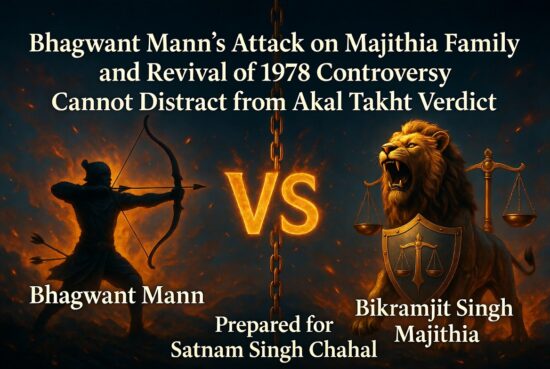
 The Akal Takht’s June 15, 2026, verdict declaring Punjab Chief Minister Bhagwant Mann a “Guru Dokhi” (betrayer of the Guru) and “Khalsa Panth Virodhi” (anti-Khalsa Panth) carries substantial political weight in a state where Sikh religious institutions have historically shaped electoral outcomes. While the edict has no constitutional power to remove Mann from office, it introduces a potent narrative shift that could redefine the contours of the 2027 Punjab Assembly elections, just over a year away. The controversy risks moving the political discourse away from AAP’s governance and welfare achievements toward questions of religious legitimacy and Panthic credentials.
For the Aam Aadmi Party (AAP) and Mann personally, the verdict poses a direct challenge to their support base among devout Sikh voters, particularly in rural areas. In the 2022 elections, AAP secured a landslide victory with 92 out of 117 seats by capitalizing on anti-incumbency against traditional parties and promising clean governance. However, Panthic (Sikh religious) sentiment remains a decisive factor in many constituencies. A religious boycott call from the Akal Takht could erode enthusiasm or turnout among this segment, forcing AAP to expend significant energy defending Mann’s personal standing rather than promoting its administrative record. The party’s strategy so far has been combative: Mann has rejected the allegations as “false propaganda” orchestrated by political rivals (primarily SAD), while highlighting his government’s enactment of what it calls Punjab’s toughest anti-sacrilege law. This counter-narrative aims to portray AAP as the true defender of Sikh values against opportunistic misuse of religious institutions.
Internally, the verdict creates significant pressure within AAP. The simultaneous summons to all Sikh MLAs and Cabinet members to appear before the Akal Takht on June 29, 2026, places baptized or religiously observant legislators in a difficult bind. Compliance could be interpreted as distancing from the Chief Minister, while defiance risks alienating religious voters or creating perceptions of disrespect toward Sikh institutions. With AAP holding a massive majority but having relatively few baptised Sikh MLAs in key positions, party leadership faces a delicate balancing act between maintaining unity and managing religious sensitivities. Public displays of support from some AAP leaders contrast with reported silence from others, hinting at underlying tensions.
Opposition parties have quickly moved to capitalize on the development. The Shiromani Akali Dal (SAD), under Sukhbir Singh Badal, has been particularly vocal, demanding Mann’s immediate resignation, calling for a lie detector test, and announcing plans for a “Dharamyudh Morcha” (religious war front) starting from the Akal Takht in mid-July. SAD sees an opportunity to reclaim the “Panthic” space it has historically dominated and to highlight what it portrays as AAP’s disregard for Sikh religious authority. Congress and BJP leaders have also demanded accountability or resignation, framing the issue as one of moral and religious fitness for leadership. This united front from the opposition, even if temporary, amplifies the pressure on the ruling party and could consolidate anti-AAP votes in key segments.
Electorally, the timing is critical. With polls due in 2027, the controversy injects religion directly into the campaign narrative at a moment when AAP had successfully shifted focus toward development, jobs, and welfare schemes. Historical precedents in Punjab show that religious edicts or controversies involving Sikh institutions can significantly influence voter behavior, especially among rural and devout populations. While no immediate polls show a dramatic collapse in AAP support, the symbolic damage could compound over time if the issue remains in the headlines through the June 29 summons and beyond. AAP’s resilience will depend on its ability to keep governance achievements front and center while managing perceptions of the religious controversy. If voters ultimately prioritize tangible delivery over religious pronouncements, the impact may be contained; however, sustained mobilization by opposition forces around the “Panth Virodhi” label could narrow AAP’s margins in competitive seats.