
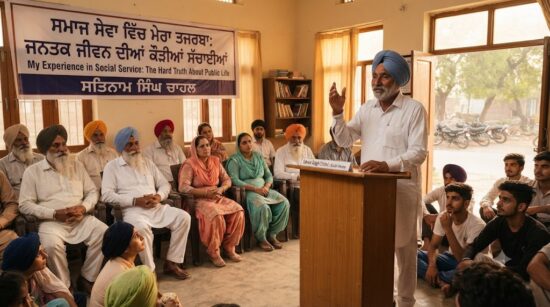
 People often believe that social service brings respect, appreciation and public recognition. My experience has taught me something very different. The moment you become active in society, people begin watching every step you take. No matter how honestly you work, there will always be someone ready to say, “Kha gaya Ohay ”—meaning, “He must have taken money” or “He must have done corruption.” Unfortunately, accusations are often made without evidence, simply because cynicism has become common in public life.
I have learned that in social work, genuine efforts are not always rewarded. Sometimes the people you help the most are the first to question your intentions. They rarely see the sacrif…One of the Hardest Lessons in Social Service: People Often Forget Who Helped Them
One of the most painful lessons I have learned through years of social service is not the hard work, long hours or personal sacrifices. It is watching how quickly some people forget those who stood beside them when they needed help the most.
Many people approach you only when they are facing difficulties. They may need help finding a job, resolving an official matter, getting guidance, or connecting with the right people. At that moment, they speak with humility and hope. They tell you that you are the only person who can help them, and they promise they will always remember your support.
As a social worker, you help because you believe it is the right thing to do. You make phone calls, arrange meetings, spend your own time, use your own resources, and sometimes even sacrifice your personal commitments. You do it without expecting anything in return because serving others gives you satisfaction.
However, once their work is completed, reality often changes. Instead of acknowledging your efforts, some people begin telling others, “My relative got it done,” or “My friend arranged everything.” Your name quietly disappears from the story. The person who spent days or weeks helping is forgotten, while someone who had little or no involvement receives the credit.
At first, this can be deeply disappointing. You question whether your efforts were appreciated at all. But with time, I realized that this behaviour says more about the other person’s character than about mine. Gratitude cannot be forced. It comes naturally from people who value honesty and remember those who stood by them during difficult times.
This experience has taught me that social service should never be based on the expectation of recognition. If your happiness depends on receiving public credit, you will often be disappointed. Help people because your conscience tells you to do so, not because you expect praise or publicity.
At the same time, these experiences also teach you an important lesson about human nature. Difficult times reveal who truly cares for you, while success and completed work reveal who is willing to forget your contribution. Both are valuable lessons because they help you distinguish genuine relationships from relationships based only on convenience.
Despite these disappointments, I have never believed that the answer is to stop helping people. Every person is different. While some may forget your efforts, others will remember your kindness for the rest of their lives. Those few sincere individuals make every sacrifice worthwhile.
Today, I no longer work to receive credit. I work because helping someone solve a genuine problem is a reward in itself. Recognition may fade, stories may be rewritten and people may choose to give credit elsewhere, but no one can erase the satisfaction of knowing that you made a positive difference in another person’s life.
Life has taught me one final lesson: never expect gratitude, but never stop showing kindness. Your character is defined not by who gives you credit, but by your willingness to help even when no credit comes your way. In the end, people may forget your name, but your actions become part of the lives you touched—and that is a legacy far greater than public recognition.