
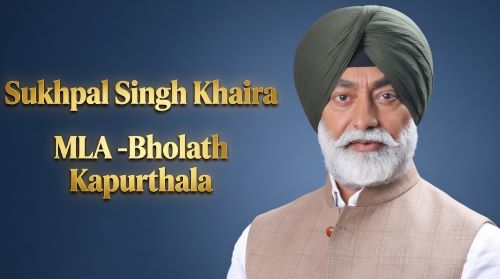
 Chandigarh: Congress MLA Sukhpal Singh Khaira has demanded that Punjab Chief Minister Bhagwant Mann and Director General of Police Gaurav Yadav publicly disclose the identity of an alleged “close aide” of senior Aam Aadmi Party (AAP) leaders who has been referred to in an Enforcement Directorate (ED) communication seeking police action.
Khaira, in a post on X, alleged that the person named in the ED communication was involved in facilitating transfers and postings of IAS, IPS, PCS and DSP-rank officers. He also questioned the recovery of approximately ₹21 lakh in cash during ED searches conducted in May 2026 and asked the Punjab government to explain who the individual is and what role he allegedly played in the functioning of the state administration.
The controversy follows an ED letter reportedly sent to the Punjab DGP after searches conducted between May 7 and 10 as part of a money-laundering investigation involving a Chandigarh-based housing society and its associates. According to reports based on the ED communication, investigators recovered nearly ₹21 lakh in cash and allegedly found WhatsApp conversations relating to attempts to influence government postings and transfers.
The ED has reportedly referred to more than 20 alleged instances between 2023 and 2026 involving the postings of IAS, IPS, PCS and DSP-level officers. The agency has also alleged interference in areas including tender conditions, licensing and land transactions. Some of the material reportedly refers to alleged cash payments and hawala transactions.
The allegations have created a politically sensitive question for the Punjab government: whether administrative transfers and postings—normally handled through established government procedures—were allegedly being influenced by individuals outside the formal civil-service structure.
Khaira, representing the Congress, has framed the issue as a question of governance and accountability. He asked whether the AAP government was actually running the state administration or whether important transfers had effectively been “outsourced” to alleged middlemen or “dalaals.”
The ED has reportedly asked the Punjab Police to examine the allegations and register an FIR, citing provisions of applicable criminal and anti-corruption laws. The agency has also reportedly referred to possible violations involving the Prevention of Corruption Act and other legal provisions.
The issue has also drawn political attention from other opposition leaders. SAD leader Bikram Singh Majithia has questioned how an individual could allegedly gain such extensive access to government postings and demanded answers from Chief Minister Bhagwant Mann.
For the Punjab government, the immediate challenge is to provide clarity rather than allow the allegations to remain the subject of political speculation. If the ED communication contains specific allegations about interference in transfers and postings, the public is entitled to know whether the Punjab Police has registered a case, whether an investigation has begun and what action has been taken.
At the same time, the allegations must not be treated as proof of criminal guilt. The identity of the individual, the authenticity and interpretation of the evidence and any eventual criminal liability must be established through an official investigation and due process.
The controversy nevertheless raises a larger question about transparency in Punjab’s administration. Government officers are expected to be transferred and posted through documented rules and authorised decision-making processes. If individuals outside the formal system were able to influence such decisions for financial or political considerations, it would represent a serious challenge to institutional governance.
The opposition is therefore demanding answers from the Chief Minister and the police leadership. The central question now is straightforward: Who is the alleged “close aide,” what role did he allegedly play in officer transfers, and what action has the Punjab government taken following the ED’s communication?
Until these questions are answered officially, the allegations will continue to fuel concerns about the manner in which administrative power is being exercised in Punjab