
 India is still attempting to regulate a rapidly transforming seed sector through legislation enacted in 1966. Since then, biotechnology, genetics, molecular breeding, genome editing and digital traceability have radically changed agriculture across the world. The law, however, remains stubbornly rooted in another age. Indian farmers cannot compete globally if their access to modern seed technology continues to be delayed by outdated regulations, political calculations and rigid ideological fears.
On September 10, a delegation of the All India Kisan Coordination Committee participated in a detailed consultation on the proposed Seeds Bill convened in New Delhi by Union Agriculture and Farmers’ Welfare Minister Shivraj Singh Chouhan. The Government has decided to hold further consultations with farmers’ organisations before taking the legislation to Parliament. The Ministry informed participants that nearly 18,000 suggestions had already been received from farmers, organisations, experts and other stakeholders. (The Tribune, Financial Express)
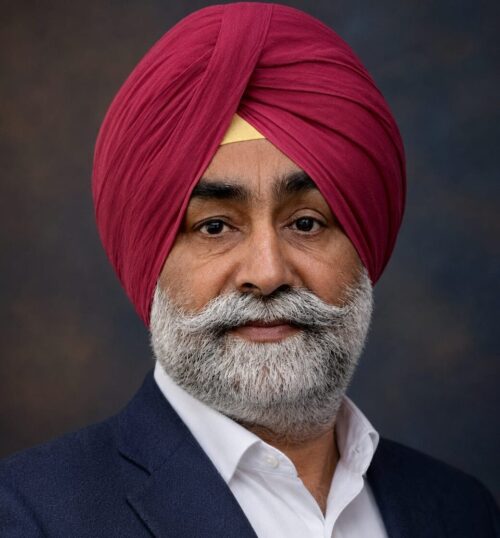
The AIKCC delegation comprised Gunvant Patil, General Secretary, All India Kisan Coordination Committee; Guni Prakash, President, BKU Haryana; Gurpartap Singh Mann, Member, KCC Punjab; Lalit Kumar, President, Shetkari Sanghatana, Maharashtra; Ajay Anmol, National General Secretary, BKU and President, BKU Uttar Pradesh; and Kisan Subrat Mani Tripathi.
The delegation submitted a detailed memorandum supporting a modern, science-based Seeds Act. Its central argument was clear: the Government must regulate the integrity of the seed market, but it should not control its economy. Research is expensive, so is technology. Farmers certainly need firm protection against spurious seeds, false labelling and dishonest claims.
But they do not need protection from technology; they need the freedom and opportunity to access it.
Political and ideological loyalties cannot be allowed to prevent modern seeds from reaching farmers who must compete with cultivators across the world. Ideology is one thing; science is another. The two should not be deliberately confused.
I said that a jawan guarding the border cannot be expected to confront modern weapons with an old .303 rifle in his hands. He must be provided with the latest and most effective equipment. The Indian kisan deserves exactly the same approach. He cannot be asked to fight new pests, unpredictable weather, shrinking water resources and aggressive international competition with obsolete technology.
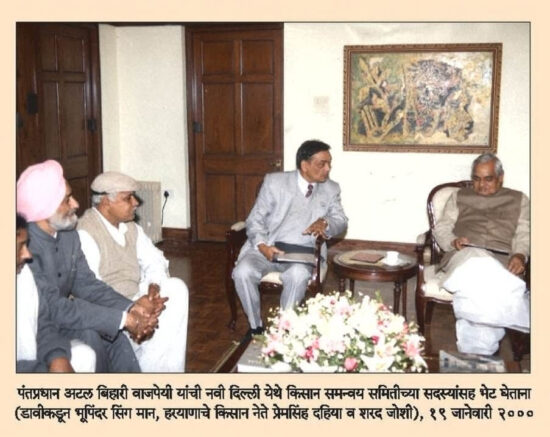
The Vajpayee Government’s decision to approve Bt cotton for commercial cultivation in 2002 was historic. Sharad Joshi and S. Bhupinder Singh Mann had consistently argued that farmers should be given access to modern technology and trusted to make their own economic choices. Bt cotton was not forced upon farmers; they adopted it because they saw an advantage in it. It remains India’s only GM crop approved for commercial cultivation. (PIB)
Unfortunately, India’s agricultural biotechnology journey largely stalled thereafter. While other countries moved towards newer seeds, improved pest resistance and gene-editing technologies, Indian agriculture became trapped in regulatory delay, endless litigation and most important: ideological hostility. This prolonged paralysis has imposed a heavy and largely invisible cost upon farmers and the country.
During the consultation, I specifically recalled how Punjab has repeatedly witnessed serious controversies involving spurious and illegally marketed seeds. Whenever such a scandal erupts, almost every farmers’ organisation demands a strong and stringent law. Yet when an attempt is made to modernise the law, some of the same organisations begin opposing it—often without properly reading its provisions. The reasons for this contradiction are best known to them.
I also stressed that although agriculture is a State subject, MSP, CACP, Food security Act, Trade, Import Export Policy, 9th Schedule Essential Commodities Act, all are under Centre. This constitutional ambiguity is the cause of farmers apathy for last 80 years.
The proposed legislation should encourage genuine competition among Indian and international seed developers, protect legitimate intellectual property and allow farmers to choose among different varieties, traits, technologies and suppliers. Arbitrary price controls and painfully slow regulatory approvals will discourage research, drive away investment and ultimately reduce the farmer’s options and keep them deprived of the technology.
Access to foreign technology should be welcomed, but not blindly. Every foreign seed intended for commercial cultivation in India must undergo credible, independent and multi-location trials under Indian agro-climatic conditions. On this essential safeguard, there can be no compromise.
AIKCC’s support for reform is also not a blank cheque. The new law must impose strong penalties and criminal consequences upon those who knowingly sell counterfeit, adulterated, substandard or falsely labelled seeds. Such people are not entrepreneurs; they are cheating the farmer at the most vulnerable point of the agricultural cycle. Link the offenses to the Crpc (BNS), recovery of penalty should be made stronger, not a defunct arrears of land revenue model. Clearly define how can a company be prosecuted in case of a criminal offense.
At the same time, liability must be determined through scientific sampling, independent testing, an opportunity to present a defence and a properly reasoned decision. Every crop loss cannot automatically be declared a seed failure. Agricultural performance also depends upon rainfall, temperature, soil, irrigation, pests, diseases, cultivation practices and the quality of other inputs. A genuine seed producer should be punished when a scientifically established defect is proved; but not merely because political pressure has been created after a poor harvest. Simply put, the law should not be misused.
The delegation also cautioned that certain powerful vested interests may resist better seed technology. Pest-resistant and water-efficient varieties can reduce crop losses, conserve water and lower farmers’ dependence on some pesticides. This would benefit the farmer and the environment, but it may not suit sections of the pesticide industry which is almost a 1 Lakh crores industry. Agricultural policy cannot be written to protect any lobby; whether belonging to pesticides, seed companies or ideological activists or pseudo environmentalists sponsored by pesticides industry . It must be guided by independent science and the long-term economic interests of the farmer.
S. Bhupinder Singh Mann, former Member of Parliament, Chairman of AIKCC and National President of BKU, could not attend the meeting because of health-related issues. The Union Agriculture Minister specially enquired about his health and conveyed his warm wishes for an early recovery.
Taking the Concerns of Kashmir’s Apple Growers Forward
Following the Delhi consultation, Gunvant Patil, Guni Prakash and Gurpartap Singh Mann travelled to Anantnag and held an extensive meeting with apple growers led by Numair Nabi.
The growers explained how middlemen capture a disproportionately large share of the final market price while cultivators carry almost every serious risk; production, weather, storage, grading and transportation. They sought better market access, transparent price discovery and effective protection against exploitative trade practices.
The delegation assured the growers that AIKCC would seek a meeting with the Union Agriculture Minister and place their genuine concerns before him. The apple growers also expressed their desire to associate with the Bharatiya Kisan Union and AIKCC. The delegation welcomed their interest and indicated that an organisational body for Jammu and Kashmir would be announced shortly.
The discussions in Delhi and Anantnag concerned two different subjects, but the underlying principle was identical. Farmers need freedom of access; to modern technology in the seed market and to genuine competition in the produce market. The State must punish fraud and prevent exploitation, but it should not deny farmers the right to choose, innovate, take informed risks and compete.