
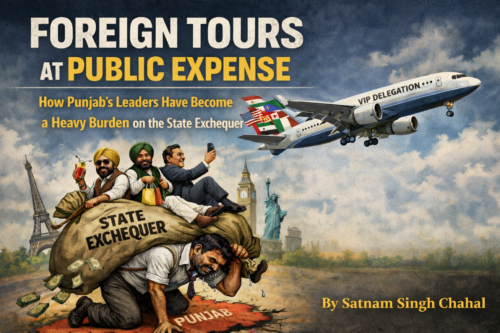
 Punjab today stands at a painful turning point. The state that once led the nation in prosperity, agriculture, and hard-working spirit is now watching its wealth slip away—not because of the people, but because of those in power who are supposed to protect it. Political leaders entrusted with governing Punjab have turned their positions into platforms of personal luxury. Instead of strengthening the state’s future, they have become a growing burden on the exchequer, wasting public money on foreign tours that bring no benefit to the common citizen. At a time when Punjab is struggling with rising debt, joblessness, and a collapsing social structure, those in power seem obsessed with world travel, comfort, and political theatre.
These foreign visits are presented to the public as “investment missions” or “economic partnerships,” but on the ground, Punjab has gained absolutely nothing. Not a single major industry has been established because of these trips. Not a single job-creating project has arrived. Not a single agricultural breakthrough has come home. The only clear outcomes of these tours are expensive hotel bills, business-class flights, unnecessary entourages, and media photographs meant to project a false image of achievement. The irony is heartbreaking: while struggling families cannot afford household essentials, the leaders they elected are spending crores enjoying global vacations in the name of governance.
The hypocrisy becomes even louder when we see political leaders returning from abroad with grand claims, only to pack their bags again within weeks. One particular leader in Punjab has made foreign travel almost a habit. Before even addressing local issues or explaining the outcomes of previous tours, he is ready to leave again—this time for another 30-day foreign trip, once again funded by the people of Punjab. This behaviour raises a painful question: Are these trips truly about the state’s progress, or are they merely an excuse for personal comfort and global enjoyment?
Meanwhile, Punjab continues to bleed financially. The state is drowning in debt, struggling to pay salaries on time, cutting essential services, and watching youth migrate because there are no jobs at home. Farmers are fighting for survival, small industries are closing, and villages are facing neglect. Yet those who are responsible for improving this situation are enjoying life thousands of miles away, far removed from the cries of their own people. This disconnect is not just disappointing—it is insulting to every hardworking Punjabi who pays taxes and expects accountability.
Public money is not a private treasure. It belongs to the people, and it must be used for the people. Leaders who travel abroad without results are betraying the trust of the very citizens who elected them. If these foreign trips are truly beneficial, then where are the investments? Where are the factories? Where are the jobs? Where is the economic progress? Punjab deserves answers, not excuses. Transparency is not optional—it is the duty of every public servant.
Punjab needs leadership that stays connected to the soil, not leadership that flies from country to country while the state suffers. It needs vision, commitment, and sacrifice—not luxury, ego, and wastage. The time has come for the people to demand accountability and for the government to justify every rupee spent on foreign tours. Punjab’s future cannot be built through empty promises, foreign sightseeing, or media-created illusions. It must be built through hard work, honesty, and a deep sense of responsibility toward the land and its people.
Until leaders realise this, Punjab will continue to suffer—paying the price while those in power enjoy the privileges.