
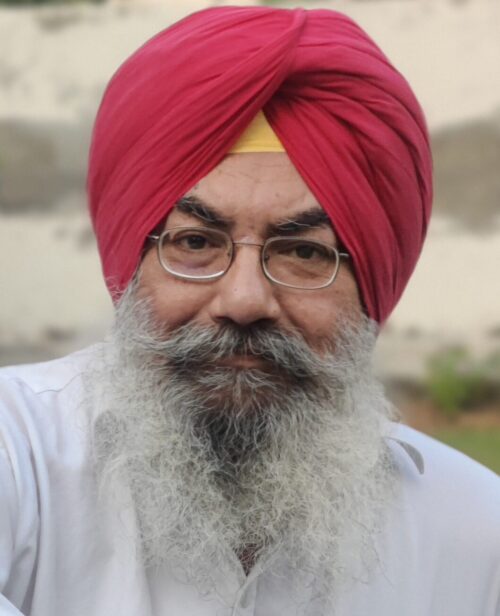
 Amritsar: Punjab BJP spokesperson Prof. Sarchand Singh Khiala has expressed surprise over the statements made by Sri Akal Takht Sahib Jathedar Giani Kuldeep Singh Gargaj and SGPC President Harjinder Singh Dhami opposing the Maharashtra Government’s decision to repeal the Nanded Sikh Gurdwara Sachkhand Sri Hazur Abchalnagar Sahib Act, 1956. He questioned why the SGPC is now openly defending an Act which it had itself declared inconsistent with Sikh principles and spirit nearly 58 years ago.
Prof. Khiala said that during the SGPC’s Annual General Session held on 27 October 1968, a formal resolution had stated that several provisions of the 1956 Act were inconsistent with Sikh religious principles and Maryada. The resolution specifically objected to the composition of the management board, demanded that nominated members should be Amritdhari Sikhs, and called for an explicit prohibition on alcohol consumption by board members. The SGPC President of the time was also authorised to initiate discussions with the Maharashtra Government to secure appropriate amendments.
He said these facts are recorded in the publication “50 Years History of the Shiromani Gurdwara Parbandhak Committee” published by the Sikh History Research Board of the SGPC and compiled by S. Shamsher Singh Ashok.
Prof. Khiala asked how an Act considered inconsistent with Sikh principles for nearly six decades has suddenly become acceptable today. He questioned whether the SGPC and the Jathedar no longer object to the inclusion of non-Amritdhari members or to the absence of explicit restrictions regarding alcohol consumption and smoking.
He clarified that the BJP Government in Maharashtra will not introduce the new Act, 2026 without the consent and due consultation of Sikh institutions and the Sikh community. A broad-based consultative process will be undertaken to build consensus and obtain the views of all stakeholders before moving forward.
Referring to a recent incident at Sri Harmandir Sahib, Prof. Khiala said that while political leaders supporting the Bhagwant Mann Government are welcomed at the Sri Akal Takht Secretariat and by the SGPC, ordinary devotees visiting under the Punjab Government’s Chief Minister Pilgrimage Scheme were allegedly stopped merely because they were wearing identification cards carrying the Chief Minister’s photograph. He described the forcible removal of those identity cards against the devotees’ wishes as humiliating and questioned why ordinary devotees were treated differently.
He further asked whether the interpretation and implementation of Sri Akal Takht Sahib’s directives are now being guided by political convenience. He pointed out that if the Akal Takht had earlier declared Chief Minister Bhagwant Mann as “Guru-Dokhi” and “Panth-Virodhi” and directed the Sikh community not to extend any support to him, why are different standards being adopted in practice?
Prof. Khiala also demanded that the SGPC clarify the identity of the individuals who allegedly confronted the devotees. Were they SGPC employees? If not, who authorised them to act inside the holy complex? If the incident occurred with the knowledge of the SGPC, should it be treated as having its tacit approval?
He concluded by stating that the directives of Sri Akal Takht Sahib are supreme and cannot be implemented selectively. If ordinary devotees are targeted because of their perceived political association, then a different approach towards political allies of the same government raises serious questions about institutional consistency. He said Sri Harmandir Sahib is not a platform for partisan politics but a universal spiritual centre where every devotee deserves equal dignity, respect and security.