
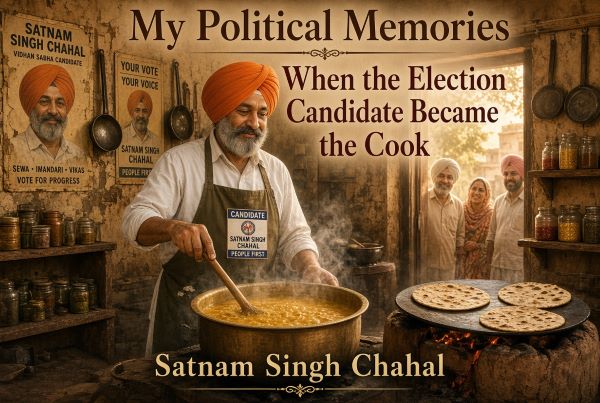
A midnight story about hunger, politics, patience and a very unusual political negotiation.Politics has taught me many lessons during my long public life. Some lessons came from election victories and defeats, some from political meetings, some from watching leaders deal with opponents, and some from simply observing human nature. But one of the most memorable lessons about patience came from a rather unusual classroom—a kitchen, sometime around midnight, during an Assembly election campaign in Punjab.The exact year is difficult for me to recall after more than five decades. It was probably 1972 or 1973. What I remember clearly is that Giani Zail Singh was the Chief Minister of Punjab and that the state was in the middle of an Assembly election. At that time, I was serving as General Secretary of the district unit of the Shiromani Akali Dal and was actively involved in election campaigning in the Sultanpur Lodhi constituency of Kapurthala district.
The constituency itself had an interesting political story. Mr Atma Singh was considered a strong claimant for the Sultanpur Lodhi seat, but the party ticket was ultimately given to Mr Balwant Singh, who later became Punjab’s Finance Minister on several occasions. Atma Singh was allotted the Zira Assembly constituency. As fate would have it, both candidates lost their respective elections. But the election result is not what has remained most vivid in my memory.I remember what happened after midnight. Election campaigns in those days were completely different from today’s political campaigns. There were no WhatsApp groups, Facebook posts, television studios, social-media managers or digital war rooms. There were jeeps, loudspeakers, posters, public meetings and political workers who could spend an entire day travelling from village to village without asking when the working day would end.
One particular night, after a long day of campaigning for Balwant Singh, we were still moving around when the clock approached midnight. The political campaign had ended for the day, but unfortunately our stomachs had not received the same instructions. We suddenly discovered that we were extremely hungry. We began looking for a dhaba or restaurant where we could get something to eat. We searched here and there, but at that late hour there was no suitable place open. Today, if somebody becomes hungry at midnight, a few taps on a mobile phone can bring food to the doorstep. In those days, there was no food-delivery application. There was only one available technology political friendship.Someone suggested, “Why don’t we go to Balwant Singh ji’s residence? He is our candidate. Surely there will be something to eat there.”
It sounded like a perfectly reasonable political strategy.So, sometime around midnight, our hungry delegation marched towards the temporary residence where Balwant Singh was staying during the election campaign.We knocked on the door.After some time, Balwant Singh woke up and welcomed us. We explained that we were hungry and wanted something to eat. He behaved like a gracious host and immediately called his servants and asked them to prepare food for us.Under normal circumstances, the matter would have ended there.But these were not entirely normal circumstances.We had been campaigning for hours. We were tired, hungry and in unusually high spirits. After such a long day, our sense of humour and enthusiasm had apparently become stronger than our common sense.We refused to eat the food prepared by the servants.Balwant Singh must have wondered what had happened to us. Here were hungry people who had just been offered food, and instead of thanking the host, we were now refusing to eat it.
Then came our final demand.We told him that we would eat only if Balwant Singh himself prepared the food for us.There was probably a moment of complete silence.I can imagine what must have been going through his mind. He had spent the entire day trying to persuade voters to support him, and now, in the middle of the night, his own campaign workers had presented him with an entirely different election manifesto.
Our manifesto had only one demand:
“Candidate khud khana banave—te hi asi khavange!”
The candidate looked at us.We looked at the candidate.There was no television camera, no press conference, no party high command and no election observer to intervene. There was only one possible solution.Balwant Singh went into the kitchen.The politician became the cook.The election candidate became the chef.And his supporters became the most demanding customers he had encountered during the entire election campaign.That scene still makes me laugh whenever I remember it.A man who was spending his days asking the people of Punjab for votes was now standing in a kitchen trying to satisfy a group of hungry political workers. Perhaps if somebody had told him earlier that day that his toughest negotiation of the campaign would take place beside a cooking stove at midnight, he would never have believed it.But the remarkable part of the story was not simply that he cooked.It was his patience.
We were tired, hungry, stubborn and clearly in no mood to compromise. We had refused perfectly good food simply because it had been prepared by somebody else. Yet Balwant Singh did not lose his temper. He did not scold us. He did not ask us to leave. He did not remind us that he was the candidate and we were merely workers.He simply cooked.And when the food was ready, we all sat together and enjoyed the meal.Looking back after more than five decades, I sometimes think that was one of the most democratic dinners I ever attended. There was no VIP table, no protocol, no political speech, no security arrangement and no discussion about vote percentages. There was simply a candidate cooking for his workers and his workers enjoying the food.Punjabi culture has always understood the importance of food and hospitality. There is an old Punjabi thought:
“ਪਹਿਲਾਂ ਰੋਟੀ, ਫੇਰ ਗੱਲ,
ਭੁੱਖੇ ਪੇਟ ਨਾ ਹੁੰਦੀ ਭੱਲ।”
First comes the food, then the conversation; a hungry stomach does not always make the best decisions.That night, we certainly followed the first part of that philosophy.There is another Punjabi thought that fits the occasion even better:
“ਜਿੱਥੇ ਪਿਆਰ ਹੋਵੇ, ਓਥੇ ਰੋਟੀ ਵੀ ਸਾਂਝੀ,
ਜਿੱਥੇ ਅਹੰਕਾਰ ਹੋਵੇ, ਓਥੇ ਥਾਲੀ ਵੀ ਵੱਖਰੀ।”
Where there is affection, even a simple meal becomes a shared feast; where there is ego, even people sitting together can remain divided.That night there was no ego.There was hunger, friendship, youthful political enthusiasm—and an extraordinary amount of patience on the part of Balwant Singh.Politics today is very different. Politicians have media advisers, public-relations teams, social-media managers and people whose job is to make sure that the politician does not find himself in an uncomfortable situation.Imagine a similar scene today.Five hungry supporters arrive at a politician’s residence at midnight and announce, “We don’t want your staff to cook. We want you to cook.”The politician might first call security.Then perhaps the party office.Then the media team.
Then a spokesperson might issue a statement explaining that the midnight kitchen incident was part of a “larger conspiracy.”
Balwant Singh had a much simpler solution.He went to the kitchen.Perhaps that is one reason why many leaders of an earlier generation left behind such strong personal memories. They could disagree politically, lose elections, face criticism and experience setbacks, but they often maintained a direct and personal relationship with their workers.There is an old Punjabi saying:
“ਨਿਮਰਤਾ ਨਾਲ ਵੱਡਾ ਕੋਈ ਗਹਿਣਾ ਨਹੀਂ,
ਸਬਰ ਨਾਲ ਵੱਡੀ ਕੋਈ ਤਾਕਤ ਨਹੀਂ।”
There is no greater ornament than humility and no greater strength than patience.That night, Balwant Singh demonstrated both.We, on the other hand, were certainly not behaving like model political workers. If a party disciplinary committee had been sitting in that house that night, I suspect our case would have required a very long hearing.
Perhaps the committee would have asked:
“Why did you refuse the food?”
We would have replied:
“Because the candidate had not cooked it.”
“Why did you wake the candidate?”
“Because we were hungry.”
“And why were you so stubborn?”
That question might still be under investigation.But the story also carries a deeper lesson.A leader’s real character is not always visible on a stage. Sometimes it appears when nobody is watching.A politician can give a thousand speeches about humility, service and dedication. But when a group of tired, hungry campaign workers wakes him at midnight and makes an unreasonable demand, that is when the real examination begins.Balwant Singh passed that examination.We probably did not.But we certainly passed the dinner examination with distinction.There is another Punjabi thought that comes to mind when I look back at that period:
“ਵੇਲਾ ਲੰਘ ਜਾਂਦਾ, ਯਾਦਾਂ ਨਹੀਂ ਲੰਘਦੀਆਂ;
ਸਿਆਸਤ ਬਦਲ ਜਾਂਦੀ, ਗੱਲਾਂ ਨਹੀਂ ਬਦਲਦੀਆਂ।”
Time passes, politics changes, leaders come and go but some memories remain exactly where they were born.That midnight kitchen is one of those memories for me.I have forgotten many election slogans from that era. I have forgotten many speeches. I have forgotten countless political arguments. But I have not forgotten Balwant Singh walking into the kitchen because his campaign workers refused to eat unless he prepared the food himself.Perhaps that is because food has a special place in Punjabi life.A political speech may last an hour.An election promise may last five years.But a good meal shared with friends can remain in the memory for a lifetime.And that night, the candidate gave us something more valuable than a political promise.He gave us his time, his patience and his hospitality.Balwant Singh did not win that election. Atma Singh also lost from Zira. But in my personal history, Balwant Singh won something that night that no election result could take away from him.He won our respect.
That is perhaps the real meaning of leadership.A leader is not tested only when thousands of people are applauding him. A leader is tested when a handful of hungry supporters wake him up at midnight and say:
“You cook—we will eat.”
And Balwant Singh did.
There is a simple Punjabi verse that perhaps captures the lesson best:
“ਕੁਰਸੀ ਆਉਂਦੀ ਜਾਂਦੀ ਰਹਿੰਦੀ,
ਬੰਦੇ ਦੀ ਯਾਦ ਰਹਿ ਜਾਂਦੀ ਏ।
ਜਿਹੜਾ ਦਿਲ ਜਿੱਤ ਲਵੇ ਸੇਵਾ ਨਾਲ,
ਉਹਦੀ ਗੱਲ ਸਦਾ ਕਹੀ ਜਾਂਦੀ ਏ।”
Positions come and go, but a person’s memory remains. The person who wins hearts through service is remembered long after the position is gone.When I think about political patience today, I do not remember a speech from the Assembly.I remember a kitchen.I remember midnight.I remember hungry campaign workers.And I remember a candidate who quietly accepted his fate, walked into the kitchen and prepared food for us.That was politics in another era.There were fewer cameras, fewer advisers and fewer political calculations. There was more direct contact between leaders and workers, and sometimes the distance between a politician and an ordinary party worker was no greater than the distance between the dining table and the kitchen.Perhaps that is why the memory has survived for more than five decades.
And here is the final lesson from that unforgettable midnight:
Elections may be won with votes, governments may be formed with numbers, and political careers may be built with speeches—but sometimes, before a candidate can win the hearts of his workers, he has to win them over with a plate of food.In Balwant Singh’s case, he did not merely ask for our votes that night.He cooked for them.And that, I can say from personal experience, was one political promise he actually delivered before the election was over.