
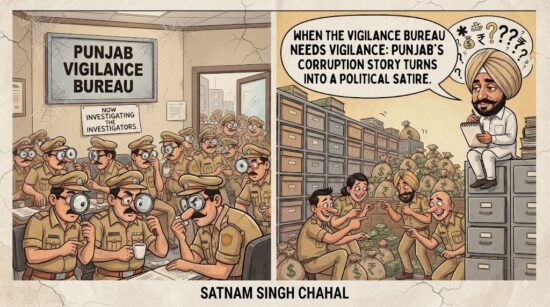
 A satirical 2022–2026 journey through arrests, allegations, political promises and the uncomfortable question: who watches the watchdog?For more than four years, Punjab has repeatedly heard one powerful political promise: “We will eliminate corruption. There will be zero tolerance.” It is a wonderful slogan. It sounds even better from a stage, behind a microphone, with cameras recording and supporters applauding. But after four years, one uncomfortable question refuses to disappear: Has corruption actually been eliminated, or have we simply become better at catching people after corruption has already taken place?A satirical journey through Punjab’s “zero-tolerance” campaign, vigilance raids, political arrests and the unanswered question: who is really cleaning the pond?
For years, Punjab has been hearing the same powerful political promise: “We will eliminate corruption. There will be zero tolerance.” The slogan sounds impressive. It looks even better on a stage, behind a microphone, with cameras rolling and supporters applauding. But after more than four years of the present government, an uncomfortable question remains: Has corruption actually been eliminated, or has Punjab simply become better at registering corruption cases?
According to figures released by the Punjab Vigilance Bureau in August 2026, between March 16, 2022 and July 31, 2026, the Bureau registered 1,091 cases and arrested 1,138 accused. It also said courts convicted 242 accused in 150 corruption cases. Of the arrests, 630 were in 523 trap cases, 492 in 536 criminal cases and 16 in 32 disproportionate-assets cases. Those numbers certainly demonstrate that the machinery is active. But the ordinary Punjabi asks a different question: How many of these cases involve the people who control the really big money, the big contracts, the big land deals and the big decisions?
> **“ਜਾਲ ਤਾਂ ਰੋਜ਼ ਵਿਛਦਾ ਏ,
> ਮੱਛੀ ਵੀ ਰੋਜ਼ ਫੜੀ ਜਾਂਦੀ ਏ,
> ਪੰਜਾਬ ਪੁੱਛਦਾ ਹੱਸ ਕੇ—
> ਵੱਡੀ ਮੱਛੀ ਕਦੋਂ ਫੜੀ ਜਾਂਦੀ ਏ?”**
That is where the story becomes both serious and strangely comic.
2022: The Zero-Tolerance Campaign Begins
When the Aam Aadmi Party government came to power in March 2022, fighting corruption was presented as one of its defining commitments. The government promised that the old political culture would change and that nobody—whether officer, politician or minister would be above the law.
Then came May 2022.
Health Minister Vijay Singla was removed from the cabinet and arrested after allegations that he had demanded a commission in connection with government contracts. The action became one of the most dramatic early demonstrations of the government’s anti-corruption policy. The government could legitimately point to it as evidence that even a minister from its own ranks could face action.
For a moment, Punjab thought perhaps the political system had finally discovered a new formula:
> **“ਆਪਣਾ ਹੋਵੇ ਜਾਂ ਪਰਾਇਆ,
> ਕਾਨੂੰਨ ਅੱਗੇ ਸਭ ਨੂੰ ਝੁਕਾਇਆ;
> ਜੇ ਇਹ ਨੀਤੀ ਰਹੀ ਕਾਇਮ,
> ਪੰਜਾਬ ਬਣੇਗਾ ਫਿਰ ਨਵਾਂ ਪੰਜਾਬ।”**
But politics rarely remains that simple.
In June 2022, former Congress minister Sadhu Singh Dharamsot was arrested by the Vigilance Bureau in a corruption case. Later, in August 2022, former minister Bharat Bhushan Ashu was arrested in the alleged foodgrain transportation and tender case. The message from the government was clear: the corruption investigation would not stop at the doors of the previous government. And suddenly Punjab had a new political spectacle: former ministers becoming Vigilance headlines.But there is an important legal principle that must never be forgotten. An allegation is not a conviction, and an arrest is not proof of guilt. A government can announce an arrest in a press conference, but only the courts can ultimately decide guilt.That distinction is especially important because corruption cases can take years to reach their conclusion. In some cases, accused politicians have obtained substantial relief from courts. That is why the real measure of an anti-corruption campaign cannot simply be the number of people arrested.
2023–24: The Files Grow, the Questions Grow With Them
As the Vigilance campaign continued, cases involving former ministers and officials remained in the headlines. By September 2024, reports said the Vigilance Bureau was awaiting sanction to prosecute five former Congress ministers in various cases, including Sadhu Singh Dharamsot, Bharat Bhushan Ashu, O.P. Soni, Sangat Singh Gilzian and Sunder Sham Arora. And this created another familiar Punjabi situation: the arrest happens quickly, but the legal process moves at the speed of a government file.
> **“ਕੇਸ ਬਣਿਆ, ਫਾਈਲ ਚੱਲੀ,
> ਫਾਈਲ ਚੱਲ ਕੇ ਥੱਕ ਵੀ ਗਈ;
> ਭ੍ਰਿਸ਼ਟਾਚਾਰ ਮਿਟਾਉਣ ਨਿਕਲੇ ਸੀ,
> ਕਾਗਜ਼ਾਂ ਦੀ ਢੇਰੀ ਵੱਧ ਵੀ ਗਈ!”**
This is precisely why Punjab needs more than headlines.
A successful anti-corruption campaign should answer four simple questions: Was the allegation proved? Was the accused convicted? Was the money recovered? And was the system that allowed the corruption changed?
Without those answers, arrests can become political theatre rather than institutional reform.
2025: The “Big Fish” Promise
Then came one of the most politically significant cases of the period.
In June 2025, Shiromani Akali Dal leader and former minister Bikram Singh Majithia was arrested by the Punjab Vigilance Bureau in a disproportionate-assets case. The Bureau alleged suspicious financial transactions exceeding ₹540 crore and other financial irregularities. Majithia and the SAD rejected the allegations and described the case as political vendetta.
Whatever the eventual legal outcome, the political significance was enormous. A major opposition leader had become one of the most prominent targets of the government’s anti-corruption campaign.
The phrase “big fish” entered the political conversation with renewed force, and Chief Minister Bhagwant Mann said more big fish would be caught.
That was the moment Punjab metaphorically sat on the riverbank with a cup of tea and waited.
> **“ਵੱਡੀ ਮੱਛੀ ਫੜਨ ਦਾ ਵਾਅਦਾ ਹੋਇਆ,
> ਪੰਜਾਬ ਦਾ ਦਿਲ ਵੀ ਖੁਸ਼ ਹੋਇਆ;
> ਲੋਕਾਂ ਨੇ ਜਾਲ ਵੱਲ ਤੱਕਿਆ—
> ਹੁਣ ਦੱਸੋ, ਅਗਲੀ ਮੱਛੀ ਕਿਹੜੀ ਆਈ?”**
The important point, however, is that the size of the fish should not be determined by political importance. A true anti-corruption system should operate independently of whether the accused is a ruling-party politician, opposition leader, senior bureaucrat or ordinary employee.
The Strange Twist: When the Watchdog Comes Under the SpotlightAnd then came a development in 2026 that created perhaps the most uncomfortable irony in the entire story.In May 2026, the CBI arrested three people in an alleged ₹20 lakh bribery case connected to the Punjab Vigilance Bureau. According to the CBI-related reporting, the accused allegedly sought money to help secure closure of a pending Vigilance complaint against a Punjab tax officer. A reader attached to the Vigilance chief was also named as an accused and was reported to be absconding.The CBI’s action reportedly involved a raid at a Punjab Vigilance office in Mohali and raised additional questions about why private individuals allegedly involved in the racket had been provided Punjab Police security.Now comes the satire:
If the department created to catch corruption itself becomes the subject of a bribery investigation, who watches the watchdog?
> **“ਚੋਰ ਫੜਨ ਵਾਲਾ ਜੇ ਆਪ ਹੀ ਫਸ ਜਾਵੇ,
> ਫਿਰ ਲੋਕਾਂ ਨੂੰ ਕੌਣ ਇਨਸਾਫ਼ ਦਿਵਾਵੇ?
> ਜੇ ਜਾਲ ਵਿੱਚ ਹੀ ਛੇਕ ਪੈ ਜਾਣ,
> ਫਿਰ ਮੱਛੀਆਂ ਕਿਵੇਂ ਕਾਬੂ ਆਵਣ?”**
Of course, the CBI matter is also an alleged case and must go through due process. But institutionally, the episode raises a legitimate question: Can an anti-corruption campaign command public confidence if the public begins to suspect the integrity of the machinery conducting it?The answer should be obvious: the anti-corruption agency must be held to an even higher standard than the people it investigates.
The Small Fish Are Still Being Caught
To be fair, it would also be wrong to suggest that nothing has happened.The Vigilance Bureau says that during 2025 it caught 144 government officials and 43 private individuals in 127 trap cases. The cases involved personnel from departments including police, revenue, power, panchayats and rural development, transport, local bodies, forest and health. That means the anti-corruption machinery is certainly active.
But catching a clerk demanding ₹10,000 is only one part of the battle.Punjab’s larger problem is corruption involving large contracts, land, mining, procurement, recruitment, transfers, government projects, public resources and political influence.A system can catch hundreds of small bribe-takers and still fail to address the deeper networks through which public money can allegedly be manipulated.
> **“ਛੋਟੀ ਮੱਛੀ ਜਾਲ ’ਚ ਆ ਗਈ,
> ਵੱਡੀ ਮੱਛੀ ਪਾਣੀ ’ਚ ਰਹਿ ਗਈ;
> ਪੰਜਾਬ ਪੁੱਛੇ ਹੱਸ ਕੇ—
> ਫਿਰ ‘ਜ਼ੀਰੋ ਟਾਲਰੈਂਸ’ ਕਿੱਥੇ ਰਹਿ ਗਈ?”**
2026: The Numbers Become the Government’s Defence
By August 2026, the government had a substantial statistical record to present. The Vigilance Bureau’s 1,091 cases and 1,138 arrests since March 2022 provide a powerful defence of its claim that the anti-corruption campaign is active. The 242 convictions reported by the Bureau also matter. But statistics can tell only half the story.The public needs to know what happened after the arrest.How many cases resulted in convictions? How many collapsed? How many accused were acquitted? How many investigations remain pending? How much money was recovered? How many assets were confiscated? How many senior political figures were ultimately convicted?
And most importantly:
Has the system itself become cleaner?
Because if one corrupt official is arrested today and another person occupies the same position tomorrow and continues the same practice, Punjab has not eliminated corruption.
It has merely changed the name on the file.
The Political Test
The ultimate test of the Punjab government’s anti-corruption promise is not whether it can arrest its political opponents.The test is whether it can investigate its own people with exactly the same enthusiasm.If an AAP leader is accused, investigate.If a Congress leader is accused, investigate.If an Akali leader is accused, investigate.If a BJP leader is accused, investigate.If a senior bureaucrat is accused, investigate.If a contractor is accused, investigate.And if somebody inside the Vigilance machinery is accused, investigate that person even more aggressively.
> **“ਭ੍ਰਿਸ਼ਟਾਚਾਰ ਦੀ ਕੋਈ ਪਾਰਟੀ ਨਹੀਂ,
> ਕੋਈ ਝੰਡਾ ਤੇ ਨਿਸ਼ਾਨ ਨਹੀਂ;
> ਜਿੱਥੇ ਵੀ ਮਿਲੇ, ਕਾਨੂੰਨ ਚੱਲੇ—
> ਇਸ ਤੋਂ ਵੱਡੀ ਸ਼ਾਨ ਨਹੀਂ।”**
That is what zero tolerance should mean.Not zero tolerance for the opposition.Not zero tolerance for inconvenient politicians.Not zero tolerance only when cameras are present.Zero tolerance for corruption—whoever commits it.
The Real “Big Fish” Question
Punjab therefore needs to move beyond the language of “big fish”.
A truly strong government should not have to announce every few months that it is going to catch a big fish. It should simply build a system in which nobody is able to hide behind political connections, bureaucracy or money.The biggest fish should not be the person who makes the best headline.The biggest fish should be the person against whom evidence is strongest, regardless of party or position.And the punishment should not depend upon political power.
> **“ਜਿਹੜਾ ਪਾਣੀ ਗੰਦਾ ਕਰਦਾ,
> ਉਸਦਾ ਰੰਗ ਨਾ ਵੇਖੋ ਜੀ;
> ਮੱਛੀ ਛੋਟੀ ਵੱਡੀ ਛੱਡੋ,
> ਪਹਿਲਾਂ ਪਾਣੀ ਸਾਫ਼ ਕਰੋ ਜੀ।”**
Punjab Does Not Need Another Slogan
After four years, Punjab does not need another dramatic slogan.It needs transparent investigations, independent institutions, speedy trials, asset recovery, public disclosure of case outcomes and equal treatment under the law.The government can legitimately say: “Look how many cases we registered.”The opposition can legitimately ask: “How many were ultimately proved?”
The public can ask an even more important question:
“How much of Punjab’s money was actually saved?”
That is the scoreboard that matters.
Because Punjab’s people are not interested in a daily television spectacle of raids, arrests and press conferences. They want a government office where a citizen does not need to pay a bribe to get legitimate work done.They want recruitment without favouritism.They want contracts without manipulation.They want land records without middlemen.They want police services without political pressure.They want public money spent on public needs.And they want the same law for the powerful and the powerless.
> **“ਨਾਅਰੇ ਬਦਲੇ, ਸਰਕਾਰਾਂ ਬਦਲੀਆਂ,
> ਫਾਈਲਾਂ ਦੇ ਰੰਗ ਬਦਲ ਗਏ;
> ਪੰਜਾਬ ਪੁੱਛਦਾ ਇੱਕੋ ਸਵਾਲ—
> ‘ਭ੍ਰਿਸ਼ਟਾਚਾਰ ਮੁੱਕਿਆ ਕਿ ਨਹੀਂ?’
> ਜਵਾਬ ਦੇਣ ਵਾਲੇ ਫਿਰ ਚੁੱਪ ਰਹਿ ਗਏ।”**
The government’s own figures show that an enormous anti-corruption effort has been undertaken. (Punjab News Express) But the May 2026 CBI case involving alleged bribery connected to the Vigilance system is also a reminder that the watchdog itself must remain beyond suspicion. And perhaps that is the most important lesson of all.Punjab does not merely need more nets. Punjab needs a cleaner pond.Because catching a few fish every day may make for good headlines.But if the water remains polluted, the fish will keep coming back.
> **“ਮੱਛੀਆਂ ਫੜ ਕੇ ਕੀ ਹੋਣਾ,
> ਜੇ ਪਾਣੀ ਹੀ ਗੰਦਾ ਰਹੇ;
> ਪੰਜਾਬ ਨੂੰ ਜਾਲ ਨਹੀਂ ਚਾਹੀਦਾ,
> ਪੰਜਾਬ ਨੂੰ ਸਾਫ਼ ਦਰਿਆ ਚਾਹੀਦਾ।”**
That is the real meaning of eliminating corruption.
Disclaimer: This article and accompanying images are for informational and illustrative purposes only. Some visuals may be AI-generated or digitally enhanced and may not depict actual events or persons.Views expressed are based on publicly available information and analysis