
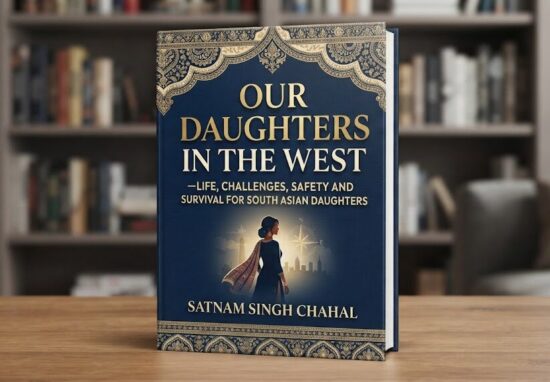
 Every year, thousands of young women from Punjab, Haryana, Gujarat and other parts of South Asia board international flights to Canada, the United Kingdom, the United States, Australia, Germany and other Western countries. They leave with degrees, ambitions and the hopes of their families on their shoulders. Some travel abroad for higher education, while others leave as brides to join husbands whom they may have known only briefly before marriage. In both situations, the life waiting for them can be far more complicated than an admission letter, visa or marriage certificate suggests.
For parents, saying goodbye at an airport is a moment of immense pride mixed with anxiety. They have raised their daughters in close-knit families and communities surrounded by relatives, familiar customs and established support networks. Suddenly, they must trust their daughters to live thousands of miles away in countries whose laws, systems and social environments may be unfamiliar to them. This article is intended for both the daughter who is leaving and the family remaining at home, because preparation, knowledge and communication can make an enormous difference.
Western countries offer genuine opportunities. They can provide access to high-quality education, professional careers, personal independence and a potentially better financial future. At the same time, living abroad can expose young women to loneliness, financial pressure, cultural differences, exploitation, domestic abuse and unfamiliar legal systems. The answer is not to frighten daughters away from going abroad, but to ensure that they understand both the opportunities and the risks before they leave.
Education Abroad: Opportunity and Reality
Universities and colleges in Canada, the United Kingdom, the United States, Australia and other Western countries offer excellent educational opportunities. A recognised qualification can open professional doors both abroad and back home. More importantly, living independently can teach young women resilience and self-confidence. Managing accommodation, transportation, finances, cooking, studies and employment without immediate family support can develop skills that remain valuable throughout life.
However, Western education can be extraordinarily expensive for international students. Tuition fees, accommodation, food, transportation, insurance, books and other living costs can place a substantial financial burden on families. Many parents take loans, sell property or use their lifetime savings to finance their daughter’s education. The daughter may consequently feel enormous pressure to succeed and may take part-time employment to help cover expenses.
Families should therefore make an honest assessment before committing their savings. They should examine the reputation of the institution, the actual cost of the programme, employment opportunities after graduation and the immigration rules applicable to international students. A foreign degree by itself does not guarantee employment or permanent residency. Immigration policies also change frequently, and families should never make a major financial decision based solely on promises made by an agent or consultant.
Beware of Low-Quality Colleges and Education Agents
One of the most serious concerns in international education is the growth of institutions that aggressively recruit overseas students while providing limited academic or employment value. Some students have paid substantial fees only to discover that their chosen institution or programme does not provide the opportunities they were promised.
Education agents may receive commissions from colleges and therefore may have a financial incentive to recommend particular institutions. Families should never rely exclusively on an agent’s advice. Before paying fees, they should independently check whether the institution is recognised by the relevant government or education authority, whether the programme is accredited and whether graduates have realistic employment prospects.
If an agent insists that a particular college is the only suitable option, families should ask why. They should compare several institutions and verify information through official government and university sources. A decision involving tens of thousands of dollars should never be made simply because an agent says, “This is the easiest route.”
Loneliness Can Be as Serious as Financial Pressure
One of the least discussed challenges facing South Asian students abroad is loneliness. A young woman who has grown up surrounded by parents, siblings, grandparents, cousins and friends may suddenly find herself living alone in a small apartment, studying in an unfamiliar environment and trying to build new relationships.
Academic pressure can become even harder when combined with homesickness, financial stress, cultural isolation and the expectation that she must constantly demonstrate that the family’s sacrifice was worthwhile. Some students hide their difficulties because they do not want to worry their parents or because mental health problems remain heavily stigmatised in many South Asian families.
Parents should make one message absolutely clear: asking for help is not failure. Most universities provide counselling, student welfare services and other forms of support. A daughter should never feel that she has to suffer silently simply because her family spent money to send her abroad.
Overseas Marriage: The Foreign Address Is Not a Character Certificate
For many South Asian families, marrying a daughter to an NRI or a citizen of a Western country is viewed as a major achievement. A foreign address can sometimes create an impression of financial security, social status and a better future. Unfortunately, this can lead families to accept matrimonial proposals without sufficiently investigating the man involved.
A passport, permanent-residence card, citizenship certificate or foreign address says nothing about a person’s character. Some women have travelled abroad after marriage only to discover that their husband’s claims about employment, finances, immigration status, lifestyle or previous relationships were exaggerated or false. Others have found themselves isolated from their families and dependent entirely on their husbands or in-laws.
Before finalising an overseas marriage, families should verify the man’s immigration status, employment, financial circumstances and marital history. They should speak to people who know him personally in the country where he lives, rather than relying only on his relatives. Where possible, families should visit the country, meet the prospective groom in his own environment and independently verify the information provided.
No family should feel embarrassed about conducting such checks. Due diligence before marriage is not an insult; it is responsible parenting.
Immigration Status Should Never Become a Weapon
A woman who enters a Western country as a dependent spouse may sometimes fear that leaving an abusive marriage will jeopardise her immigration status. This fear can be exploited by an abusive husband who tells his wife that she will be deported if she contacts the police or leaves the relationship.
Families and daughters should understand that immigration and domestic-abuse laws differ from country to country, but many Western jurisdictions provide protections for victims of domestic violence, including some immigration pathways for people whose status is connected to an abusive partner. The exact rules must be checked with official immigration authorities or a qualified lawyer because eligibility depends on individual circumstances.
The important message is simple: a daughter should never believe that her visa makes her the property of her husband.
Domestic Violence: Recognising the Warning Signs
Domestic violence occurs across all communities and social classes. South Asian immigrant women can face additional vulnerabilities because of language barriers, financial dependence, isolation from relatives, immigration concerns and fear of community judgment.
Abuse is not limited to physical violence. It can include constant humiliation, threats, intimidation, emotional manipulation, financial control, social isolation, sexual coercion and controlling behaviour. A husband who constantly monitors his wife’s phone, controls her movements, prevents her from speaking privately with her parents, refuses to allow her access to money or humiliates her in front of others may already be displaying serious warning signs.
Controlling behaviour should not be dismissed as jealousy or marital discipline. It can become more serious over time. A daughter should feel safe telling her parents about such behaviour, and parents should listen carefully rather than immediately advising her to “adjust” or “compromise.”
When a Daughter Calls Home in Distress
The reaction of the family can determine what happens next. When a daughter calls home crying or frightened, parents must resist the temptation to immediately protect the family’s reputation. Telling her to tolerate abuse because of the money spent on the wedding, worrying about what relatives will say, or advising her to return to her husband without understanding the circumstances can place her in greater danger.
A daughter needs to know that her safety comes before family reputation, social status and financial considerations. She should know before she leaves India that if she ever finds herself in danger, she can return home without shame and without being blamed.
That assurance should be given before the crisis occurs. A woman who knows that her parents will stand behind her is more likely to seek help when she needs it.
Know the Law Before You Need the Law
Women travelling abroad should learn the basic legal protections available in their destination country. Canada, the United Kingdom, the United States and Australia all have laws and services designed to protect people experiencing domestic abuse, although the specific procedures and immigration protections differ.
In the United States, for example, certain immigrant spouses of U.S. citizens or permanent residents may be able to seek immigration protection independently under the Violence Against Women Act. In the United Kingdom, immigration rules contain protections for certain victims of domestic abuse whose immigration status depends on a partner. Canada and Australia also have provisions addressing family violence and immigration in particular circumstances.
These protections are important, but they should not be treated as automatic guarantees. Immigration law is complex and individual circumstances matter. A woman facing abuse should seek advice from a qualified immigration lawyer, legal-aid service or specialist domestic-abuse organisation.
Cultural Shock: Living Between Two Worlds
Moving from Punjab, India or another South Asian society to a Western country can produce a profound sense of cultural disorientation. A young woman may suddenly encounter different attitudes toward clothing, relationships, gender roles, religion, food, social behaviour and personal independence.
She may sometimes feel caught between two worlds. Her family may expect her to preserve everything she learned at home, while her new environment may encourage her to make very different choices. This tension does not necessarily mean that she has rejected her family or culture. It is often simply part of adapting to a new society.
Parents should allow their daughters to grow without treating every change as a betrayal. At the same time, daughters should remain connected to their families and understand the values that shaped them. The healthiest relationship between parents and daughters abroad is based on trust and conversation rather than suspicion and control.
Mental Health and the Importance of Community
Loneliness, anxiety, depression and social isolation can affect immigrant women and students, particularly during the early stages of settlement. Distance from family, financial pressure, discrimination, cultural adjustment and the pressure to appear successful can all contribute to emotional distress.
Building a community is therefore extremely important. Major Western cities often have South Asian cultural organisations, Gurdwaras, temples, mosques, community centres and student organisations that can provide friendship, cultural familiarity and practical assistance.
For Sikh and Punjabi families, community institutions can be particularly valuable sources of connection. But daughters should not feel that they are required to remain within only one social circle. Building friendships with people from different backgrounds can also help them understand and navigate their new environment.
Parents at home can make an enormous difference simply by maintaining regular, warm communication. Instead of repeatedly asking, “How are your studies?” or “How much are you earning?”, parents should sometimes ask, “Are you happy?” “Are you lonely?” and “Is everything okay?” Listening without immediately judging or lecturing can be one of the greatest forms of support.
Financial Independence Is Essential
Every daughter going abroad should have some degree of financial independence. Whether she is a student or a married woman, she should understand how banking works in her new country and have access to money in her own name.
She should ideally maintain a personal bank account and an emergency fund that only she can access. She should know how to access emergency assistance and understand the financial arrangements of her household. A married woman should not be completely dependent on her husband for every basic expense.
Financial control is itself a form of domestic abuse. A woman who has no money, no bank account and no knowledge of her family’s finances may find it extremely difficult to leave a dangerous situation. Financial independence is therefore not about mistrust; it is about basic security and personal dignity.
Practical Safety Before Leaving India
Before departure, every daughter should prepare copies of important documents, including her passport, visa, educational records and, where applicable, marriage documents. Secure digital copies should be stored somewhere she can access independently, while physical copies should also be kept safely.
She should have the contact details of her country’s embassy or consulate, local emergency services and trusted people in the destination city. She should also know where her university’s student welfare office, workplace human-resources department or local support services are located.
Once abroad, maintaining regular communication with family can provide an important safety net. Families can agree on a regular check-in routine without turning it into surveillance. Technology can also be used sensibly, including location-sharing with trusted people where the daughter is comfortable doing so.
Most importantly, she should understand that asking the police, emergency services, medical professionals or support organisations for help is not something to be ashamed of.
A Message to Parents
To every mother and father sending a daughter abroad: your greatest gift to her is not money, property or a foreign visa. It is the certainty that she can call you when life becomes difficult.
Tell her before she leaves that she has the right to live safely and with dignity. Teach her about her legal rights. Make sure she understands basic financial management. Discuss domestic violence openly rather than treating it as an embarrassing subject. Give her emergency contacts and encourage her to maintain relationships with trustworthy people.
Most importantly, tell her that no marriage, no family reputation and no amount of money spent on a wedding is more valuable than her life.
Stay involved after she leaves. Do not call only to ask about grades, employment, immigration or money. Ask whether she is happy. Ask whether she feels safe. Listen when she speaks. If she tells you something frightening, take her seriously.
A daughter who lives thousands of miles away is still your daughter. Distance should change geography, not the relationship between parents and children.
A Message to Our Daughters
To every daughter preparing to leave home: going abroad is a major step, and you should be proud of your courage. You are entering a new society where you will have opportunities that can transform your life, but you will also face challenges that may test your confidence.
Learn your rights before you need them. Understand your visa conditions, know how the local legal system works and learn where you can obtain help. Keep control of your important documents and maintain access to your own finances.
Do not confuse suffering with strength. Asking for help does not make you weak. Leaving an abusive relationship does not make you a failure. Seeking counselling does not mean that you are incapable. Protecting yourself is not selfish.
Stay connected to your family and to yourself. You do not have to abandon your language, culture, faith or values simply because you are living in a Western country. At the same time, you are entitled to learn, grow and develop your own identity.
And remember one final thing: you are never alone simply because you are far from home. Other women have travelled the same road before you. Find trustworthy people, build healthy friendships, seek help when necessary and never allow shame or social pressure to silence you.
The real purpose of sending our daughters abroad should never be merely to obtain a foreign degree, a foreign passport or a foreign marriage. It should be to give them the opportunity to build a safe, dignified, independent and successful life. For that to happen, families must give their daughters not only money and dreams, but also knowledge, confidence, legal awareness and the unconditional assurance that, whatever happens, home will always be a place where they are safe, loved and welcome.
Disclaimer: This article and accompanying images are for informational and illustrative purposes only. Some visuals may be AI-generated or digitally enhanced and may not depict actual events or persons.Views expressed are based on publicly available information and analysis