
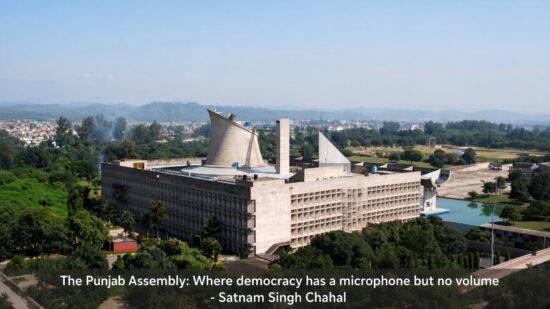
 The first day of the six-day Punjab Vidhan Sabha session ended after approximately 10 minutes on Thursday, with Speaker Kultar Singh Sandhwan announcing that the House would reconvene on Friday. The brief sitting has raised questions about the legislative business planned for the session, even as Punjab faces mounting public concerns over drug trafficking, gangsterism, law and order, corruption allegations and farmers’ issues.
The House began by paying tributes to eight people killed in a road accident in Sangrur, former minister Chuni Lal Bhagat, former MP Varinder Singh Bajwa, former MLA Ranjit Singh, eminent doctor Rattan Lal Mittal and the mother of MLA Manjit Singh Bilaspur. Congress members requested that anti-drug activist Bikramjit Singh of Batala and Gulzar Singh, who died by suicide in Dirba, also be included in the obituary references. Their request was not accepted, according to the published report.
The coming proceedings are expected to witness a confrontation between the ruling Aam Aadmi Party government and the Opposition over Punjab’s drug problem and the killing of anti-drug activist Parvinder Singh Jhota. The Congress has accused the government of failing to control drug trafficking and gangsterism and is expected to demand accountability from Chief Minister Bhagwant Mann. The government’s response and the evidence supporting the competing claims will be important in determining the substance of the debate.
The political confrontation extended beyond the Assembly chamber. Congress leaders, including state party president Pargat Singh and Leader of the Opposition Partap Singh Bajwa, protested outside the Vidhan Sabha by burning an effigy of the Chief Minister. They accused the AAP government of failing to maintain law and order. Meanwhile, former Punjab BJP president Sunil Jakhar brought two women from Abohar to the Assembly complex. The women reportedly sought justice after the deaths of family members allegedly linked to drug use. Chandigarh Police subsequently took them away, according to the report.
The AAP government is expected to blame previous Akali-BJP and Congress administrations for allowing the drug problem to grow. It may also question the Centre’s efforts to prevent narcotics from entering through Gujarat’s ports and across the international border. The government is likely to cite its ‘Yudh Nashiyan Virudh’ campaign as evidence of its efforts to tackle the menace.
However, Punjab’s citizens need more than competing political accusations. The government should present verifiable information about drug seizures, arrests, prosecutions, action against alleged political or police protection networks, rehabilitation services and the availability of treatment for people struggling with addiction. Previous governments’ records may be examined, but the present government must also be judged on its own performance.
The killing of Parvinder Singh Jhota is likely to remain a particularly sensitive issue. The Opposition has questioned whether those fighting against drugs are adequately protected. The authorities must ensure a fair investigation, establish the facts and take action against anyone found responsible in accordance with the law. Allegations should not be treated as proven findings before the investigation and legal process establish the facts.
The session is also expected to take up a proposed resolution seeking the resignation of Chief Election Commissioner Gyanesh Kumar. Another relief measure for women may be announced. These proposals will require scrutiny of their legal basis, practical implications and financial consequences, rather than being assessed solely through their political appeal.
Farmers’ concerns are also likely to feature prominently. The government is expected to bring resolutions relating to Punjab’s claims over river waters and the demand for repeal of the Dam Safety Act. These matters have long-term implications for agriculture, water management and the state’s interests. They deserve detailed discussion based on constitutional provisions, legal obligations and the practical consequences for Punjab’s farming community.
The brief opening sitting has also revived the wider question of public expenditure and legislative accountability. An estimate of ₹80–85 lakh for a day of Assembly proceedings has been cited in public discussion, but the figure requires confirmation through official expenditure records. A sitting lasting only 10 minutes does not, by itself, establish that the entire day’s expenditure was wasted. Nevertheless, the government and Assembly authorities should explain the planned business, the use of available sitting time and the outcomes expected from the session.
The Opposition, too, has a responsibility to use legislative procedures effectively. Questions, calling-attention notices and substantive debates can compel ministers to respond to public grievances. Disruptions and slogans may attract attention, but they cannot replace detailed scrutiny, evidence-based arguments and practical recommendations.
Punjab’s Assembly should be a forum for addressing unemployment, public debt, farmers’ difficulties, drug trafficking, corruption and public safety. The government must answer difficult questions, while Opposition members must offer credible scrutiny and constructive alternatives.
The real measure of this Assembly session will not be the number of days it occupies on the calendar, but the answers it produces, the accountability it establishes and the improvements it delivers for the people of Punjab. Taxpayers deserve meaningful legislative work, transparency in public spending and concrete action on the issues affecting their lives.
Editorial note: This article is based on the supplied news report. Political allegations are attributed to the respective parties and should not be interpreted as established facts. The estimated daily Assembly expenditure requires official verification.