
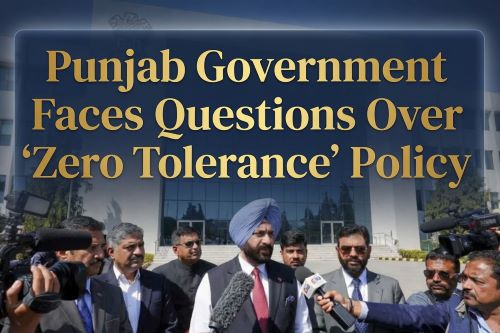
 Chandigarh: The Punjab Government is facing renewed criticism over its much-publicised “zero tolerance against corruption” policy after senior IPS officer Surinder Pal Singh Parmar, the former Chief Director of the Punjab Vigilance Bureau, was officially cleared of departmental charges.
According to an order issued by the Punjab Home Department, the departmental proceedings initiated against the 1997-batch IPS officer have been withdrawn, all allegations against him have been dropped, and the period of his suspension will be treated as official duty. Parmar, who currently serves as ADGP (Law and Order), has effectively been restored without any penalty.
The development has sparked political debate, with critics questioning whether the state government’s anti-corruption campaign has produced any major convictions despite numerous high-profile announcements and arrests since coming to power.
Opposition leaders and commentators argue that while the government has frequently publicized the registration of corruption cases and the suspension of officials, very few have ultimately resulted in proven misconduct or meaningful punishment. They contend that registering an FIR or initiating an inquiry is only the first step, and that successful prosecution and conviction are the real measures of an anti-corruption drive.
Critics have also pointed to previous high-profile cases, including those involving former Punjab minister Dr. Vijay Singla, claiming that several individuals who initially faced serious allegations have either secured bail, obtained legal relief, or seen proceedings weakened over time. They argue that this creates a perception that the government’s “zero tolerance” slogan has not consistently translated into lasting accountability.
The clean chit granted to Parmar has become the latest example cited by opposition voices, who say the government’s actions reveal a gap between public announcements and final outcomes. They question whether suspensions and investigations are being used more as administrative or political measures than as steps toward securing convictions.
Government officials, however, maintain that departmental proceedings are conducted according to established legal procedures and available evidence. They emphasize that disciplinary action cannot continue if allegations are not substantiated through the prescribed process, and that decisions must comply with service rules and principles of natural justice.
The issue is likely to fuel fresh political debate over the effectiveness of Punjab’s anti-corruption campaign, with opposition parties expected to demand greater transparency regarding the final status of cases initiated during the present government’s tenure. As the controversy unfolds, the Parmar decision has once again brought the government’s “zero tolerance” policy under public scrutiny, raising questions about whether headline-making investigations are ultimately leading to accountability or ending with clean chits.
Disclaimer: This article and accompanying images are for informational and illustrative purposes only. Some visuals may be AI-generated or digitally enhanced and may not depict actual events or persons.Views expressed are based on publicly available information and analysis.