
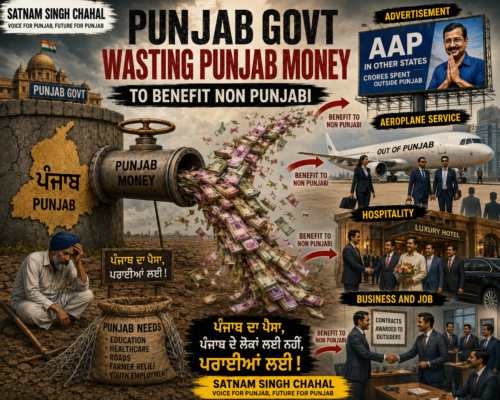
 Punjab has historically been one of India’s most prosperous states, known for its agricultural strength, industrial base, and enterprising people. Punjabis have contributed significantly to the economy not only within the state but across India and around the world. Given this legacy, many citizens believe that the primary responsibility of any government in Punjab is to protect and promote the economic interests of the state and its residents. In recent years, however, questions have been raised by critics regarding whether certain policies of the Aam Aadmi Party (AAP) government are adequately prioritizing Punjab’s interests.
One of the major concerns expressed by critics relates to appointments to senior government positions and other key posts. They argue that several individuals appointed to important positions do not belong to Punjab. According to these critics, Punjab possesses a vast pool of highly qualified professionals, administrators, academics, and experts who are fully capable of serving the state. They contend that appointing local talent not only creates opportunities for Punjabis but also ensures that decision-makers have a better understanding of Punjab’s unique social, cultural, and economic realities. The government, however, may argue that appointments are made on the basis of merit and expertise rather than regional identity.
The issue of employment extends beyond senior appointments. Punjab has long struggled with unemployment and the migration of its youth abroad in search of better opportunities. In such circumstances, many believe that government jobs should, wherever legally permissible, prioritize local candidates. Advocates of this approach argue that public resources generated through taxes paid by Punjab’s residents should contribute directly to the welfare and employment of the state’s own people. At the same time, any preference for local residents must remain consistent with constitutional provisions ensuring equality of opportunity.
Another issue that has attracted attention is the hiring of buses from outside Punjab for religious pilgrimage schemes such as Tirath Yatra programs. Critics argue that Punjab’s transport operators and businesses should receive preference in government contracts whenever possible. They believe that awarding contracts to local companies would strengthen the state’s economy, create employment, and support thousands of workers connected with the transport sector. Government authorities may respond that contracts are awarded through tendering processes designed to ensure efficiency and cost-effectiveness.
Questions have also been raised regarding air travel arrangements and aviation-related business linked to government activities. Critics contend that economic opportunities arising from official travel and tourism initiatives should benefit businesses based in Punjab whenever feasible. Given Punjab’s large global diaspora and significant travel demand, many believe there is considerable scope for developing local enterprises in tourism and aviation-related sectors.
Government advertising expenditure has emerged as another subject of debate. Opposition parties and critics have alleged that crores of rupees are being spent on advertisements outside Punjab, including in states where the AAP seeks political expansion. They argue that public funds collected from Punjab taxpayers should primarily be used for the benefit of Punjab’s residents and for addressing the state’s pressing challenges, including agriculture, healthcare, education, and infrastructure. Supporters of the government may counter that advertisements are intended to publicize government achievements and policies beyond state boundaries.
Similarly, concerns have been expressed regarding contracts related to party events and government functions. Critics allege that business opportunities connected with such events are sometimes awarded to firms or service providers from outside Punjab rather than to local enterprises. They argue that Punjab’s entrepreneurs, event managers, suppliers, and small businesses should be given a fair opportunity to participate in government-related activities. Economists often note that government procurement policies can play a major role in stimulating local economic growth.
Another point of contention involves hospitality and security expenditures associated with visits by senior AAP leaders from Delhi, including party convenor Arvind Kejriwal. Critics question whether Punjab’s financial resources should bear such expenses at a time when the state faces significant economic challenges, including debt, unemployment, and agrarian distress. Supporters of the government, however, may argue that security arrangements for political leaders are governed by established protocols and administrative requirements.
At the heart of these debates lies a larger question: should state governments adopt a “Punjab First” approach when making appointments, awarding contracts, and spending public money? Those advocating this approach believe that government expenditure should circulate within Punjab’s economy, benefiting local businesses and workers while creating jobs and promoting economic growth. They argue that strengthening local industries and talent is essential for Punjab’s long-term prosperity.
Ultimately, in a democratic system, governments are judged not only by their intentions but also by public perception and outcomes. Whether one supports or opposes the current government, the broader discussion underscores an important principle: the resources of a state should be managed in a manner that maximizes benefits for its people while remaining consistent with constitutional values, transparency, and good governance. The ongoing debate reflects the aspirations of many Punjabis who seek greater economic opportunities and a stronger focus on the state’s interests.
Disclaimer: This article and accompanying images are for informational and illustrative purposes only. Some visuals may be AI-generated or digitally enhanced and may not depict actual events or persons. Views expressed are based on publicly available information and analysis.