
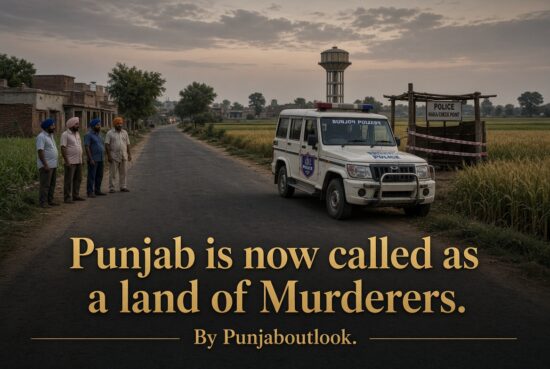
North American Punjabi Association (NAPA) Executive Director Satnam Singh Chahal expressed serious concern over the deteriorating law-and-order situation in Punjab, saying that repeated reports of shootings, killings, extortion, gangster activity, drug trafficking, illegal weapons and attacks on police personnel are raising serious concerns about public safety.
Chahal said Punjab cannot afford to become a place where people are afraid to speak against criminals, families receive extortion threats, business owners live under pressure, or ordinary citizens fear becoming victims of violence. “The right to life and personal security is fundamental. Protecting that right must be the first responsibility of any government,” he said.
He said the growing influence of organised criminal networks is particularly disturbing because modern organised crime is no longer confined to one village, city or even one country. Criminal networks can operate through associates in Punjab and abroad, social-media platforms, illegal weapons and financial channels. “The state must go after not only those who pull the trigger, but also those who provide money, weapons, shelter, information and logistical support,” Chahal said.
Chahal expressed particular concern about the safety of the Punjabi diaspora. Thousands of Punjabis living in the United States, Canada, Britain and other countries return to Punjab every year to meet their families, visit their villages, manage businesses and look after ancestral homes and agricultural land. “An NRI should be able to return to his or her own village without fear of extortion, intimidation, violent property disputes or criminal attacks,” he said.
He also warned against allowing a small number of criminal elements to damage the reputation of the wider Punjabi and Sikh community. “The overwhelming majority of Punjabis are hardworking, peaceful and law-abiding. Criminals must not be allowed to use Punjabi or Sikh identity as a cover for criminal activities. At the same time, the actions of a few individuals must never be used to stigmatise an entire community,” Chahal said.
According to Chahal, Punjab also needs a transparent and accountable system for dealing with complaints involving land grabbing, illegal occupation, alleged forged documents and property disputes involving NRIs. People living thousands of miles away can be particularly vulnerable because they cannot personally monitor their land and homes every day. “When an NRI alleges that property has been illegally occupied or records have been manipulated, the complaint should be properly registered, investigated and tracked, with the complainant able to know what action has been taken,” he said.
Chahal further called for stronger action against the drug trade and illegal weapons. He said the drug trade and organised crime can reinforce each other by generating illegal money that may subsequently finance weapons, extortion and violence. “Punjab’s fight against drugs cannot be separated from its fight against organised crime. Breaking the financial chain behind criminal networks is just as important as arresting their members,” he said.
He also expressed concern over attacks involving police personnel. “When police officers themselves become targets of organised criminal groups, it should be treated as a serious warning to the entire system. Police need modern equipment, intelligence support, manpower and institutional backing, but they must also remain accountable and operate strictly within the law,” Chahal said.