
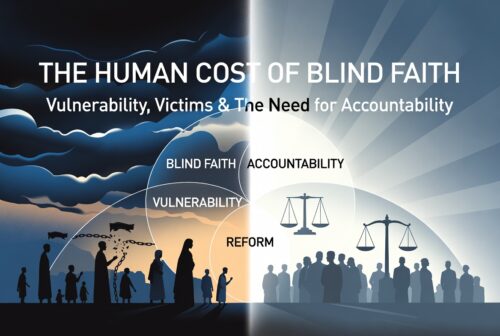
 Punjab stands at an important crossroads. The state has inherited a remarkable spiritual legacy based on equality, compassion, service, and truth, yet it is also facing new social challenges created by economic uncertainty, migration, unemployment, addiction, changing family structures, and declining trust in public institutions. In such an environment, the influence of spiritual organizations and religious leaders will continue to remain significant. The question before society is not whether these institutions should exist, but how they can continue to serve humanity while maintaining transparency, accountability, and respect for democratic values.
Religion has always been a source of strength for communities. Throughout history, places of worship have provided food to the hungry, shelter to those in need, education to children, and support to people facing difficult times. Punjab’s tradition of seva represents one of the finest examples of collective responsibility. Millions of people dedicate their time and resources to helping others without expecting personal recognition. This spirit of selfless service must be protected and encouraged.
However, faith becomes vulnerable when it is concentrated around individuals rather than principles. A society must carefully distinguish between spiritual leadership that empowers people and personality cults that create dependency. A genuine spiritual guide encourages followers to become responsible citizens, respect knowledge, work honestly, care for others, and develop moral strength. A leader who demands unquestioning obedience, discourages questions, or uses faith for personal benefit moves away from the true purpose of spirituality.
The solution is not government interference in religious belief. Freedom of faith is a fundamental democratic right. Every person has the freedom to worship, pray, follow traditions, and seek spiritual guidance. At the same time, freedom of religion does not mean freedom from accountability. Every institution that collects money, owns property, employs workers, operates educational or medical facilities, or influences public life must follow the same standards of transparency and law that apply to other organizations.
Financial transparency should become an essential principle for all large religious institutions. Regular audits, clear records of donations, proper management structures, and public reporting of charitable activities can strengthen public confidence. Honest organizations have nothing to fear from accountability. In fact, transparency protects genuine spiritual institutions by separating them from those who misuse religious identity for personal gain.
Education is another important safeguard. A society that encourages critical thinking is less vulnerable to manipulation. Children and young people should be taught to respect faith while also understanding the importance of questioning, evidence, and independent judgment. Faith and knowledge are not enemies. The greatest civilizations have progressed when spiritual values existed alongside education, science, and rational thinking.
Political leaders also have a responsibility. Democracy becomes weaker when politicians seek shortcuts through powerful personalities instead of earning public trust through performance. Governments should focus on improving schools, hospitals, employment opportunities, agriculture, law and order, and social welfare rather than relying on symbolic support from influential individuals. Citizens deserve governance based on policies and results, not only public appearances and endorsements.
The media has an equally important role in protecting society. Journalism must neither promote religious personalities blindly nor attack them unfairly. Responsible reporting requires investigation, evidence, balance, and respect for due process. When allegations arise, they should be examined carefully. When positive social work takes place, it should also receive appropriate recognition. Truth—not popularity or controversy—should guide public discussion.
Punjab’s future depends upon restoring confidence in institutions. When people receive quality education, accessible healthcare, employment opportunities, justice, and social security, they become less vulnerable to anyone promising instant solutions. A strong society does not eliminate faith; it creates conditions where faith exists alongside dignity, opportunity, and responsibility.
The greatest spiritual traditions of Punjab have always emphasized humility. True greatness does not come from wealth, crowds, or political influence. It comes from service, honesty, and the ability to uplift others. The measure of any leader—religious or otherwise—should not be the size of their organization or the number of followers they command. The true measure should be how much they contribute to humanity.
Punjab’s people have always shown extraordinary resilience. From protecting the nation to contributing globally through hard work and entrepreneurship, Punjabis have repeatedly demonstrated courage and determination. The same spirit must now be applied to building a society where faith remains a source of compassion, not a tool of exploitation; where leaders remain servants, not rulers; and where citizens remain free thinkers, not followers of blind obedience.
The future belongs to a Punjab where spirituality and accountability walk together, where tradition and progress support each other, and where every institution earns respect through service and integrity.
Editor’s Note-The article “Parallel Power Centres: The Deras of Punjab and the Politics of the Blessing” marks the beginning of a special five-series publication examining important social, political, and cultural issues affecting Punjab and Punjabi society worldwide.Through this series, we will explore how different forms of influence shape public life, how ordinary people are affected by changing social realities, and what steps are needed to protect democratic values, transparency, and the dignity of every citizen.This series does not target any particular religion, community, dera, or individual. Punjab’s spiritual and humanitarian institutions have made countless positive contributions to society, and those contributions deserve recognition. At the same time, every institution that holds significant social, financial, or political influence must remain open to accountability, transparency, and lawful scrutiny.The purpose of this series is constructive: to encourage discussion, awareness, and responsible citizenship. A strong society is built when faith is respected, questions are welcomed, truth is valued, and the rule of law applies equally to everyone.
Disclaimer: This article and accompanying images are for informational and illustrative purposes only. Some visuals may be AI-generated or digitally enhanced and may not depict actual events or persons. Views expressed are based on publicly available information and analysis.
Share via: