
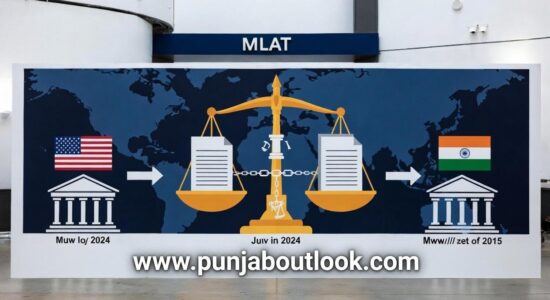
 The Mutual Legal Assistance Treaty (MLAT) between the United States and India, signed in 2001 and effective since 2002, serves as a critical framework for cooperation in criminal matters. Unlike extradition, which involves transferring individuals, MLAT focuses on sharing evidence, documents, witness statements, and other investigative assistance. It has played an important supporting role in operations such as “Operation Hard Ball,” enabling US authorities to gather information from India for cases involving gangsters like Lawrence Bishnoi and Jaggu Bhagwanpuria. Under the MLAT, either country can request assistance for investigations, prosecutions, or proceedings related to serious offenses. Common forms of assistance include obtaining bank records, seizing assets, taking witness depositions, serving legal documents, and executing search warrants. Requests are channeled through designated central authorities the US Department of Justice and India’s Ministry of Home Affairs and must meet requirements of dual criminality and proportionality. This treaty complements the 1997 Extradition Treaty, forming a comprehensive legal partnership against cross-border crime.
In the context of Operation Hard Ball, MLAT requests likely facilitated the sharing of telephone records, financial trails, and intelligence on the operations of India-based syndicates directing crimes in the US and Canada. For instance, evidence linking Punjab-based networks to extortion attempts in Los Angeles or alleged involvement in overseas assassinations would rely heavily on such cooperation. The treaty allows for urgent requests in time-sensitive cases, though processing times can vary from weeks to months depending on complexity and sensitivity. Challenges in MLAT implementation include bureaucratic delays, differing legal standards for privacy and data protection, and occasional political sensitivities around high-profile cases. India has strengthened its data-sharing mechanisms in recent years through amendments to laws like the Information Technology Act and increased coordination with international partners. However, concerns over sovereignty, human rights safeguards, and the protection of sensitive information can slow responses. In gang-related probes involving serving officials (such as the Nagra case), additional layers of internal review may apply.
The US-India MLAT has been instrumental in numerous successful investigations, including narcotics trafficking, terrorism financing, and organized crime cases. It reflects growing bilateral trust in law enforcement matters while respecting each nation’s legal sovereignty. For Punjab and the diaspora, effective use of MLAT helps disrupt extortion rackets and violence targeting families abroad, but it also underscores the need for stronger domestic accountability to reduce reliance on foreign assistance. As Operation Hard Ball progresses, continued MLAT cooperation will be vital for building strong cases that support both extradition requests and prosecutions. This treaty, alongside the extradition framework, demonstrates how legal diplomacy can address the transnational nature of modern organized crime.
Disclaimer: This article and accompanying images are for informational and illustrative purposes only. Some visuals may be AI-generated or digitally enhanced and may not depict actual events or persons.Views expressed are based on publicly available information and analysis. Overview based on the US-India MLAT provisions and public reporting on bilateral law enforcement cooperation.