
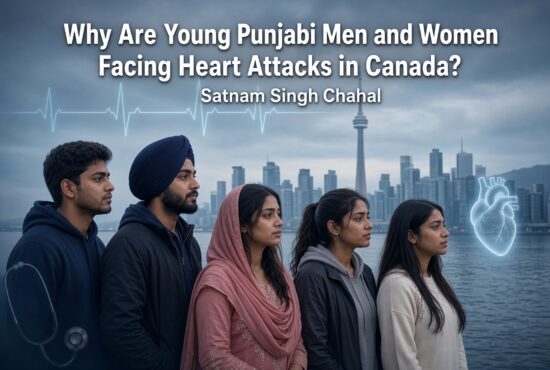
The increasing reports of young Punjabi men and women suffering heart attacks and other serious cardiac problems in Canada are deeply concerning. However, it would be inaccurate to claim that “most” Punjabi youth are dying from heart attacks without reliable Canadian statistics proving that. What is well established is that South Asians, including people of Punjabi origin, have a higher risk of cardiovascular disease and may develop heart disease at a younger age than some other population groups.
One of the major concerns is genetic and family susceptibility. South Asians have been found to have a higher risk of diabetes, high blood pressure, abnormal cholesterol, abdominal obesity and insulin resistance. These factors can contribute to the development of heart disease much earlier in life. A young person may therefore appear healthy from the outside while carrying significant cardiovascular risk.
Diabetes and high blood sugar are particularly important issues. South Asians have a higher prevalence of type 2 diabetes, and diabetes can damage blood vessels and significantly increase the risk of heart disease. Young Punjabi people with a family history of diabetes should not wait until middle age to start paying attention to their blood sugar and overall metabolic health.
Another important factor is the change in lifestyle after moving to Canada. Some young people who were physically active in Punjab may become much more sedentary after arriving in Canada. Long hours of studying, driving, working, commuting or sitting at a desk can gradually reduce physical activity. When this is combined with weight gain and poor dietary habits, cardiovascular risk can increase.
Diet can also play a role. Traditional Punjabi food is not automatically unhealthy, but excessive consumption of fried foods, refined carbohydrates, sweets, sugary beverages, processed foods, fast food and large portions can contribute to obesity, diabetes, high cholesterol and high blood pressure. After immigration, some young people also adopt highly processed Western eating patterns without maintaining adequate physical activity.
Stress and lack of sleep deserve attention as well. International students, new immigrants and young workers can face tremendous pressure involving education, employment, finances, immigration matters, family responsibilities and establishing themselves in a new country. Stress by itself should not be described as the sole cause of a heart attack, but chronic stress combined with poor sleep, unhealthy eating, inactivity and other risk factors can negatively affect cardiovascular health.
There is also a dangerous misconception among young people that heart attacks happen only to older people. That is simply not true. Young South Asians can experience premature cardiovascular disease, particularly when multiple risk factors are present. Being 25, 30 or 35 years old does not provide complete protection against heart disease.
Punjabi women should also be part of this conversation. Heart disease is not exclusively a male problem. Women can develop cardiovascular disease as well, and symptoms may sometimes be less obvious than the classic severe chest pain people associate with a heart attack. Delaying medical attention can have serious consequences.
The Punjabi community in Canada needs a heart-health awareness movement rather than panic or speculation. Young people should know their blood pressure, blood sugar, cholesterol and family history and should discuss their individual risk factors with healthcare professionals. Regular physical activity, adequate sleep, healthier food choices, maintaining a healthy waistline and avoiding tobacco can all contribute to reducing cardiovascular risk.
Most importantly, symptoms such as chest pressure or pain, shortness of breath, unusual sweating, fainting, nausea or sudden unexplained weakness should never simply be dismissed as stress or tiredness. Anyone experiencing possible heart-attack symptoms should seek emergency medical care immediately.
The Punjabi community has worked extremely hard to build successful lives in Canada. Now, the community must give equal importance to health, not just wealth. A successful career, a beautiful house or a good car means little if young people are losing their health at an early age.
The message should therefore be simple: young does not mean invincible. Prevention, awareness and timely medical attention can save lives.
Disclaimer: This article and accompanying images are for informational and illustrative purposes only. Some visuals may be AI-generated or digitally enhanced and may not depict actual events or persons.Views expressed are based on publicly available information and analysis