
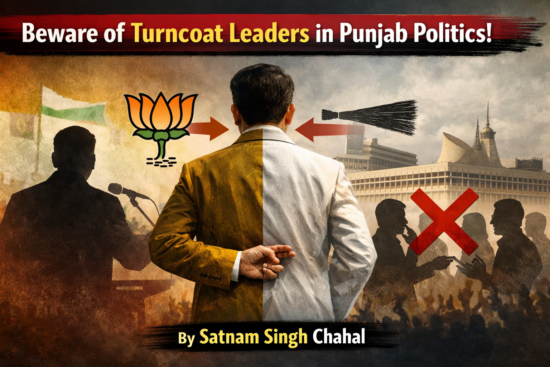
 As the political atmosphere in Punjab heats up ahead of the 2027 Vidhan Sabha elections, a troubling trend has once again come into focus—leaders frequently switching parties for personal gain. This phenomenon, often described as “Aya Ram, Gaya Ram” politics, reflects a deeper crisis in political morality and public trust. Recent developments clearly show that politicians are leaving their parties and joining rivals without hesitation, driven not by ideology or public service, but by electoral opportunity and power calculations.
In recent weeks, several examples have reinforced this pattern. Leaders who once fiercely criticised a party are now sharing stages with the same political forces. Reports indicate that many former members of one party have joined another, even those who held senior positions earlier. At the same time, new entrants are being inducted into parties as part of election strategies, highlighting how political loyalties have become increasingly flexible.
This shifting landscape is not accidental. With major parties like the BJP deciding to contest the 2027 elections independently and aggressively expand their base, political competition has intensified. As a result, leaders are constantly looking for better prospects, tickets, and positions, often abandoning the very parties that gave them identity and recognition. In many cases, the same individuals have switched multiple parties over the years, raising serious questions about their commitment to public service.
Such behavior directly impacts the credibility of democracy. When leaders change sides without any ideological consistency, it sends a message that politics is no longer about principles but about convenience. Voters are left confused, as the lines between parties blur and accountability disappears. If a leader can criticize a party today and join it tomorrow, how can the public trust their words or promises?
Moreover, this trend weakens the political system itself. Parties lose dedicated workers, internal discipline breaks down, and opportunism replaces long-term vision. Some leaders have even warned voters to remain cautious about “engineered political entrants” who may be introduced just to influence electoral outcomes. This raises concerns about manipulation and the erosion of genuine democratic choice.
At such a critical juncture, the responsibility lies not only with political parties but also with the people of Punjab. Voters must become more aware and vigilant. Those who repeatedly switch parties for personal gain should not be blindly trusted. In fact, society must send a strong message that loyalty, integrity, and commitment matter more than political convenience. Engaging with such opportunistic leaders without questioning their motives only encourages further instability in the system.
Punjab has a rich political history rooted in sacrifice, ideology, and public service. It deserves leadership that stands firm on principles rather than shifting with the winds of power. As the 2027 elections approach, the real test will not just be for political parties, but for the people to choose credibility over convenience, and integrity over opportunism.