
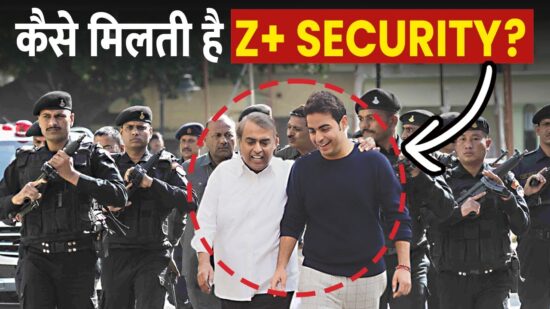
In Punjab, politics has always had its fair share of drama, but nothing matches the daily soap-level suspense of VIP security cover. One day, a leader is surrounded by a convoy of black SUVs, commandos, and flashing lights, feeling like a head of state and the very next day, he is back to opening his own gate, wondering where everyone disappeared. In this ever-changing script, security is not just about protection; it has become a performance, a symbol, and sometimes, a punchline.
Security cover in Punjab now behaves like the weather, unpredictable and politically sensitive. Leaders don’t check intelligence alerts as much as they check political signals. A sudden upgrade to Z+ security arrives like a surprise promotion, often without explanation, and before the leader can get used to the luxury of ten guards escorting him to the corner tea stall, another order arrives quietly: “Security withdrawn.” The biggest mystery is not the threat itself, but how it appears and disappears overnight without even leaving a forwarding address.
Over time, security has evolved into a status symbol more powerful than wealth or influence. The real VIP is not the one with the biggest house, but the one with the longest convoy. A leader with heavy security walks into public spaces like royalty, while one whose cover has been reduced suddenly feels politically “invisible.” Some even continue their old habits, pausing at the car door expecting someone to open it, only to realise that the era of commandos has ended faster than their last election campaign.
What makes this entire system even more entertaining and concerning is how closely it seems tied to political fortunes rather than actual danger. Win an election, and your “threat perception” rises. Lose influence, and suddenly the खतरा (danger) reduces. Switch parties, criticise the government, or fall out of favour, and security levels will adjust accordingly. It gives the impression that threats in Punjab are not managed by intelligence agencies but by political equations.
Meanwhile, behind the humor lies a serious question about public resources. Hundreds of police personnel are assigned to protect VIPs, while ordinary citizens often struggle to get timely police assistance. In many areas, people joke that if you want quick security, you should become a politician or at least stand next to one. The irony is hard to miss: those elected to serve the public seem to be the most heavily guarded from it.
For the leaders themselves, the experience becomes an emotional rollercoaster. One moment they demand increased protection citing danger, and the next they protest loudly when it is taken away, calling it political vendetta. The shifting security becomes less about safety and more about prestige, creating a strange situation where even the guards might wonder whether they are protecting lives or reputations.
In the end, the constant giving and taking back of security cover in Punjab turns a serious governance issue into political satire. Security is meant to safeguard lives based on genuine threats, not to reward loyalty or signal power. Until transparency and consistency replace this ad-hoc approach, Punjab will continue to witness this unique “security musical chairs,” where leaders keep changing positions, but the public remains a spectator watching, waiting, and occasionally laughing at a system that seems unsure of whom it is really protecting.
Share via: