
Colleges have long been serving as the backbone of higher education, shaping generations
through structured learning and academic leadership. In Punjab, presently, a total of 675
colleges, including 11 autonomous, are imparting traditional higher education to over 6.5 lakh
students. However, beneath these numbers lies a structural imbalance that is steadily eroding
the quality and governance of higher education in the state. Of these 675 colleges, only 64,
i.e., nine percent, are government-run, while 33, i.e., merely five percent, are constituent
colleges of the three state-funded universities. The overwhelming majority, nearly 86 percent,
are privately managed colleges. Among these 578 private colleges, just 152 are government-
aided, while a significant remaining 426 operate as self-financed private colleges. This
skewed distribution places a substantial burden on private managements, often leading to
inconsistencies in administration and academic standards.
At the heart of any educational institution lies its leadership. A duly qualified
regular Principal is crucial for academic excellence, institutional discipline, and overall
development of a college. The University Grants Commission (UGC) Rules-2018 have laid
down clear eligibility criteria for the post: a postgraduate degree with at least 55 percent
marks in any subject being taught in the concerned college, a Ph.D., a minimum of 15 years
of teaching experience from a recognized university/college, properly approved as a
Professor/Associate Professor, and a prescribed academic performance score of 110 marks.
Despite these well-defined norms, the ground reality in Punjab reveals a quite different story.
The Sixth UGC Pay Commission, while fixing the service conditions and pay
scales for the College Principals, created two categories of colleges in September 2009:
‘Under-Graduate’ (UG) College and ‘Post-Graduate’ (PG) College. Both had the same
eligibility conditions and pay, aligned with the ‘Professor Scale’, but different special
allowances of ₹2000/- and ₹3000/- per month, respectively. The tenure of the Principal’s
appointment was fixed, for the first time at an institution, for a period of five years,
extendable for another five years through re-interview, up to a maximum period of ten years
or until superannuation, whichever is earlier. The Seventh Pay Commission maintained the
same academic eligibility qualifications but differentiated pay scales: ‘UG’ College Principal
to receive initial pay of ₹1,31,400/- with special allowance of ₹2000/- in an Academic Level
13A of ‘Associate Professor’, while the ‘PG’ College Principal to get initial pay of
₹1,44,200/- with special allowance of ₹3000/- per month in Academic Level 14 of the
‘Professor’ scale. The Principal’s tenure of appointment remains similar, with an option to
return to the previous college after the expiry of the term, before the age of retirement, if any,
provided the person has retained liaison in the same. However, the implementation of these
regulations across different categories of colleges has remained uneven and, in many cases,
counterproductive.
In government colleges, appointment of Principal is relatively structured,
where in 48, i.e., 75 percent of colleges, it is made through departmental promotions based on
seniority of the faculty by the Department of Higher Education, Punjab Government, and for
the remaining 25 percent, i.e., 16 colleges, via direct recruitment through the Punjab Public
Service Commission, Patiala. In sharp contrast, self-financed private colleges often witness
arbitrary appointments, with managing committees bypassing established norms regarding
educational qualifications, pay scales, and retirement in line with their own whims and
fancies. The situation in constituent colleges, managed by the three state-run universities, is
equally concerning, where ad hoc arrangements, such as appointing a retired principal as
‘Officers on Special Duty’ or designating an assistant professor as in charge, have long been
a common practice.
However, the complex and problematic scenario exists in government-aided,
privately managed colleges, where appointments must comply with both the affiliating
university regulations and state government policies. Instead of facilitating the process, recent
policy changes espoused by the Department of Higher Education, Punjab, particularly
following the implementation of the Seventh Pay Commission on September 9, 2022, have
introduced significant disincentives, such as: payment of only basic pay for the first three
years of a five-year tenure of the Principal, reduction of retirement age from 60 to 58 years
for a newly appointing Principal after April 1, 2023, and lack of clarity in categorizing
college as UG or PG institution. Such measures have made the position of Principal
absolutely unattractive, both financially and professionally. For instance, why would a regular
Associate Professor, currently earning approximately ₹2.5 lakh per month, with service up to
the superannuation age of 60, accept a Principalship with reduced pay, diminished
allowances, and a loss of two years of service due to an earlier retirement age?
Unsurprisingly, the managing committees of most colleges, especially in rural areas, are
reluctant to bear the financial burden on their own. The consequences are stark. Nearly 58
percent of colleges affiliated with Guru Nanak Dev University, Amritsar, have reportedly
been functioning without regular Principals for the past several years. Similar trends are
visible in colleges under Panjab University, Chandigarh, and Punjabi University, Patiala.
Panjab University had even issued a show-cause notice in December 2025 to 42 of its
affiliated colleges for failing to appoint regular principals. This leadership vacuum is not
merely an administrative lapse, although it directly impacts academic standards, student
outcomes, and institutional credibility.
Therefore, addressing this crisis needs immediate and pragmatic
transformations. To begin with, the Punjab government must align its policies with UGC
norms by removing unnecessary anomalies and restrictions. The Principal should be allowed
to serve until the age of 60, with full pay protection from the date of one’s appointment. If the
academic eligibility criteria for UG and PG college principals are the same, their pay
structures should also align accordingly. Additionally, promotion for faculty in self-financed
colleges under the Career Advancement Scheme is vital for creating a pipeline of qualified
candidates for leadership positions. Filling vacant Associate Professor positions is equally
critical to strengthening the academic hierarchy. Finally, enhancing institutional governance
can also be achieved by bringing domain expertise into the fold. Appointing the Director of
Higher Education, Punjab, from within the college cadre, as was the earlier practice, could
lead to more informed decision-making and a better understanding of ground realities, in
contrast to purely bureaucratic oversight. Currently, Punjab’s higher education system stands
at a crossroads. Timely intervention is essential to prevent existing issues from escalating into
a systemic decline. Restoring effective academic leadership is not just an administrative
necessity but essential to ensuring the future viability of higher education in the state.
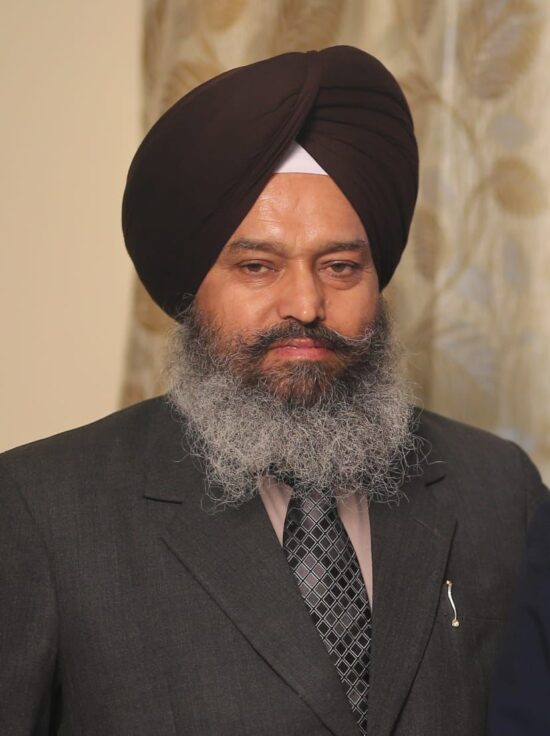
(Dr.) Kulwant Singh Phull
Mobile: 94637 63331