
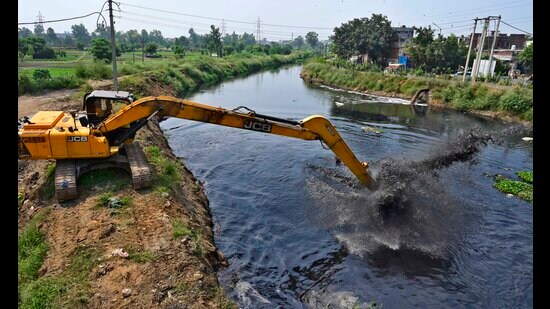
The issue of water pollution in Punjab has reached an alarming stage, particularly for regions like Abohar, where canal water serves as a crucial source for irrigation, livestock, and even domestic use. The contamination of canal water flowing into this region is not an isolated problem; rather, it is the cumulative result of unchecked discharge from some of Punjab’s most polluted water channels, including Budha Nallah, Chitti Bein, Kala Sanghya, and the Jamsher Drain. These drains carry industrial effluents, sewage, and agricultural runoff, ultimately merging into canal systems that distribute this toxic mixture across vast agricultural belts.
For decades, Budha Nallah has symbolized environmental neglect. Once a natural stream, it became a carrier of untreated industrial waste, dyeing chemicals, heavy metals, and municipal sewage from Ludhiana. Similarly, Chitti Bein and other drains contribute significantly to the degradation of water quality. When such polluted water enters canals feeding regions like Abohar, the consequences are severe: declining soil fertility, contaminated crops, health hazards for farmers, and long-term ecological damage.
However, recent developments offer a glimmer of hope. One of the most significant interventions has been the control of waste from dairy operations. Previously, around 650 tons of cow dung were dumped daily into Budha Nallah by approximately 79 dairies. This organic load not only increased biological oxygen demand (BOD) in the water but also accelerated bacterial contamination and foul odor. With improved management practices and stricter monitoring, this figure has been reduced dramatically to about 80 tons per day, with efforts underway to eliminate it entirely. This reduction has already led to visibly cleaner water in the nallah, demonstrating that targeted interventions can yield tangible results.
Yet, while this progress is commendable, it addresses only one part of a much larger problem. Industrial discharge, chemical pollutants, and untreated sewage still continue to flow into these drains. Therefore, a comprehensive and multi-layered treatment strategy is essential to ensure that water reaching Abohar is safe and usable.
The first step must be the establishment and strict enforcement of functional Sewage Treatment Plants (STPs) and Effluent Treatment Plants (ETPs) in cities like Ludhiana and Jalandhar. These facilities must operate at full capacity, with real-time monitoring systems to prevent illegal discharge. Secondly, decentralized treatment solutions such as bio-remediation and constructed wetlands can be deployed along smaller drains like Kala Sanghya and Jamsher Drain. These nature-based systems use plants, microbes, and soil to filter contaminants and improve water quality before it enters the main canal network.
Another critical measure is the interception and diversion of polluted drains. Instead of allowing contaminated water to mix directly with canal systems, it should be diverted to treatment facilities. Additionally, strict penalties must be imposed on industries and municipalities that fail to comply with environmental norms. Without accountability, even the best infrastructure will fail to deliver results.
For rural and agricultural areas like Abohar, on-site water treatment solutions can also play a role. Farmers can be supported with low-cost filtration units, sedimentation tanks, and awareness programs on safe water usage. In the long term, transitioning towards sustainable agricultural practices that reduce dependency on polluted canal water will also be necessary.
Equally important is community participation. The success in reducing dairy waste dumping into Budha Nallah shows that when stakeholders cooperate—whether dairy owners, local authorities, or environmental groups meaningful change is possible. This model should be replicated across other pollution sources.
In conclusion, while the reduction of dairy waste in Budha Nallah marks a positive step forward, it is only the beginning of a long journey. The health of Punjab’s canal water system, and by extension regions like Abohar, depends on sustained, coordinated efforts involving infrastructure development, strict enforcement, technological innovation, and public awareness. If these measures are implemented effectively, Punjab can not only restore its polluted water bodies but also secure a healthier and more sustainable future for its people and agriculture.