
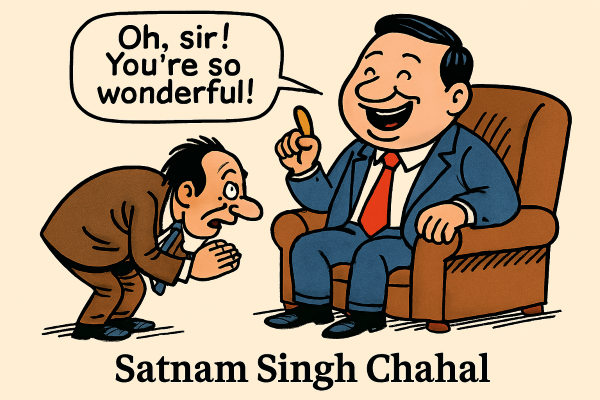
Punjab politics has once again provided enough entertainment to compete with a full season of comedy shows. This time, the spotlight is on the seven Rajya Sabha MPs who left the party that had sent them to Parliament. Ever since their departure, social media experts, political uncles, chai-shop philosophers, and WhatsApp universities have started distributing imaginary “GADAR Awards” to them. According to many angry voices online, these MPs “betrayed Punjab.”
But the real comedy begins when one asks a very simple question: were they actually representing Punjab in the first place?
That question has divided political discussions across villages, cities, tea stalls, and drawing rooms. Many Punjabis argue that these MPs were never truly the voice of Punjab’s people. According to critics, they were mainly representing Arvind Kejriwal and the party’s central leadership in Delhi rather than the emotions and concerns of Punjab itself.
This is why many people now sarcastically say that calling them “traitors of Punjab” is technically incorrect. One cannot betray something one was never deeply connected with politically. That sentence alone has become a full comedy script for Punjab’s political observers.
Punjab’s people traditionally believe that anyone sent to Rajya Sabha from the state should raise Punjab’s issues loudly in Parliament — farmers’ problems, unemployment, water disputes, drug addiction, industry collapse, federal rights, and migration of youth abroad. Punjabis expect their representatives to carry the pain and pride of the state to Delhi. But critics say these seven MPs often appeared more connected to party headquarters than to Punjab’s villages and towns.
One elderly farmer jokingly remarked at a village gathering:
“Punjab only gave them the boarding pass. Their final destination was always Delhi headquarters.”
That line spread faster than political gossip itself.
Many political commentators sarcastically describe these Rajya Sabha nominations as “corporate transfers” instead of democratic representation. According to the joke, Punjab became the transit airport while the real control tower remained in Delhi. Some even laugh that these MPs spent more time understanding party strategy than understanding the difference between Majha, Malwa, and Doaba.
Earlier generations of Punjabi leaders were known for spending decades among the people before entering Parliament. They attended weddings, funerals, protests, and village meetings. They argued loudly, fought elections, and built mass support. Today, critics joke that politics has changed completely. Instead of public connection, the most important qualification now seems to be “high command connection.”
One satirical comment circulating online says:
“Earlier leaders reached Parliament after touching Punjab’s soil. Now some leaders only touch Chandigarh airport before flying straight to Delhi.”
Social media users, as always, have converted the entire controversy into a comedy festival. Imaginary award categories are being invented every day. Some of the most popular include:
“Best Remote-Control Politics Award”
“Punjab Without Punjabis Award”
“Silent Mode MP Award”
“High Command Loyalty Medal”
“Frequent Flyer Parliament Award”
“Best Performance in Invisible Representation”
The funniest part of the entire debate is that many ordinary Punjabis still cannot even name all seven Rajya Sabha MPs without using Google or asking younger family members who follow political news on Instagram and YouTube. This itself has become part of the satire. Critics say that if people do not even recognize their representatives, how can those representatives claim emotional connection with Punjab?
Another viral joke says:
“The public thought Punjab had sent seven lions to Parliament. Later they discovered they were seven official courier parcels from headquarters.”
Despite all the humour and sarcasm, there is also a serious political debate hidden underneath. The controversy raises an important democratic question: should Rajya Sabha MPs primarily answer to the people of the state from which they are elected, or should their main loyalty remain with party leadership?
That debate has become stronger not only in Punjab but across India. Critics argue that states lose their real voice when Rajya Sabha seats are treated as rewards for loyalty rather than representation of regional aspirations. Supporters of centralized party leadership, however, argue that political parties have every right to nominate trusted individuals who support the party’s national vision.
Still, Punjabi humour refuses to spare anyone. One more popular sarcastic remark states:
“Calling them ‘Gaddars of Punjab’ is wrong. First prove they belonged to Punjab politically.”
That single sentence perfectly captures the mood of many frustrated and amused observers.
Punjab has always been known for producing fearless political personalities who openly challenged Delhi, regardless of which party ruled at the Centre. That history makes today’s centralized style of politics appear even more dramatic and comedic to many Punjabis. People who grew up watching fiery mass leaders now see carefully controlled political messaging, disciplined silence, and loyalty to party command structures.
As always, Punjab’s people continue watching this political theatre with equal amounts of frustration and entertainment. Politics changes quickly. Yesterday’s revolutionary becomes today’s rebel. Today’s loyalist may become tomorrow’s critic. Alliances change, slogans change, and political speeches change — but Punjabi satire survives every government.
One thing is absolutely certain: as long as politics in Punjab continues producing such dramatic twists, Punjabi comedians, writers, and social media meme creators will never run out of material