
The Punjabi community, whether in Punjab or across the global diaspora in countries such as Canada, the United Kingdom, the United States, Australia, and New Zealand, has experienced tremendous social and economic changes during the past few decades. Higher education levels, increased economic opportunities, migration, and changing social values have brought many positive developments. However, these changes have also created new challenges for family life. One of the most concerning trends being discussed within the community today is the increase in domestic violence cases and rising divorce rates. While many Punjabi families continue to enjoy strong and healthy relationships, growing numbers of marital disputes, family conflicts, and relationship breakdowns have become a matter of concern for community leaders, social organisations, and mental health professionals.
Traditionally, Punjabi society was built around strong family values and extended family support systems. Before the 1990s, divorce was extremely rare and was often considered socially unacceptable. Many couples remained together despite serious marital difficulties because of family pressure, social stigma, and concern for family reputation. Unfortunately, this also meant that many victims of domestic violence suffered silently without seeking help. Women, in particular, often had limited financial independence and few options for escaping abusive situations. Family elders frequently encouraged reconciliation, even when abuse was occurring behind closed doors.
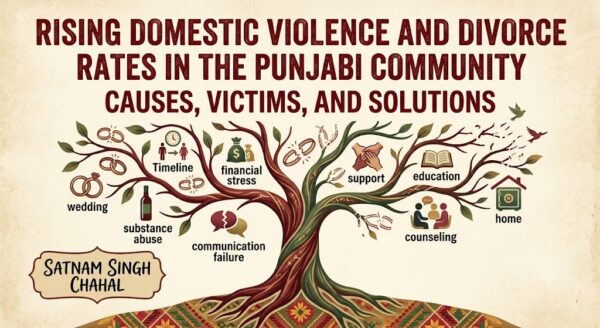
The period between 1990 and 2010 brought major changes as large numbers of Punjabis migrated abroad and younger generations became more educated and economically independent. Women increasingly entered professional careers and gained greater financial security. At the same time, traditional expectations regarding marriage, family responsibilities, and gender roles often remained unchanged. This created tension in some households where modern aspirations clashed with traditional beliefs. During this period, awareness about domestic violence increased, and more victims began seeking legal assistance, counseling, and community support.
From 2010 onward, social media, greater awareness of individual rights, and easier access to legal protections further transformed family relationships. People became more willing to speak openly about abuse, emotional trauma, and marital dissatisfaction. Divorce gradually became less stigmatized than in previous generations. Couples who felt trapped in unhealthy relationships increasingly chose separation rather than continuing years of conflict. While this shift empowered many victims to seek safety and independence, it also highlighted growing challenges facing modern Punjabi families.
Women continue to represent the largest group of domestic violence victims within the community. Many face physical abuse, emotional harassment, verbal humiliation, financial control, intimidation, and psychological pressure. In some cases, abuse extends beyond the husband and involves other family members within the household. Fear of social judgment, concern for children, financial dependence, and worries about family reputation often prevent victims from reporting abuse or seeking assistance. As a result, many cases remain hidden from public view.
At the same time, domestic violence is not limited to one gender. Men can also become victims of emotional abuse, psychological manipulation, false accusations, financial exploitation, and toxic relationship dynamics. Although such cases may be reported less frequently due to social expectations and stigma, they deserve equal attention and support. Domestic violence should be recognized as a human issue rather than a gender issue, with protection available to every victim regardless of gender.
Children are often the silent victims of domestic conflict. Growing up in an environment filled with arguments, violence, hostility, or emotional neglect can have lasting effects on their mental health and development. Many children from troubled homes experience anxiety, depression, reduced academic performance, and difficulties forming healthy relationships later in life. The impact of domestic violence often extends far beyond the immediate victims and can affect entire generations.
Several factors contribute to rising domestic violence and divorce rates within the Punjabi community. One of the most significant causes is the conflict between traditional expectations and modern lifestyles. Many couples enter marriage with different views regarding careers, finances, household responsibilities, personal freedom, and family obligations. When expectations are not discussed openly before marriage, misunderstandings can gradually develop into serious conflicts.
Financial stress has also become a major source of marital tension. Rising living costs, expensive housing, debt, unemployment, and economic uncertainty place significant pressure on families. Many couples struggle to balance financial responsibilities while maintaining a healthy relationship. Arguments over money often become one of the most common reasons for marital disputes and eventual separation.
Interference from extended family members is another important factor. In some households, disagreements involving parents, siblings, or in-laws create constant tension between spouses. While family support can be valuable, excessive involvement in personal decisions may undermine trust and independence within a marriage. Conflicts regarding living arrangements, financial contributions, childcare, and family loyalty can become major sources of disagreement.
Poor communication is perhaps one of the most overlooked causes of relationship breakdowns. Many individuals enter marriage without learning effective communication skills, conflict resolution techniques, or emotional management strategies. Instead of discussing problems calmly and constructively, couples may allow resentment and frustration to build over time. Small disagreements can eventually grow into major conflicts when communication breaks down completely.
Substance abuse, including alcohol and drug addiction, also contributes significantly to domestic violence in some families. Addiction often creates financial problems, emotional instability, aggression, and neglect of family responsibilities. In Punjab particularly, concerns regarding drug abuse have affected many households and have placed additional strain on marriages and family relationships.
The increasing divorce rate does not necessarily indicate that families are weaker than in previous generations. In many cases, it reflects changing attitudes toward personal dignity, safety, and emotional well-being. Individuals today are more likely to recognize unhealthy relationships and less willing to remain in situations involving abuse, neglect, or constant conflict. Greater education and financial independence have given many people the confidence to make difficult decisions that previous generations may not have considered possible.
Addressing these challenges requires a collective effort from families, community organizations, educational institutions, and religious bodies. Young people should receive education about healthy relationships, emotional intelligence, communication skills, and mutual respect long before marriage. Premarital counseling should become more common so that couples can openly discuss expectations regarding careers, finances, children, family responsibilities, and future goals.
Community organizations and gurdwaras can play an important role by providing counseling services, awareness programs, and confidential support systems for victims of domestic violence. Religious and community leaders should actively promote messages of respect, equality, and non-violence within family relationships. Victims must feel confident that seeking help will not result in social shame or isolation.
Mental health support is equally important. Many family conflicts stem from untreated stress, anxiety, depression, trauma, and emotional difficulties. Expanding access to culturally sensitive counseling services can help couples address problems before they escalate into violence or divorce. Encouraging open conversations about mental health can strengthen families and reduce stigma within the community.
The Punjabi community has long been known for its strong family values, resilience, and commitment to collective well-being. The growing concerns surrounding domestic violence and divorce should not be viewed as signs of failure but rather as challenges that require honest discussion and practical solutions. By promoting healthy relationships, mutual respect, gender equality, emotional awareness, and community support, Punjabi families can build a stronger and safer future for the next generation