
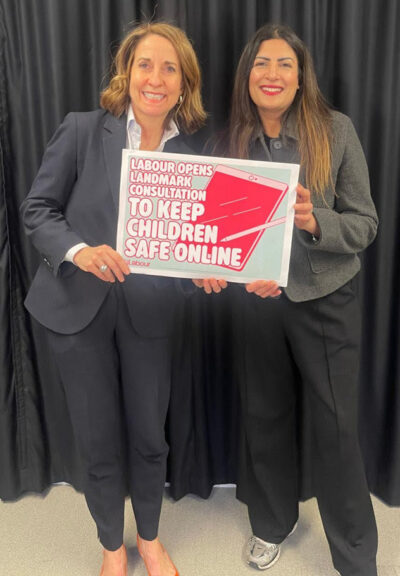
 London: Member of Parliament Preet Kaur Gill has welcomed new measures announced by the UK Government aimed at strengthening child protection online and holding major technology companies accountable for the safety of young users.
Under the new proposals, technology giants such as Apple and Google have been given three months to activate built-in safety features on smartphones and tablets designed to detect and block nude images involving children. The government says these measures are intended to prevent online predators from exploiting children and to stop minors from accessing harmful pornographic content.
According to the government, if technology companies fail to implement the safeguards within the specified timeframe, legislation will be introduced to make the activation of such protections mandatory. The proposed measures could include significant financial penalties for companies that fail to comply. In the most serious cases, ministers are also exploring the possibility of criminal liability for technology executives who neglect their responsibilities regarding child safety.
The announcement comes amid growing concern over the scale of online child exploitation. Official figures indicate that 91 percent of online child sexual abuse reports recorded in 2024 contained self-generated content. Experts warn that children, some as young as five years old, are being groomed, manipulated, and coerced by online predators into creating and sharing explicit images.
Once obtained, these images are frequently used by offenders to blackmail and further exploit their victims. In some of the most tragic cases, vulnerable children have been pressured into self-harm or even suicide while being manipulated through online platforms.
Supporting the government’s action, Preet K. Gill emphasized that the new safeguards are focused solely on protecting children rather than monitoring private communications. She stressed that the technology is designed to prevent the sharing, viewing, and creation of explicit images involving minors without collecting personal data, monitoring user activity, or reporting private information.
The proposals would still allow adults over the age of 18 to access legal adult content after providing appropriate age verification. Government officials have underlined that the measures strike a balance between protecting children and respecting the privacy rights of adults.
If successfully implemented, Britain would become the first country in the world where children would be effectively prevented from taking, sharing, or viewing naked images on their personal devices. Advocates believe the move could set a global standard for child online safety and place greater responsibility on technology companies to ensure their products do not become tools for exploitation.
The initiative reflects growing international pressure on social media and technology firms to take stronger action against online abuse and demonstrates the government’s determination to place child protection at the centre of digital policy.
— Satnam Singh Chahal