
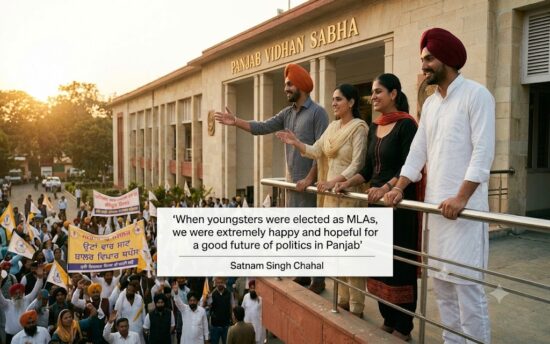
 Before the elections, the people of Punjab placed immense faith in those they elected to the Legislative Assembly. Every MLA was entrusted with a sacred responsibility to study laws, debate them thoroughly, protect the Constitution, and safeguard the interests of the people. Voters hoped that a new generation of representatives would raise the standard of politics and governance. Many believed Punjab was entering an era where informed debate, accountability, and transparency would replace blind political loyalty.
That hope has been deeply shaken by the manner in which the anti-sacrilege legislation was handled. Reports and statements from legislators themselves suggesting that they were given the Bill only on the day it was introduced, with little or no opportunity to study its provisions before it was passed, have raised serious questions about the legislative process. If lawmakers themselves did not have sufficient time to read, understand, and debate a law dealing with such a sensitive issue, it inevitably raises concerns about whether the Assembly fulfilled its deliberative role.
A legislator’s first duty is not to the party leadership but to the Constitution, the Assembly, and the people who elected them. Every Bill deserves careful examination, especially one concerning religious sentiments, criminal law, and public order. Laws are not mere documents to be approved by raising hands; they shape society, determine rights and responsibilities, and can have lasting consequences for generations.
If elected representatives approve legislation without fully understanding its contents, they risk reducing the Assembly to a formality rather than a forum for democratic debate. Democracy is strengthened when legislators ask questions, seek expert advice, propose amendments where necessary, and ensure that laws are carefully scrutinized before they are enacted.
The anti-sacrilege law was not an ordinary piece of legislation. It touched one of the most sensitive and emotionally significant issues in Punjab. Such a Bill required extensive discussion, legal scrutiny, consultation with stakeholders, and meaningful debate inside and outside the Assembly. Instead, if legislators were unable to examine it adequately before voting, it raises legitimate concerns about the quality of the legislative process.
People did not elect MLAs to function as rubber stamps. They elected them to exercise independent judgment, represent their constituents, and hold the executive accountable. Blind approval may serve party interests in the short term, but it weakens democratic institutions and erodes public trust in the long term.
The real strength of a democracy lies not in how quickly laws are passed, but in how carefully they are examined. Punjab deserves a Legislative Assembly where every law is debated with seriousness, every representative is prepared, and every vote reflects informed judgment rather than unquestioning obedience. The dignity of the Assembly, and the faith of the people, depend on nothing less.
Disclaimer: This article and accompanying images are for informational and illustrative purposes only. Some visuals may be AI-generated or digitally enhanced and may not depict actual events or persons.Views expressed are based on publicly available information and analysis.