
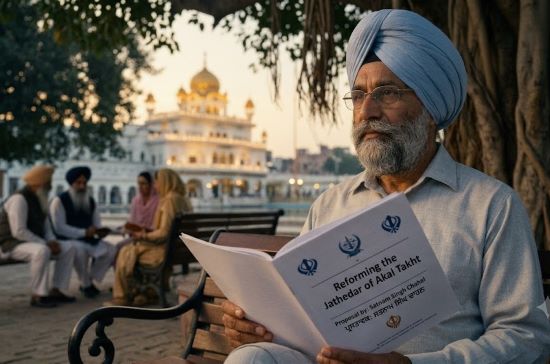
 The office of the Jathedar of the Akal Takht holds a central position in Sikh religious and institutional life. The Akal Takht itself, established by Guru Hargobind Sahib Ji, represents the highest temporal authority in Sikhism, complementing the spiritual authority of the Guru Granth Sahib. Over time, the Jathedar has come to be seen as a key voice of the Sikh Panth, especially on matters of doctrine, ethics, discipline, and collective guidance.
Because of this supreme role, the selection of the Jathedar should not be treated as a simple appointment by any single body or individual. Instead, he should be chosen through a properly constituted board or panel formed specifically for this purpose. This selection panel should include respected Sikh scholars, representatives of the Shiromani Gurdwara Parbandhak Committee, members of Sikh institutions, diaspora Sikh representatives, and individuals known for their integrity and understanding of Sikh maryada. The aim should be to ensure that no single political or institutional group dominates the process.
The selection process itself should be transparent and based on clear criteria. The candidate should be deeply grounded in Sikh theology, history, and rehat maryada, and must demonstrate moral integrity, non-partisanship, and the ability to represent the Sikh community globally. The process can include nomination, screening, interviews, and final selection through consensus or a strong majority within the panel, ensuring that the chosen Jathedar has broad acceptance across Sikh institutions.
Once selected, the Jathedar should have a fixed tenure to ensure stability and independence. This tenure could be for a defined number of years, with the possibility of renewal based on performance review. During his tenure, he should not be subject to arbitrary removal, as this would weaken the authority of the office and open it to political influence.
At the same time, accountability is essential. Therefore, removal of a Jathedar should only be possible through another independent panel formed specifically for oversight and disciplinary review. This removal panel should consist of neutral Sikh institutions, senior religious authorities, and ethical advisors. Removal should only take place on serious and proven grounds such as violation of Sikh code of conduct, misuse of authority, or actions that damage the integrity of the institution. A fair inquiry process, opportunity for defense, and a supermajority decision should be required before removal.
Financially, the Jathedar should receive a fixed salary to ensure independence and allow him to function without external pressure. Alongside this, he should also be given an honorarium that reflects the respect and spiritual dignity associated with the office. This dual structure helps balance administrative responsibility with the symbolic and religious importance of the position.
In addition, there should be a permanent questioning or review panel that can regularly engage with the Jathedar regarding his decisions and activities. This panel should meet periodically and can ask for explanations of major decisions, hukamnamas, and public statements. While its role should not undermine the authority of the Jathedar, it should ensure transparency, consistency, and accountability to Sikh principles and institutions.
Overall, such a system would help preserve the spiritual sanctity of the office of the Jathedar of the Akal Takht while also introducing structured governance, fairness, and accountability. It would ensure that the Jathedar remains both a respected religious authority and a responsible institutional leader, answerable to the wider Sikh Panth rather than any single organization or political influence.