
Canadian visa and immigration fraud remains a persistent problem for applicants from India, particularly those from Punjab. Unregistered agents and organised networks exploit the strong desire among families to secure study permits, work visas or permanent residence by collecting large sums of money under false pretences. Common schemes involve promises of guaranteed approvals, special embassy connections or complete packages that include jobs and accommodation, with fees often ranging from ₹10 lakh to ₹50 lakh or more.
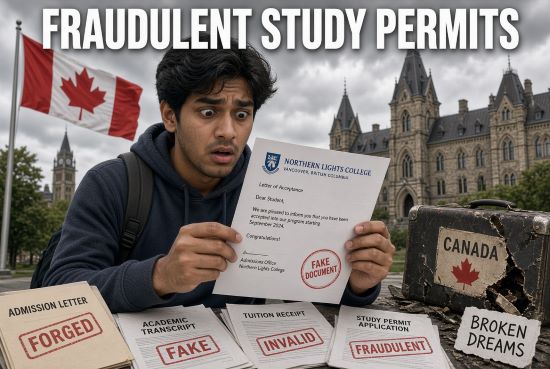
Once the money is paid, the agents frequently delay, disappear or provide worthless documents, leaving families without visas or refunds.One of the most widespread patterns involves fraudulent letters of acceptance for study permits. Agents supply fake or altered acceptance letters from Canadian colleges, often private institutions. Applicants receive study permits based on these documents, only to discover upon arrival that the offered seat does not exist or that they have been forced into low-quality programmes while the agent retains commissions. Canadian authorities have identified hundreds of such cases, the majority linked to Indian applicants, and have strengthened verification of acceptance letters as a result.Misrepresentation of documents forms another core method.
Agents create false bank statements, employment records, academic transcripts or job offers and coach applicants to provide incorrect information on forms. Many who enter Canada on these visas later switch to asylum claims or other pathways using the same fabricated narratives. Agents also sell the idea of a seamless “study-to-work-to-permanent residence” pathway, charging extra fees for guarantees that no one can legally provide. After arrival, students often face high living costs, limited work opportunities and heavy debt, making them vulnerable to further exploitation.
Sham marriages and spousal sponsorships are frequently used as well. Families or agents arrange staged engagements, sometimes conducted only via video call, and collect substantial payments in exchange for the promise of an open work permit or permanent residence through sponsorship. In parallel, some networks combine visa applications with illegal routes, collecting money for a supposed legal Canada visa while sending people on tourist visas or multi-country smuggling paths.More recently, Canadian border intelligence has noted that some individuals who entered on study or work permits, especially young men from Punjab facing financial pressure, have been drawn into organised crime networks involved in extortion and related activities targeting the South Asian community in Canada.
Officials have repeatedly warned that guarantees of approval, demands for large cash payments to personal accounts, claims of special contacts inside Canadian missions, and pressure to apply without a genuine acceptance letter are clear signs of fraud.Applicants are advised to apply only through official Canadian government channels or authorised representatives, to verify that any educational institution is a designated learning institution, and never to hand over large sums based solely on verbal assurances. Misrepresentation can lead to a multi-year ban from Canada and a permanent fraud record. Despite tighter screening and higher refusal rates in recent years, these patterns continue to surface regularly in Punjab and other parts of India.