
WASHINGTON
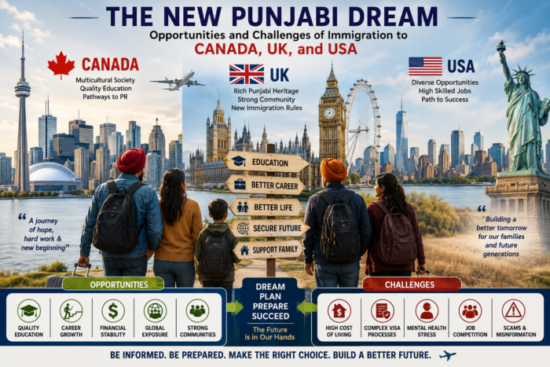
: Indian nationals continue to have access to the U.S. immigration system, but several immigration categories are facing increased scrutiny, tighter procedures and significant backlogs. The current policy does not impose a blanket immigration ban on Indian citizens, but Indian students, skilled workers, green-card applicants and families are experiencing different challenges depending on their immigration category.
The H-1B program, which is particularly important to Indian technology and professional workers, remains available. However, the U.S. government has introduced additional requirements and scrutiny for certain new H-1B petitions. A presidential proclamation issued in September 2025 established a $100,000 payment requirement for certain H-1B petitions filed after September 21, 2025, subject to government-defined exceptions. Visa applicants are also facing expanded screening and online-presence review.
For Indian professionals already working in the United States, one of the biggest long-term issues remains the employment-based green-card backlog. Because of statutory per-country limits, Indian applicants in categories such as EB-2 and EB-3 can face substantially longer waits than applicants from countries with smaller employment-based queues.
The U.S. State Department announced that India’s FY2026 EB-2 allocation had been reached on May 22, 2026. The employment-based visa numbers will become available again with the beginning of the new fiscal year on October 1, although actual visa availability will depend on the applicable Visa Bulletin and annual numerical limits.
The EB-5 immigrant investor category has also faced numerical limitations for Indian applicants. The State Department announced that the FY2026 EB-5 unreserved allocation for India had been reached on June 5, 2026. New annual numbers become available with FY2027 beginning October 1, 2026.
Indian students continue to be eligible for F-1 student visas, but applicants should expect detailed consular screening. The United States has expanded online-presence screening for several visa categories, making documentation, academic plans, financial information and the consistency of an applicant’s statements increasingly important during the visa process.
Family-based immigration remains available to Indian citizens, but applicants may face waiting periods depending on the particular family preference category. Immediate relatives of U.S. citizens are treated differently from preference-category applicants because different statutory numerical limits apply.
Visa interview procedures have also changed. The State Department has directed nonimmigrant visa applicants generally to seek interviews in their country of nationality or residence, with limited exceptions. Similar residence- or nationality-based procedures apply to immigrant-visa processing, although exceptions may exist.
For Indian immigrants, therefore, the current U.S. immigration environment is best understood as a system of greater screening, stricter procedures and continuing employment-based backlogs rather than a general immigration ban on Indians. The impact varies considerably between H-1B workers, students, green-card applicants, investors, family-based applicants and visitors.
Indian applicants and families should therefore distinguish between visa eligibility, visa issuance, lawful status inside the United States and green-card eligibility. A change affecting one category does not automatically apply to every Indian immigrant or visa holder.
Immigration rules and visa availability can change through presidential proclamations, agency regulations, court decisions and the monthly Visa Bulletin. Applicants should therefore verify their individual situation through official U.S. government sources or qualified immigration counsel before making major travel or immigration decisions.
Disclaimer: This article and accompanying images are for informational and illustrative purposes only. Some visuals may be AI-generated or digitally enhanced and may not depict actual events or persons.Views expressed are based on publicly available information and analysis