
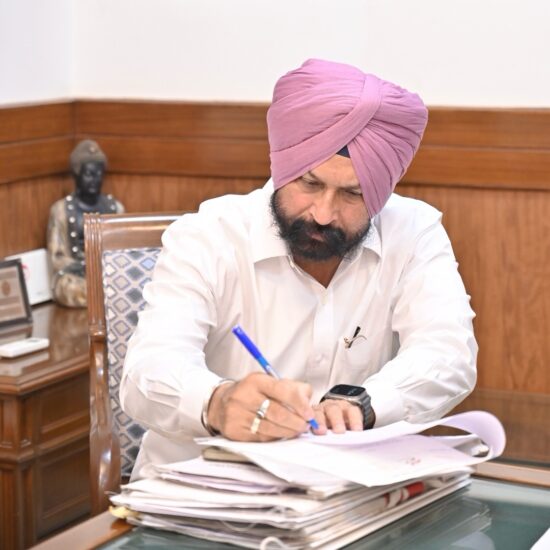
Patiala-Former Punjab police officer Gurinder Dhillon, IPS, has questioned the initial handling of a matter involving a letter from the Enforcement Directorate (ED) received by the Punjab government in July 2026. In a public post on X, Dhillon argued that the matter should have been handled with sound legal judgment from the outset and said he had raised concerns about the approach while speaking to the media in July–August.
Referring to Section 17A of the Prevention of Corruption Act, Dhillon stated that the amended provision requires prior approval from the competent authority before a police officer conducts an inquiry or investigation into an offence alleged to have been committed by a public servant in relation to a recommendation made or decision taken in the discharge of official functions or duties.
According to Dhillon, instead of seeking the required approval from the Punjab government at the initial stage, the Bureau of Investigation (BOI) began conducting an inquiry into the matter. He said the inquiry continued until the Punjab and Haryana High Court intervened. He questioned why the BOI had not sent the necessary request to the state government at the outset and asked who, if anyone, had prevented that step.
Dhillon further pointed out that the situation had changed after the High Court examined files and records in a public interest litigation (PIL) and ordered the registration of an FIR for investigation. He argued that the request for relief under Section 17A at this later stage raised questions about why the prescribed approval process had not been followed earlier.
Explaining what he believed should have happened, Dhillon said that once the ED’s letter arrived in July, the police should have forwarded the matter to the Punjab government’s Department of Home Affairs through an official memorandum or demi-official communication, seeking permission under Section 17A before proceeding with an inquiry. He suggested that the competent authority could then have examined the records and decided whether to grant or refuse approval in accordance with the law.
Using a Punjabi analogy, Dhillon remarked that discussions about stopping the water begin only after the dam has broken, suggesting that preventive legal steps should have been taken at the beginning rather than after the matter reached the High Court.
Model of Utter Failure The cold-blooded killing of anti-drug activist Parvinder Singh Jhota in Mansa today is a classic case of an old, documented wajha ranjish being allowed to turn fatal due to professional failure at the district and Range level. In July 2023, Jhota had publicly paraded chemist Ashwani Kumar with a garland of shoes over alleged sale of banned drugs. FIRs were registered against both sides and the matter was pending before the High Court. Yet there was no effective monitoring or preventive intervention by the local police or senior Range officers — a basic professional duty that was clearly neglected. Today the same enmity exploded on camera. Parwinder Jhota a social activist having continuous rivalry with killer was shot dead during a Facebook Live confrontation at the chemist’s shop, with his companions also injured.
The video must be shared as evidence of how a known, live dispute was left unattended until it ended in murder. How it landed from Courts to Camera? From expected civilised criminal justice system to a systemic failure leading to a brutal murde in brad day light. Mansa has seen this before. Sidhu Moosewala who also addressed himself as Jhota in his song was also killed in this district in an act of organised crime. Here in this case a camera dealt with firearm. How can the hard-core local hostilities, existing FIRs and pending court matters are not professionally tracked and contained, the result is inevitable: deteriorating law and order and a spurt in sensational, preventable crime. This is not just one incident. It reflects a failure of supervision and basic policing standards that the state can no longer afford. An example of a failed statecraft.
Dhillon tagged the Punjab Chief Minister’s Office, the Director General of Police, Punjab, and the Chief Secretary, raising questions about the administrative and legal handling of the matter.The legal position and the implications of Section 17A will depend on the precise allegations, the nature of the proposed inquiry or investigation, and the relevant court orders. Dhillon’s post presents his assessment of the handling of the case; the reasons for the BOI’s actions and the government’s position were not included in the material provided for this report.
Punjab Outlook will seek the responses of the Punjab government and police authorities on why approval under Section 17A was not sought at the initial stage, whether any official directed or prevented the submission of such a request, and how the High Court’s order affects the subsequent proceedings.