
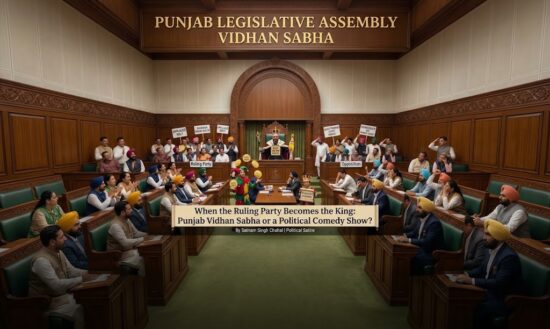
Punjab has a long and proud tradition of political debate, revolutionary poetry and fearless questioning of those in power. From the verses of Sant Ram Udasi to the rebellious spirit of Pash, Punjabi literature has repeatedly reminded rulers that power is temporary, but the people’s voice is enduring. Unfortunately, when one watches the conduct of political parties in power, one sometimes wonders whether our elected representatives have mistaken the Vidhan Sabha for a private drawing room where the ruling party speaks and everyone else is expected to applaud.
The Punjab Vidhan Sabha is not the personal property of any political party. It belongs to the people of Punjab, whose taxes pay for its functioning. The Chief Minister, ministers, ruling-party legislators and opposition members are all representatives of the public. Yet, whenever a government begins to treat questions as insults, criticism as conspiracy and opposition as an obstacle to progress, democracy starts looking less like public service and more like a one-sided comedy show.
The irony is that political parties enter elections promising badlav — change. They speak of transparency, accountability, honesty and respect for ordinary citizens. But once the government is formed, the language sometimes changes. Yesterday’s revolutionaries become today’s administrators, yesterday’s questioners become today’s defenders, and yesterday’s promises begin to sound like forgotten songs from an old election campaign.
As the Punjabi saying goes:
“ਕੁਰਸੀ ਮਿਲੇ ਤਾਂ ਸੇਵਕ ਬਣੀਏ, ਮਾਲਕ ਬਣ ਕੇ ਕੀ ਲੈਣਾ;
ਲੋਕਾਂ ਨੇ ਹੀ ਤਾਜ ਪਹਿਨਾਇਆ, ਲੋਕਾਂ ਤੋਂ ਹੀ ਲੈਣਾ-ਦੇਣਾ।”
When given a chair, become a servant, not its master; the people placed the crown upon your head, and your accountability remains to them.
The real test of a democratic government is not how loudly it celebrates its achievements but how patiently it answers uncomfortable questions. A government confident in its performance should welcome scrutiny. If its policies are successful, explain the results. If promises remain unfulfilled, explain the reasons. If public money is being spent, publish the figures. Shouting down criticism does not make a government stronger; it merely makes its explanations harder to hear.
The Assembly: A House of Questions or a House of Egos?
The Vidhan Sabha should be a place where Punjab’s most pressing problems receive serious attention: unemployment, drug trafficking, farmers’ distress, law and order, public debt, education, healthcare and the future of young people who continue to look beyond the state for opportunities.
Instead, whenever legislative proceedings become dominated by political confrontation, citizens are left wondering whether their representatives have forgotten why they were elected. Questions are not personal attacks. Calling-attention notices are not acts of rebellion. Opposition criticism is not automatically anti-Punjab. These are legitimate instruments of parliamentary democracy.A government that claims to represent the common person must also be willing to listen to the common person’s representatives. The opposition, for its part, must use the Assembly to expose failures, propose alternatives and demand evidence rather than turn every proceeding into a theatrical performance.As another satirical Punjabi couplet puts it:
“ਸਵਾਲ ਪੁੱਛੇ ਤਾਂ ਰੋਸ ਜਤਾਇਆ, ਜਵਾਬ ਦੇਣ ਤੋਂ ਕਤਰਾਉਂਦੇ ਨੇ;
ਲੋਕਤੰਤਰ ਦੇ ਰਾਖੇ ਬਣ ਕੇ, ਸਵਾਲਾਂ ਤੋਂ ਘਬਰਾਉਂਦੇ ਨੇ।”
When questions are asked, indignation follows; when answers are due, excuses appear. Those who claim to guard democracy seem uncomfortable when democracy asks them to explain themselves.These lines are original satirical verse, not quotations attributed to a historical poet.The reported cost of a one-day Assembly session has been estimated at approximately ₹80–85 lakh. The precise expenditure should be established through official records, including the costs of staffing, security, administration and other arrangements. Nevertheless, even an estimate of this scale raises an entirely reasonable question: what concrete public benefit does a session deliver?
A short session is not necessarily a waste of money. Important legislation, urgent public concerns or constitutional responsibilities may justify even a brief sitting. But if a session is called without a substantial agenda, if essential questions remain unanswered, or if valuable time is consumed by political point-scoring, the public deserves an explanation.Imagine a taxpayer asking the government, “What did we receive for the money spent?” The government should not respond with a slogan, a press conference or a list of political achievements unrelated to the session. It should provide the agenda, the business transacted, the questions addressed, the decisions taken and the expenditure incurred.After all, the Assembly is not a wedding reception where guests arrive, exchange greetings, take photographs and leave after the refreshments. It is a constitutional institution. Its success should be measured by the quality of its decisions, not by the number of television cameras outside the building.
Punjab is already grappling with serious financial pressures. Every public expenditure, whether large or small, deserves responsible scrutiny. The question is not whether the Assembly should function; it absolutely must. The question is whether it is functioning effectively enough to justify the money spent.Political arrogance is not exclusive to any one party. History shows that parties across the political spectrum can develop the same illness after acquiring power: the belief that electoral victory grants them unlimited authority until the next election.It does not.
Winning a majority gives a party the constitutional right to form a government. It does not give it the right to treat public institutions as party offices, public criticism as disloyalty or elected opposition members as unwanted visitors.The people are not employees of the ruling party, and legislators are not members of a private club. The government is accountable to the Constitution, the legislature, the courts and, ultimately, the electorate.Punjabi humour has always possessed a remarkable ability to expose inflated egos. Consider this original satirical couplet:
“ਕੱਲ੍ਹ ਤੱਕ ਕਹਿੰਦੇ ਸੀ ਲੋਕਾਂ ਦੇ ਹਾਂ, ਅੱਜ ਲੋਕਾਂ ਨੂੰ ਸਮਝਾਉਂਦੇ ਨੇ;
ਜਿਹੜੇ ਸਵਾਲ ਚੋਣਾਂ ਵੇਲੇ ਪੁੱਛਦੇ ਸੀ, ਉਹੀ ਸਵਾਲ ਹੁਣ ਚੁਭਦੇ ਨੇ।”
Yesterday they claimed to belong to the people; today they lecture the people. The very questions they asked before the election now seem to irritate them.This is the tragedy of political memory. A party may remember every insult delivered by its opponents while conveniently forgetting every promise made to voters. It may keep a detailed record of criticism directed at its ministers while losing track of the commitments made to unemployed youth, farmers, employees and women.Democracy cannot survive on selective memory.
Punjab is not short of problems requiring urgent attention. Families worry about employment and the future of their children. Farmers seek sustainable incomes. Government employees expect their legitimate concerns to be addressed. Citizens demand safer streets, effective action against drug networks and transparent public services.These matters cannot be resolved through slogans alone. They require legislation, administrative coordination, measurable targets and honest reporting.The ruling party should therefore demonstrate its confidence through performance rather than confrontation. Let the government publish a clear record of promises fulfilled, promises pending and reasons for delays. Let the opposition examine that record critically and offer practical alternatives. Let Assembly proceedings focus on evidence and outcomes rather than political theatrics.
If the government has delivered, it should be able to defend its record. If it has fallen short, acknowledging mistakes would be a sign of maturity, not weakness.The same standard must apply to the opposition. Criticism is most effective when it is supported by documents, figures and constructive proposals. A noisy opposition without solutions can be as disappointing as an arrogant government without answers.Punjabi political satire has a simple message for those who become intoxicated by power: never confuse the chair with the person sitting on it. Chairs change hands. Governments come and go. The public treasury belongs to the public, and the Assembly belongs to the people.Let us conclude with another original Punjabi verse:
“ਨਾ ਤਖ਼ਤ ਸਦਾ, ਨਾ ਤਾਜ ਸਦਾ, ਨਾ ਰਹਿੰਦੀ ਸਰਦਾਰੀ ਏ;
ਲੋਕਾਂ ਦੀ ਯਾਦ ਬੜੀ ਲੰਮੀ, ਵੋਟਾਂ ਦੀ ਵਾਰੀ ਆਉਣੀ ਏ।”
Neither the throne nor the crown lasts forever, and no reign is permanent. The people have long memories, and the next electoral reckoning will arrive.The Punjab Vidhan Sabha must be more than a stage for political egos. It must be a forum where the government answers, the opposition questions, legislators deliberate and citizens receive value for every rupee spent.The ruling party may control the government benches today. It may decide the legislative agenda and command a majority. But it cannot command public confidence by decree.In the end, the people will judge not how forcefully their leaders spoke, how aggressively they silenced opponents or how cleverly they managed the headlines, but what they actually accomplished.
Punjab does not need rulers who expect applause. It needs representatives who are prepared to answer questions.And if anyone still believes that an election victory is a permanent licence for arrogance, Punjabi political satire has a final reminder: the public may laugh at the performance today, but it holds the ballot when the curtain falls.
Disclaimer: This article is political satire and opinion. Its poetic couplets are original compositions written for this article. Any specific expenditure figure should be verified against official records.