
 The year 1984 is not merely a date in the calendar; it is one of the darkest chapters in Sikh history, leaving deep wounds in the community’s faith, sense of security and hopes for justice. Every November reopens those painful memories. The horrific violence against Sikhs in Delhi and several other cities following the assassination of then Prime Minister Indira Gandhi on October 31, 1984, remains a shameful chapter in independent India’s history. It was not simply spontaneous mob violence. Serious questions surrounding the organised and premeditated attacks, political patronage, and administrative failure continue to demand answers even four decades later.
In June 1984, the Congress government at the Centre, led by Indira Gandhi, launched a military operation at Sri Darbar Sahib and other Sikh shrines. The use of tanks and heavy weaponry caused extensive damage to Sri Akal Takht Sahib. On August 10, 2023, Prime Minister Narendra Modi described the action as an “attack” in the Lok Sabha, reflecting the deep pain felt by the Sikh community. The military operation against sacred religious sites and citizens of the country inflicted a profound wound on Sikh consciousness. A few months later, on October 31, Indira Gandhi was assassinated by two of her Sikh security personnel.
In the aftermath, Sikhs were targeted collectively. Between November 1 and 3, 1984, Sikhs were brutally beaten and killed in Delhi and several other cities. Many were identified by their unshorn hair and turbans, had burning tyres placed around their necks and were burnt alive. Sikh women suffered sexual violence, while gurdwaras and Sikh homes were set ablaze. The remark attributed to then Prime Minister Rajiv Gandhi—“When a big tree falls, the earth shakes”—was widely perceived as deeply insensitive to the victims and their suffering. Testimonies concerning the alleged use of electoral rolls by mobs, along with questions about police failure and alleged complicity, continue to raise serious concerns about the organised nature of the violence.
According to official figures, 2,733 people were killed in Delhi alone. Sikhs were also massacred in other cities across the country. International media and human rights organisations described the violence as a “state-sponsored pogrom”.
Instead of ensuring accountability and bringing the truth about the role of political leaders and the police into the open, successive inquiries became part of a process that left victims waiting for justice for decades. More than ten committees, investigative teams and commissions examined aspects of the violence. The Nanavati Commission and other inquiries raised serious questions about the role of Congress leaders and the conduct of the police. Jagdish Tytler, Sajjan Kumar, H. K. L. Bhagat and Kamal Nath were among the Congress leaders whose names featured in controversies and cases connected with the massacre. Yet, accountability remained painfully elusive for years.
H. K. L. Bhagat, a Congress MP and Union minister at the time, faced serious allegations of inciting violence against Sikhs and instigating mobs involved in killings. Victims testified against him, and in 1996 he was arrested and sent to Tihar Jail. He was subsequently acquitted in the cases after key witnesses turned hostile and the evidence was found insufficient for conviction. He died in 2005. Many Sikh victims’ families and organisations have maintained that political influence helped him escape punishment, leaving justice incomplete. His case underlines the continuing demand for accountability for the failures of the Congress government of the time and the subsequent justice process.
After Narendra Modi became Prime Minister in 2014, several significant steps were taken in cases relating to the 1984 massacre. Modi had described the killings as a horrific massacre and condemned the barbaric killing and burning alive of thousands of Sikhs.
In 2015, following the recommendations of the Justice G. P. Mathur Committee, the Modi government established a Special Investigation Team (SIT) to reopen cases that had previously been closed. Modi’s stated resolve was that those responsible for killing innocent Sikh men and women must not escape punishment, and that justice, however delayed, must not be denied. Subsequently, a committee headed by Justice D. K. Dhingra examined closed cases under the directions of the Supreme Court. The conviction of Sajjan Kumar and the legal proceedings against Jagdish Tytler in the Pul Bangash case were among the significant developments in this period.
In December 2018, the Delhi High Court convicted former Congress MP Sajjan Kumar in the Raj Nagar case relating to the Delhi Cantonment area and sentenced him to life imprisonment. In February 2025, he received a second life sentence in a separate case involving the murder of a father and son in Saraswati Vihar. Sajjan Kumar died on August 20, 2026, at the age of 80 while serving his sentence in Tihar Jail.
Yashpal Singh and Naresh Sehrawat were also sentenced in connection with the Mahipalpur killings. These verdicts demonstrated that legal proceedings remain possible even after many years. However, when thousands of citizens have been killed, convictions in only a limited number of cases cannot, by themselves, amount to complete justice.
In December 2014, the Modi government approved additional compensation of ₹5 lakh per deceased victim for the families of approximately 3,325 people killed in the massacre. This provided financial relief to affected families.
The BJP government in Delhi, led by Rekha Gupta, has provided government jobs to 125 riot victims, while the BJP government in Haryana, led by Nayab Singh Saini, has provided jobs to 121 victim families by relaxing certain rules. The Modi government has also initiated dialogue with Sikh representatives from abroad and laid the foundation for “Sikh Justice Memorials”. These initiatives have been welcomed as positive steps towards recognition and redress.
However, the struggle for rehabilitation is far from over for families who fled Delhi and settled in Punjab after the 1984 massacre. Issues relating to property ownership, red cards, employment and other relief measures continue to affect many families.
Objections raised by the Riot Victim Welfare Society are particularly concerning. These include notices issued by the Punjab government asking some families to vacate allotted houses, action concerning the cancellation of red cards, and questions over previously available benefits.
If victims’ families are still forced to make repeated visits to government offices to secure their rights, the Bhagwant Mann government in Punjab must provide clear answers. It should explain the legal basis for eviction notices, clarify decisions concerning red cards and disclose what steps are being taken to resolve the families’ grievances.
If any flat has been illegally occupied, the matter should be investigated impartially and dealt with according to law, ensuring that the rightful owner receives justice. No individual’s political connections should place them above the law. For a government that claims to uphold social justice and public welfare, resolving the outstanding grievances of the 1984 victims must be a moral responsibility.
The November 1984 tragedy dealt a severe blow to public faith in democracy and secularism. When innocent citizens are targeted collectively and the state machinery fails to protect them—or faces allegations of remaining silent or complicit—the constitutional promises of security and equality ring hollow. Thousands of families were displaced, and countless women were left to endure widowhood and lives of hardship in resettlement colonies. This was not merely a social catastrophe; it inflicted a wound on the Sikh community that has yet to heal fully.
The massacre also profoundly affected Punjab’s political and social landscape. The state endured decades of instability and violence, while concerns about security, identity and dignity deepened among Sikhs. A community that made immense sacrifices for India’s freedom and contributed substantially to nation-building could never have imagined that its innocent members would be killed in their own country because of their religious identity. The attacks on Sikhs in Delhi and elsewhere remain a blot on humanity and Indian civilisation. Questions about the role of the Congress-led government and the failure of the administration continue to demand answers.
The question is not merely what happened in 1984, but why the system failed to protect innocent people and why justice took so long. Some perpetrators were convicted, but for many victim families, the wait for justice continues. Social silence and the evasion of accountability remain serious challenges to democracy.
Sikhism teaches resistance to oppression, commitment to truth and the defence of humanity. Forgiveness and compassion do not mean forgetting history or exempting the guilty from accountability. Respecting the Sikh community’s contributions and sacrifices requires us to make the memory of this tragedy a foundation for justice, national unity and the protection of human dignity.
Remembering November 1984 is not about revenge; it is about justice. This tragedy must serve not as a source of hatred, but as a lasting call for national conscience, unity, accountability and justice.
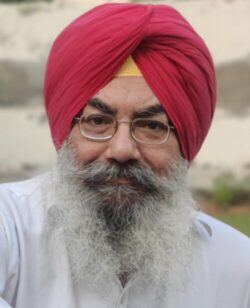
Prof. Sarchand Singh Khiala
Punjab BJP Spokesperson and Sikh Thinker
9781355522