
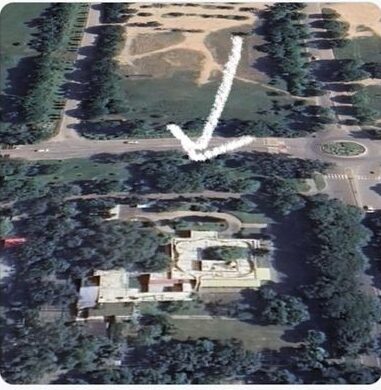
 Chandigarh — Government Kothi No. 50 in Sector 2, Chandigarh, has emerged as one of the most controversial addresses in Punjab politics. Once regarded as a government residence and accommodation for prominent political figures and senior officials, the sprawling property has become a symbol of the ongoing debate over political power, government resources, accountability and the influence of leaders from outside Punjab.
The controversy intensified in 2025 when the Bharatiya Janata Party (BJP) accused the ruling Aam Aadmi Party (AAP) government of turning the approximately two-acre property into a luxurious residence for AAP national convener Arvind Kejriwal. BJP leaders dubbed it “Sheesh Mahal 2.0,” alleging that public resources were being used to provide lavish accommodation to a leader who was not the Chief Minister of Punjab. AAP rejected the allegations, describing them as politically motivated.
Punjab Chief Minister Bhagwant Mann defended the use of the property, stating that Kothi No. 50 was designated as his camp office-cum-guest house and was part of the official arrangements connected with his government residence.Mann maintained that his official residence was Kothi No. 45, while Kothi No. 50 was intended for meetings, government officials, ministers and visiting dignitaries. He denied that the government had formally allotted the property to Kejriwal as a personal residence and challenged the BJP to produce an official allotment order.The Chief Minister also accused the BJP of spreading misinformation and attempting to divert attention from Punjab’s real problems. The AAP maintained that Kejriwal’s visits and stays were in the capacity of a guest and that the property continued to serve government purposes.
The bungalow had already attracted political attention during the early years of the AAP government, when Rajya Sabha MP Raghav Chadha reportedly used it as his base during visits to Chandigarh.
Opposition leaders alleged that Chadha had become a parallel centre of power in Punjab, with ministers, legislators, senior bureaucrats, police officials and other influential people seeking appointments at the residence. These allegations fuelled questions about the role of a Rajya Sabha member in the functioning of a state government.
AAP leaders later acknowledged that Chadha had been given considerable influence during that period. However, claims about the extent of his authority and alleged interference in government decisions remain politically contested.
The controversy returned to the headlines in April 2026 after Chadha left AAP and joined the BJP along with several other Rajya Sabha MPs. Mann referred to Kothi No. 50 while criticising his former colleague, alleging that Chadha had enjoyed the benefits of power during his time in the party. Chadha’s political departure further intensified the debate over the bungalow’s role in Punjab’s power structure.
Kothi No. 50 has a long history of housing influential figures. During different political periods, it was associated with senior police officers, political leaders and government functionaries. It also came under scrutiny during the Congress government when former Advocate General Atul Nanda occupied the property.
In 2017, renovation expenses reportedly became a subject of political criticism, with questions raised about the cost and scale of refurbishment. Former opposition leader Sukhpal Singh Khaira had sought expenditure details through the Right to Information mechanism and questioned the spending at a time when Punjab was facing financial pressures.The bungalow has therefore been surrounded by controversy across different governments, suggesting that the issue is not limited to one political party or one occupant.
In October 2026, Kothi No. 50 again came under political scrutiny following reports of CBI action linked to individuals associated with the Chief Minister’s Office. The developments triggered fresh opposition attacks and renewed public discussion about the bungalow and its political significance. <Cite refs={[“turn648655search0″,”turn648655search12”]}/>
The property’s repeated appearance in political controversies has also prompted questions about whether government residences and camp offices are being used strictly for official purposes or have become informal centres of political influence.The controversy surrounding Kothi No. 50 raises several important questions. Who is authorised to use the property? What public money has been spent on its renovation, maintenance, security and other facilities? Are the expenses and occupancy records available for public scrutiny? And what rules govern the use of government accommodation by political leaders who do not hold constitutional positions in Punjab?
These questions deserve clear answers through official documents rather than political accusations alone.Punjab is facing serious challenges, including mounting public debt, unemployment, drug abuse and concerns over law and order. At a time when ordinary citizens are struggling with economic pressures, the use of public properties by political leaders must be transparent and justified.The controversy over Kothi No. 50 should not become merely another exchange of political insults between AAP and BJP. It should lead to a proper examination of government expenditure, occupancy rules and accountability.
A government bungalow belongs to the public, not to any political party or individual leader. Whoever occupies it, the people of Punjab have a right to know how their money is being spent and whether public resources are serving public interests.
Punjab Outlook will continue to examine issues of governance, transparency and accountability in Punjab.Disclaimer: This article and accompanying images are for informational and illustrative purposes only. Some visuals may be AI-generated or digitally enhanced and may not depict actual events or persons. Views expressed are based on publicly available information and analysis