
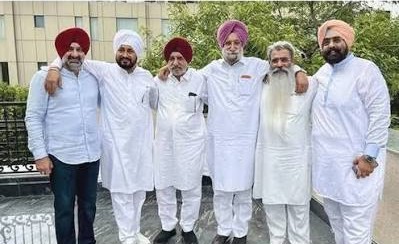
 The Punjab Congress continues to face a serious leadership crisis at a time when the state is preparing for the 2027 Assembly elections. Despite repeated efforts by the Congress high command to bring senior leaders onto a common platform, the party has yet to demonstrate the kind of unity and organisational discipline required to challenge its political opponents effectively. The biggest problem facing the Punjab Congress is not the absence of experienced leaders but the inability of those leaders to work together under one collective political strategy. Every senior leader appears to have his own ambitions, supporters, political calculations and preferred way of operating.
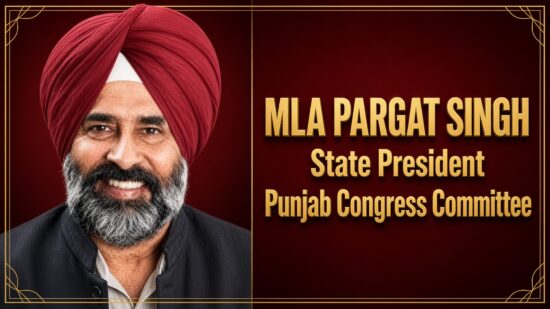
The internal differences became increasingly visible during the political developments of 2026, particularly between former Punjab Congress president Amrinder Singh Raja Warring and former Chief Minister Charanjit Singh Channi. The disagreement over the leadership of the state unit eventually resulted in Warring’s replacement. On October 2, 2026, the Congress high command appointed Pargat Singh as the new Punjab Pradesh Congress Committee president. Although this decision was presented as an effort to bring different factions together, changing the state president alone cannot resolve the deeper political differences within the organisation.
Charanjit Singh Channi, who served as Punjab Chief Minister for a short period in 2021, continues to have his own political ambitions and influence among a section of Congress leaders. Sukhjinder Singh Randhawa, Partap Singh Bajwa and other senior leaders also have their individual political standing and aspirations. The presence of several experienced leaders should have been an advantage for the Congress, but competing ambitions have instead become a source of internal tension. The question is whether these leaders are prepared to accept collective leadership or whether each wants to establish himself as the most important political face of the party.
The differences between Warring and Channi were not simply a matter of personalities. They reflected a deeper struggle over organisational control, political influence and the direction in which the Punjab Congress should move before the next elections. Several political programmes and public gatherings exposed the divisions, with rival groups sometimes organising events without the participation of other senior leaders. The Rakhar Punia gathering at Baba Bakala in August 2026 was one such example of the divisions becoming visible in public.
The Congress high command has also recognised the seriousness of the problem. On October 27, senior leaders were reportedly warned to end factional activities and work together for the 2027 Assembly elections. The central leadership made it clear that individual political campaigns should not replace programmes conducted under the Congress banner. It also indicated that disciplinary action could follow if leaders continued to undermine the party’s unity.
Even the November 4 Sangrur Insaaf Rally, attended by Rahul Gandhi and several prominent Punjab Congress leaders, could not by itself establish that the internal divisions had disappeared. Bringing leaders together on one stage is different from bringing them together organisationally. Public appearances may create an impression of unity, but the real test is whether these leaders cooperate when it comes to constituency-level activities, candidate selection, political campaigns and the distribution of organisational responsibilities.
The continuing differences between Raja Warring and Bharat Bhushan Ashu in Ludhiana, despite the change of state leadership, provide another indication that local rivalries remain a challenge. Similarly, the reconciliation efforts involving Channi and working president Sukhwinder Singh Danny show that the party is still dealing with disagreements within its own leadership structure.
The ordinary Congress worker is also facing uncertainty. Workers who should be concentrating on strengthening the party at the village, block and constituency levels are often left confused about which senior leader or group they should follow. Political organisations cannot function effectively when loyalty to individual leaders becomes more important than loyalty to the party. The high command may issue instructions from Delhi, but unity must be established at the grassroots level in Punjab.
The Congress must also understand that the 2027 Assembly elections will not be won simply through political statements against the ruling government. Voters will examine the party’s credibility, leadership, election promises, candidate selection and ability to present a stable alternative. If the Congress continues to display internal disagreements, its opponents will have every opportunity to use those divisions politically.
The real question facing Punjab Congress is not who will become the next Chief Minister, but whether its senior leaders are willing to work together to bring the party back to power. If every leader continues to follow his own political route, the party may enter the 2027 elections with several powerful individual personalities but without a united political organisation.
Pargat Singh has an opportunity to change this situation, but the responsibility does not rest with him alone. Channi, Warring, Randhawa, Bajwa, Ashu and every other senior leader must demonstrate political maturity and accept that the party is bigger than any individual. The Congress high command must also move beyond temporary compromise arrangements and establish clear accountability.
Punjab Congress does not lack of leaders. It lacks a common direction, mutual trust and collective political discipline. Unless its senior leadership puts personal ambitions aside, the party’s biggest political opponent before the 2027 elections may not be AAP, SAD or BJP. It may be its own internal divisions.
Punjab Outlook — Political Analysis | November 9, 2026