
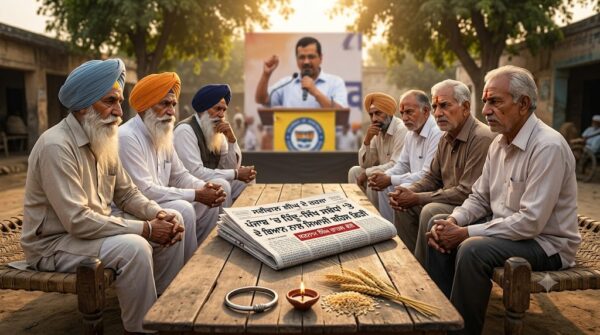
A recent statement by Arvind Kejriwal has triggered political controversy in Punjab, with critics alleging that his remarks risk creating unnecessary divisions between communities that have historically lived together in harmony.In a social media post, Kejriwal claimed that enforcement agencies were conducting raids on “Hindu traders” in Punjab and appealed to the trading community not to panic. While the statement was intended to criticise the actions of central agencies, several political observers and community leaders have questioned the need to specifically identify the affected traders by religion rather than describing them simply as traders, businessmen, or citizens.
The Fabric of Communal Harmony Critics argue that Punjab’s social fabric has long been built on the strong bonds between Hindus and Sikhs. Families from both communities have lived side by side for generations, sharing cultural traditions, festivals, businesses, and social institutions. In many Punjabi households, it is common to find close family ties that transcend religious identities. Because of this unique history, opponents contend that introducing religious labels into political debates can be counterproductive and potentially harmful. Those criticising Kejriwal’s remarks argue that if the issue concerns alleged misuse of investigative agencies, then the focus should remain on questions of governance, due process, and the rights of citizens rather than on the religious identity of those being investigated. They contend that corruption investigations, tax inquiries, or enforcement actions should be judged on their legal merits and not through the prism of religion.
Sensitivity to Political Rhetoric. Political analysts have also noted that Punjab has experienced difficult periods in its history when communal tensions were exploited for political gain. As a result, many Punjabis remain sensitive to any rhetoric that could be perceived as dividing communities. They argue that responsible political leadership requires language that unites people rather than emphasising religious distinctions. Supporters of Kejriwal, however, may argue that he was highlighting concerns expressed by a specific section of the business community and attempting to reassure those who felt targeted. They maintain that his remarks were directed against what he described as excessive enforcement actions rather than against any particular community. Moving ForwardNevertheless, the controversy has reignited a broader discussion about political communication in Punjab.
Many observers believe that leaders across party lines should exercise caution when referring to religious identities in political disputes. Punjab’s strength has historically come from Hindu-Sikh unity, particularly during periods of social and economic challenges. Any perception of efforts to separate these communities politically often attracts strong criticism from various sections of society.The debate ultimately raises an important question: should political leaders frame issues affecting citizens in religious terms, or should they focus on common concerns that affect all Punjabis regardless of faith? For many critics of Kejriwal’s statement, the answer is clear they believe Punjab’s future lies in strengthening communal harmony and emphasizing shared interests rather than highlighting religious differences.By Satnam Singh Chahal Originally published on Punjab Outlook