
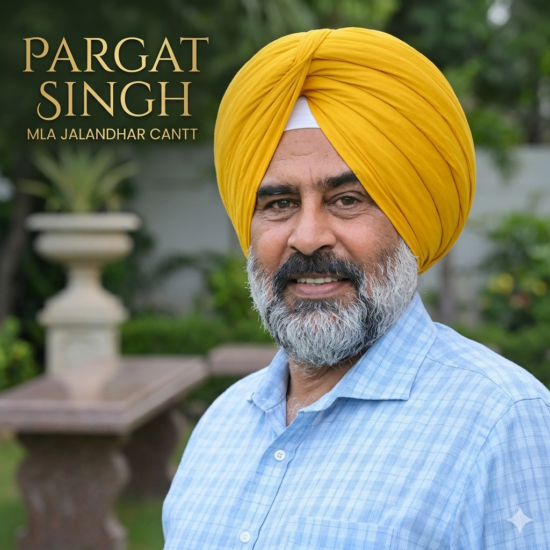
 Chandigarh-Padma Shri & Arjuna awardee , Former Captain of the Indian Hockey Team and MLA from Jalandhar Cantt and Senior Congress leader MLA Pargat Singh has launched a sharp attack on the Aam Aadmi Party (AAP), accusing it of engaging in alleged collusion that has, according to him, facilitated the movement of Punjab’s Rajya Sabha members towards the Bharatiya Janata Party (BJP). His remarks have intensified the already heated political atmosphere in Punjab, where opposition leaders continue to question the intent and transparency of the ruling party’s decisions.
In a strongly worded statement shared on social media, Pargat Singh claimed that the AAP’s actions point toward a deeper political understanding that benefits the BJP at the cost of Punjab’s interests. While he did not provide specific evidence, his allegations reflect a growing narrative among opposition parties that the ruling dispensation is not acting independently in key political matters, particularly those related to appointments and representation at the national level.
The Congress leader also took aim at reports of a First Information Report (FIR) allegedly filed against AAP leader and Rajya Sabha MP Sandeep Pathak. He dismissed the development as “political theatre,” suggesting that such actions are designed merely to capture media attention rather than to ensure accountability. According to him, there is little expectation that the FIR will lead to any meaningful investigation or legal consequences.
Drawing parallels with past incidents, Pargat Singh pointed out that similar FIRs had previously been registered against five MLAs, but ultimately resulted in no substantial outcomes. He alleged that those cases quietly faded away, with the individuals involved receiving clean chits, thereby raising serious questions about the credibility and intent behind such legal actions.
The statement underscores the deepening mistrust between Punjab’s ruling party and opposition leaders, with accusations of political maneuvering, selective action, and misuse of legal mechanisms becoming increasingly common. As Punjab’s political landscape grows more polarized, such exchanges are likely to further fuel debate over governance, accountability, and the role of investigative processes in the state’s politics.