
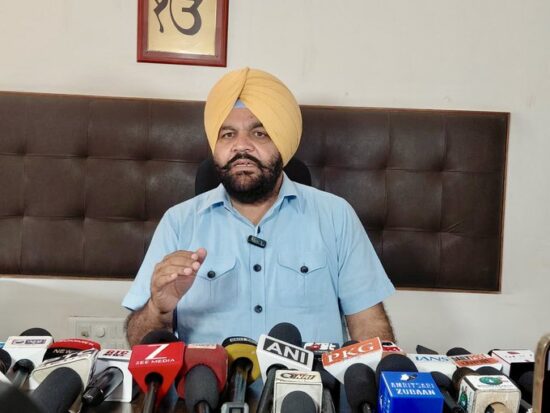
 AMRITSAR/CHANDIGARH — Congress MP from Amritsar Gurjeet Singh Aujla has launched a sharp attack over what he describes as the mounting financial pressure on Punjab’s traders and industrial sector, questioning why businesses can be penalised for delayed payments while the government faces no comparable penalty when legitimate GST refunds remain unpaid for months.
In a strongly worded social-media post, Aujla said GST refunds worth crores were allegedly remaining stuck for eight to nine months, leaving traders struggling with working capital and cash-flow pressures. He questioned what he called an imbalance in the system: if a trader delays payment to the government, penalties and interest can follow, but what accountability exists when the government delays money legally due to the trader?
The issue is not entirely new. Traders’ organisations in Punjab have previously raised concerns that delayed GST refunds were affecting working capital and hampering business activity. In June 2025, the Punjab Pradesh Beopar Mandal had specifically complained to tax authorities in Amritsar about excessive delays in GST refunds and their impact on entrepreneurs.
Aujla’s intervention comes at a time when Punjab’s business community is already dealing with what he described as high operating costs, debt and poor cash flow. For small and medium-sized businesses, delayed refunds can mean that money which should be circulating through the business instead remains locked up, potentially affecting salaries, purchases, expansion and investment.
Punjab’s Legislative Assembly has recently amended the state GST law, including provisions intended to provide wider access to provisional refunds and reduce some procedural hurdles for businesses. The changes were presented by the state government as measures to make GST compliance less burdensome and improve access to refunds.
But Aujla’s criticism raises a practical question: legislative changes mean little to a trader whose legitimate refund is still sitting in the system for months.
The Amritsar MP also linked the economic concerns to Punjab’s deteriorating law-and-order situation. He warned that political patronage to gangsterism could take Punjab down a dangerous path, arguing that businesses cannot be expected to invest and create employment in an environment where they feel insecure.
His message was blunt: Punjab does not need more political publicity, pressure politics or advertisements, he said. What the state needs is jobs, investment, clean governance and security.
The argument goes beyond party politics. Punjab’s economy depends heavily on the confidence of its traders, industrialists, exporters, entrepreneurs and small businesses. When working capital is blocked, costs rise and security concerns increase, the consequences can eventually reach employment and investment.
The bigger question for Punjab
The central issue raised by Aujla is one of government accountability. A businessperson is expected to meet every tax deadline, maintain documentation and face penalties for non-compliance. But if the government itself delays releasing money that is legitimately owed, should there also be a defined accountability mechanism?
That question deserves a serious answer from Punjab’s tax administration.
For Punjab’s traders, a GST refund is not simply an accounting entry. It can represent working capital needed to keep a shop open, pay employees, purchase inventory, service debt or invest in expansion.
Punjab Outlook analysis: If Punjab wants private investment, industrial expansion and employment for its youth, the government must create an environment in which businesses receive timely refunds, predictable taxation, transparent administration and effective law and order.
The real test of a government’s business policy is not the number of advertisements it releases or announcements it makes. It is whether a Punjab trader can conduct business without fear, receive money owed to him on time, and believe that the rules apply equally to both the taxpayer and the government.