
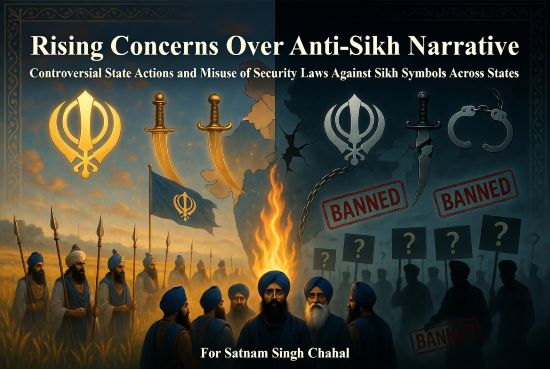
 In recent months, growing concern has emerged within sections of the Sikh community and diaspora organizations regarding what is being described as an increasing pattern of controversial statements, administrative actions, and isolated incidents across several Indian states, including Himachal Pradesh, Uttarakhand, Haryana, and Maharashtra. These developments have triggered debates about religious freedom, cultural sensitivity, and the treatment of Sikh symbols and identity in public spaces.
In Himachal Pradesh, tensions have recently surfaced following disputes related to inter-state policies and protest actions involving Sikh groups, particularly over entry taxes and border-related issues. Certain statements and reactions from local authorities and political figures have been viewed by Sikh organizations as lacking cultural sensitivity, further escalating already strained relations in specific border regions. While the government maintains that its actions are administrative in nature, Sikh representatives argue that the tone and handling of such matters risk deepening mistrust.
In Uttarakhand, recent incidents involving Sikh pilgrims have drawn significant attention, particularly after clashes between groups of pilgrims and local residents in areas such as Karnaprayag and Rudraprayag. Reports of arrests, allegations of custodial mistreatment, and the removal or mishandling of Sikh religious symbols such as the turban have intensified concerns. Sikh religious bodies, including the Akal Takht, have demanded impartial investigations and accountability where excessive force or discriminatory treatment is alleged. The presence of traditional Sikh weapons such as the kirpan and swords, rooted in religious and historical tradition, has further complicated public perception in these incidents.
In Haryana, historical and continuing sensitivities remain linked to past communal tensions and periodic controversies that surface during political discourse or law-and-order situations. Sikh organizations argue that certain political rhetoric and administrative responses have, at times, failed to adequately reflect the historical trauma and religious significance attached to Sikh identity in the region. While official positions often reject allegations of bias, community groups continue to call for stronger safeguards to prevent any form of profiling or misrepresentation of Sikh traditions.
In Maharashtra, recent reports regarding the alleged seizure of kirpans and other Sikh shastras from individuals and shops in certain areas, including Nanded, have sparked widespread concern. Sikh bodies have strongly objected, stating that the kirpan is not merely a weapon but a sacred article of faith enshrined within Sikh religious practice. They argue that such actions, even if taken under the justification of public safety, risk being interpreted as targeting religious identity unless handled with clear consultation and sensitivity.
Across all these developments, Sikh organizations have repeatedly emphasized that the kirpan and other shastras are deeply rooted in Sikh theology, representing spiritual responsibility and protection of justice rather than aggression. They argue that misunderstanding or misrepresentation of these symbols in policy enforcement or public debate contributes to unnecessary tension and alienation.
At the same time, governments and state authorities maintain that their actions are driven by security considerations, law-and-order management, and public safety concerns, particularly in sensitive or crowded environments. However, Sikh representatives stress that security concerns must be balanced with constitutional guarantees of religious freedom and respect for minority identities.
The growing divergence in narratives has led to calls for structured dialogue between state governments, Sikh institutions, and community representatives to ensure that misunderstandings do not escalate into wider social or political conflict. Organizations such as NAPA and other diaspora bodies have urged that all states adopt clear guidelines on handling Sikh religious symbols, pilgrimage groups, and related issues in a manner consistent with both law and religious sensitivity.
Ultimately, the emerging situation highlights the need for careful policy framing, responsible political communication, and stronger institutional engagement with Sikh religious authorities. Without such measures, community leaders warn that isolated incidents risk being interpreted as part of a broader pattern, further straining trust between Sikh communities and state institutions.
The Sikh tradition, rooted in principles of justice, courage, and spiritual discipline, continues to emphasize peaceful coexistence and respect for all communities. Ensuring that these values are understood and respected in administrative and political processes remains essential for maintaining harmony across regions.
Disclaimer: This article and accompanying images are for informational and illustrative purposes only. Some visuals may be AI-generated or digitally enhanced and may not depict actual events or persons.Views expressed are based on publicly available information and analysis.