
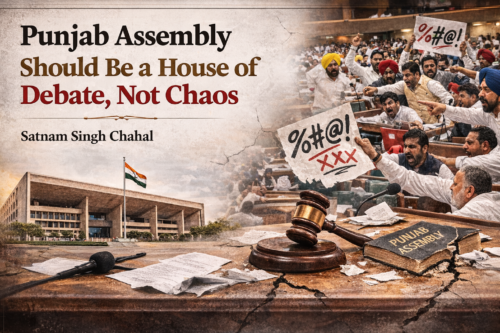
 A political controversy has erupted after a poster circulating widely on social media was strongly rejected by the individual to whom it was attributed. In a clear and firm statement, the individual said they “completely trash and deny” the poster, calling it a fabricated and misleading attempt to spread misinformation in the political sphere.
According to the statement, the poster was allegedly prepared and circulated by the IT Cell of the Aam Aadmi Party (AAP). The individual insisted that the content shown in the poster has no connection to them and that their name was used without permission to falsely portray a political position. They described the poster as part of a deliberate effort to manipulate public opinion and create confusion among viewers on social media platforms.
The controversy also involves the name of Lok Awaz TV, which appeared on the poster to give it the appearance of a legitimate media publication. However, the individual clarified that the use of the channel’s name was entirely fake and misleading. They emphasised that the channel had no role in creating or publishing the poster and that its identity was misused to make the graphic appear authentic.
The owner of the media platform, Maninderjit Sidhu, was also mentioned in the statement. It was claimed that Sidhu himself has been facing political pressure and harassment in recent times. The statement alleged that he has been a victim of vendetta linked to the administration led by Punjab Chief Minister Bhagwant Mann. By using the name of Lok Awaz TV in the poster, the creators not only attempted to mislead the public but also dragged a media organisation into a controversy it had nothing to do with.
Observers say such incidents highlight the growing problem of fake digital propaganda in modern politics. With the rapid spread of content through social media networks, manipulated images, fabricated quotes, and misleading posters can quickly reach thousands of people before their authenticity is questioned. Experts warn that this trend can damage reputations, undermine media credibility, and distort public debate.
The individual who denied the poster has urged the public and social media users to exercise caution before sharing unverified content online. They stressed that misinformation campaigns harm not only individuals but also democratic discussion by replacing facts with propaganda.
There are also growing calls for accountability and investigation into the origin of the poster. Political analysts believe that identifying those responsible for producing and distributing such misleading material is necessary to discourage similar attempts in the future. Ensuring transparency and responsible digital communication, they say, is essential for maintaining trust in both political discourse and independent media.
In the meantime, the individual reiterated that the poster is entirely false and should not be taken seriously. They called on the public to rely on verified statements and authentic sources of information rather than viral social media graphics that may be created with political motives.