
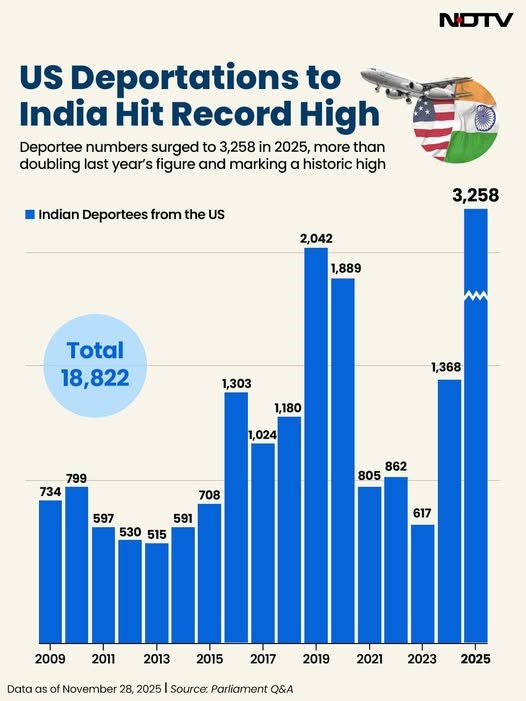
 The latest immigration data from the United States presents a deeply concerning picture of a system under mounting pressure and imbalance. The Department of Homeland Security (DHS) has significantly intensified its push for deportations, filing nearly 47,900 new Notices to Appear (NTAs) in March 2026 alone—almost double the 24,507 cases filed in March 2025. This sharp increase signals a clear shift toward aggressive enforcement, but the nature of these cases raises serious questions about priorities and fairness.
A closer examination of the data reveals that the overwhelming majority of individuals targeted are not accused of serious crimes. DHS cited alleged criminal activity in only 55 additional cases, while more than 23,000 individuals were accused of civil immigration violations such as visa overstays or unauthorized entry. Even more striking is the continued rarity of national security concerns, with just 2 such cases reported in March 2026, down from 13 the previous year. These figures suggest that enforcement efforts are disproportionately focused on non-criminal migrants rather than genuine security threats.
At the same time, the capacity of the immigration court system is weakening. The number of Immigration Judges has dropped sharply from 735 at the end of fiscal year 2024 to just 557 by December 2025, largely due to dismissals under the Trump administration. This reduction in judicial capacity is having a cascading effect on the system’s efficiency and fairness.
Despite increased filings, case closures have not kept pace. Monthly closures have slightly declined from 86,077 to 82,691, while the average time to resolve a case has increased significantly—from 698 days to 803 days. This growing delay highlights a widening gap between enforcement actions and the system’s ability to process them.
Although the total backlog has marginally decreased from 3.7 million cases at the end of the Biden administration to 3.3 million today, the burden on individual judges has intensified. Each judge is now responsible for nearly 6,000 cases, compared to about 5,000 previously. This growing workload inevitably leads to longer wait times and reduced attention to each case.
For immigrants caught in this system, the consequences are severe. The average wait time for case resolution has reached 882 days, not including additional delays before hearings are even scheduled. For asylum seekers, the situation is even more dire, with an average wait of 1,764 days just to receive a hearing date. Many are still waiting without any scheduled hearing at all, living in prolonged uncertainty.
This data underscores a critical imbalance: enforcement is accelerating while judicial capacity is shrinking. Without meaningful reforms to restore court capacity, prioritize serious cases, and ensure timely due process, the system risks becoming increasingly ineffective and unjust.