
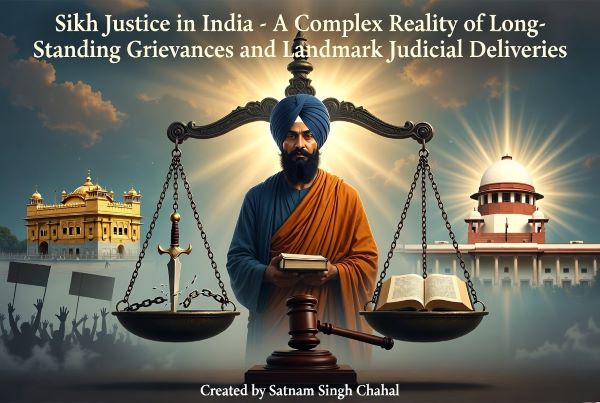
 The Sikh community in India has often raised concerns about discrimination and unequal treatment in different phases of history. These concerns are frequently linked to political representation, historical events, and specific episodes of violence or administrative neglect. At the same time, the full picture is more complex, because there have also been instances where the justice system has intervened and delivered accountability, even if delayed.
One of the most widely cited examples is the 1984 anti-Sikh violence cases. For many years, survivors and families felt that justice was either delayed or denied. However, in later years, renewed judicial action led to significant developments. In 2018, former Congress MP Sajjan Kumar was convicted and sentenced to life imprisonment by the Delhi High Court for his role in the 1984 killings. This and other convictions emerged after Special Investigation Teams reopened cases that had earlier been closed, showing that judicial review and persistent legal pressure eventually produced results.
Another important area where Sikh identity has received legal recognition is through constitutional and statutory protections. The Anand Marriage Act, effectively implemented again in 2012 after long demand, formally recognizes Sikh marriages separately from Hindu personal law, reinforcing the distinct legal identity of the community. Courts in India have also repeatedly affirmed that Sikhs are a distinct religious group with their own identity, customs, and practices protected under the Constitution.
In addition, Sikh religious and cultural rights have been upheld in several judicial decisions involving personal appearance, dress, and religious expression. For example, courts have protected the right of Sikhs to wear turbans and maintain articles of faith in schools, workplaces, and public institutions. These rulings reflect constitutional safeguards under Articles 25 to 30, which protect freedom of religion and minority rights.
There have also been instances where investigative agencies and courts have revisited older cases involving communal violence or alleged targeted attacks. The formation of Special Investigation Teams in post-2015 years helped reopen previously neglected cases related to 1984 violence, resulting in renewed trials and convictions. While these actions came after long delays, they still represent formal acknowledgment of wrongdoing and enforcement of accountability through legal channels.
Overall, the situation presents a mixed reality. On one hand, there are long-standing grievances within sections of the Sikh community regarding justice delays and historical wrongs. On the other hand, there are also clear examples where India’s judiciary and constitutional system have delivered justice, particularly when cases have been reopened and actively pursued. The key issue that emerges is not the absence of legal mechanisms, but the delay and inconsistency in how effectively they are applied.
In conclusion, the Sikh experience reflects both unresolved concerns and meaningful legal victories. While many demands for justice remain part of ongoing debate, there are also documented cases where accountability has been established. The larger challenge remains ensuring that justice is not only possible, but also timely, consistent, and free from political influence.
Disclaimer: This article and accompanying images are for informational and illustrative purposes only. Some visuals may be AI-generated or digitally enhanced and may not depict actual events or persons.
Views expressed are based on publicly available information and analysis.