
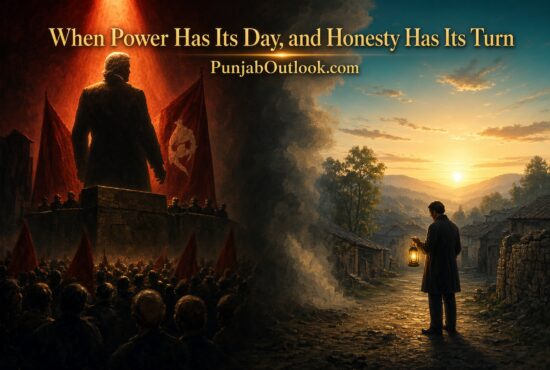
We live in an age when political influence can sometimes appear more valuable than honesty. Those who hold power may find people bringing them gifts, praising them publicly, and surrounding them with favors not necessarily because they have earned respect, but because others hope to benefit from their position.Yet power is never permanent. Political fortunes change, governments change, and the people who are celebrated today can find themselves questioned tomorrow. The quiet observer should remember this: every powerful person eventually has to answer for what he or she did with that power.Waris Shah expresses a timeless principle in Heer:
“Binan amal de nahin nijaat teri…”
The sense of the line is that without putting good principles into action, there is no salvation or deliverance. The passage appears in stanza 594 of Heer, and its larger message is about the importance of conduct rather than merely claiming status or spiritual standing.That lesson has relevance far beyond its original context. A person may receive gifts, applause and political attention today, but none of these things can permanently erase the record of his or her actions.
Honest people should therefore not become discouraged when they see dishonesty being rewarded. Their patience should not be mistaken for weakness. Sometimes people remain silent because they are watching, remembering and waiting for the proper moment to speak.And that moment can come.
Those who today bring fruits, gifts and compliments to powerful people should also remember that their turn will come. When the political wind changes, the same society that once applauded power may begin asking uncomfortable questions: Who stood for truth? Who benefited from influence? Who remained silent? And who kept faith with ordinary people?
The wisdom of Punjabi poetry is especially powerful here because it repeatedly reminds us that worldly status is temporary while human conduct leaves a deeper mark. We should therefore be careful when quoting our great poets Bulleh Shah, Waris Shah and Shiv Kumar Batalvi deserve accurate words and proper attribution, not quotations invented or altered for political effect.
In the end, the measure of a public figure should not be how many people bring gifts to his door, but what kind of legacy remains after the gifts, power and political position are gone.
Honesty may have to wait. Justice may have to wait. But neither should be forgotten.