
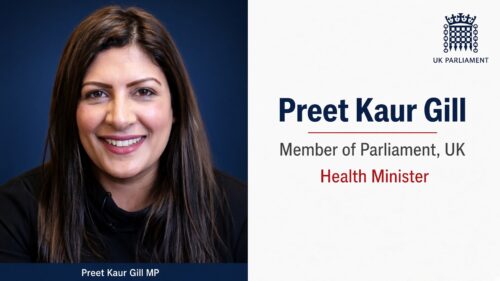
 Birmingham, UK: British MP Preet Kaur Gill has renewed her call for urgent government action to strengthen regulations governing supported housing, warning that serious failures in the system have exposed vulnerable residents to unsafe living conditions and exploitation.
In her parliamentary intervention, Gill said the Saif Lodge incident was not an isolated case but reflected deeper structural problems within the supported housing sector. She recalled submitting evidence to Parliament in 2022, highlighting the discovery by Birmingham City Council of 1,120 serious Category 1 hazards and 650 Category 2 hazards across just 431 inspected properties. These included concerns about unsuitable accommodation, inadequate assessments and insufficient care and supervision.
Gill said she had repeatedly raised the issue in Parliament, including leading a Westminster Hall debate calling for reforms and pressing successive ministers to take action. She argued that vague requirements for providers to offer more than minimal care, support or supervision had been exploited by some operators.
Acknowledging the work undertaken by Birmingham City Council, Gill said its specialist enforcement team had removed more than 9,000 serious hazards, including severe mould and fire risks. The council had also issued 48 community protection orders and prevented £8.8 million in unjustified housing benefit payments. She said these achievements demonstrated the importance of properly resourced local authorities and effective enforcement.
However, Gill warned that voluntary or locally developed accreditation schemes could not replace legally enforceable national regulations. According to her statement, only around 15 per cent of Birmingham’s supported housing providers had secured gold, silver or bronze accreditation.
She also pointed to the Supported Housing (Regulatory Oversight) Act 2023, which was passed with cross-party parliamentary support. Although the legislation established a framework for national support standards, local licensing and stronger council oversight, Gill expressed concern that the regulations required to implement these powers had still not been fully delivered.
Gill called on the government to introduce enforceable national minimum standards, ensure proper assessments before residents are placed in accommodation, and prevent vulnerable individuals from being housed in unsuitable environments. She specifically stressed that survivors of abuse must not be placed alongside individuals who could pose a danger to them, while people requiring intensive clinical or round-the-clock care should not be accommodated in ordinary shared houses with minimal supervision.
She further demanded stronger licensing powers for councils to remove unsuitable providers, address the excessive concentration of supported housing properties in particular communities and close dangerous accommodation. She also called for planning rules that give local communities and services a greater say when family homes are converted into larger supported housing facilities.
The MP emphasised that her criticism was not directed at supported housing itself or the vulnerable people who depend on it. Instead, she argued that responsible providers should be protected through stronger regulation, preventing unscrupulous operators from exploiting public funds while failing to deliver meaningful care.
Gill concluded that vulnerable residents deserve safety, dignity and genuine support to rebuild their lives, while taxpayers must be assured that public money is being spent on care rather than exploitation.
Her central message to the government was clear: the legislation is already in place, the evidence has been presented, and the time has come to turn parliamentary commitments into effective action.
By Satnam Singh Chahal