
The credibility of India’s electoral system has come under renewed scrutiny following an investigation by The Reporters’ Collective, which examined internal records of the Election Commission of India (ECI) relating to the 2024 Lok Sabha and Assembly elections in Maharashtra, Haryana and Jammu and Kashmir. The investigation has reportedly identified discrepancies between the number of voters recorded as having voted and the number of votes subsequently counted through Electronic Voting Machines (EVMs). These findings have raised serious questions about election administration, the accuracy of official records and the accountability of officials responsible for conducting elections.
According to the investigation, journalists examined records covering 530 constituencies, including 467 Assembly constituencies and 63 parliamentary constituencies. They reportedly digitised and checked 4,212 physical election records. Their examination identified discrepancies in 51 constituencies. In 19 constituencies, the records contained zero or nil entries against the number of voters who had entered polling booths. In another 32 electoral contests, the number of votes recorded as polled did not match the number of votes counted on EVMs. The investigation found that 12 contests showed fewer votes counted than recorded as polled, while 20 showed more votes counted than the number recorded as polled.
One of the most widely discussed examples concerns Mumbai North parliamentary constituency in Maharashtra. According to the internal record examined by the journalists, 18.11 lakh was entered against the votes-polled figure, whereas approximately 10.33 lakh votes were counted on EVMs, creating a numerical difference of 7.78 lakh. However, the investigation explains that the 18.11 lakh figure represented the total number of registered voters and had apparently been entered in the wrong column. It was not evidence that 7.78 lakh votes had deliberately been removed or left uncounted. Nevertheless, such an error in an important parliamentary election record raises questions about the accuracy of official documentation and the procedures used to verify it.
A similar example was identified in Badkhal Assembly constituency in Haryana. The internal record reportedly showed 3.32 lakh against the votes-polled entry, while approximately 1.60 lakh votes were counted on EVMs, producing a difference of 1.72 lakh. Here too, the report explains that the larger figure represented registered voters rather than the actual number of people who voted. BJP candidate Dhanesh Adlakha defeated Congress candidate Vijay Pratap Singh by 6,181 votes. The discrepancy deserves an official explanation, particularly because the election result was decided by a considerably smaller margin than the numerical difference appearing in the disputed record.
Another example concerns Kaithal Assembly constituency in Haryana, where the investigation reportedly found that the internal record showed only 215 voters, whereas 1,67,285 votes were counted on EVMs. Congress candidate Aditya Surjewala defeated BJP candidate Leela Ram by 8,124 votes. Such a substantial difference between the recorded number of voters and the EVM count raises questions about how the documents were prepared, checked and approved by the responsible election officials.
The investigation also identified a different type of discrepancy in Srinagar parliamentary constituency in Jammu and Kashmir. According to the report, 6,72,942 votes were counted on EVMs, while the internal records showed 6,66,046 votes as polled, producing a difference of 6,896 votes. National Conference candidate Aga Syed Ruhullah Mehdi won the constituency. This example is significant because the number of votes counted was higher than the number recorded as polled. The Election Commission needs to explain how such differences occurred and whether they were investigated before the election process was declared complete.
To understand the seriousness of these findings, it is important to understand the election documentation system. Form 17A records the details of electors who are admitted to vote at a polling station, while Form 17C contains the account of votes recorded in the EVM at the conclusion of polling. Ordinarily, the number of voters recorded and the number of votes polled should correspond, subject to limited circumstances in which an elector may enter a polling station but not cast a vote. Any substantial discrepancy requires proper examination and an explanation from the officials responsible for maintaining the records.
The investigation also raises questions about the response of the Election Commission. According to the journalists, they submitted detailed questions to the Commission regarding the discrepancies identified in its internal records. Instead of providing detailed public explanations, the Commission reportedly treated their questions as a grievance and referred them to its public grievance redressal system. The Commission subsequently asked the journalists to provide the data they had obtained, reportedly assuring them that the information would remain confidential within the department. This approach has added to concerns about whether the institution is sufficiently transparent when questions are raised about its own election records.
The controversy is not limited to the latest investigation. The issue of public access to election records has been debated for some time. The Association for Democratic Reforms approached the Supreme Court seeking greater access to Form 17C records from the 2024 elections. The Election Commission opposed wider disclosure, maintaining that the law did not require it to provide these documents to everyone beyond candidates and their authorised agents. Subsequently, on December 20, 2024, the Union government amended Rule 93 of the Conduct of Election Rules, 1961, restricting public access to certain election-related documents. These developments have further intensified the debate about electoral transparency and the public’s right to scrutinise the election process.
The Election Commission of India is a constitutional institution entrusted with the responsibility of conducting free and fair elections. Its responsibility does not end with announcing the results. It must also ensure that the records supporting those results are accurate, properly maintained and capable of verification through appropriate legal procedures. If the discrepancies identified by the journalists were merely clerical mistakes, the Commission should explain why they occurred, who was responsible and what corrective measures were taken. If the records reveal other irregularities, those matters should be investigated independently and appropriate action should follow wherever wrongdoing is established.
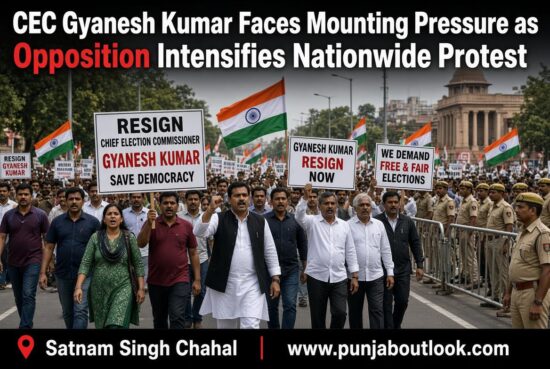
The latest investigation also raises questions about the accountability of Chief Election Commissioner Gyanesh Kumar and the institutional leadership responsible for supervising election administration. Prime Minister Narendra Modi and the ruling BJP have also been named in political criticism by the Indian Youth Congress. However, the investigation itself does not establish that the Prime Minister, the Chief Election Commissioner or any particular political party committed electoral fraud. Allegations of deliberate vote manipulation must be established through evidence and appropriate legal proceedings. At the same time, the Election Commission cannot expect the public to ignore documented discrepancies without providing convincing explanations.
The opposition parties also have a responsibility to pursue these questions through documentary evidence, election petitions and judicial proceedings rather than relying exclusively on political statements. The issue should not become merely a confrontation between the ruling party and the opposition. It concerns the democratic rights of every voter, irrespective of political affiliation.
The Election Commission should publish constituency-wise explanations of the discrepancies identified in the investigation and clarify whether the relevant records were examined by returning officers and other supervisory authorities. It should also explain why no repolls were conducted in the constituencies identified by the investigation and whether the reported discrepancies were considered before the results were finalised. An independent examination of the relevant records, where legally appropriate, would help establish whether the errors were administrative or involved more serious irregularities.
India is the world’s largest democracy, and public confidence in its electoral institutions is essential to the functioning of the democratic system. Elections cannot be judged only by the announcement of winners and losers. The credibility of an election also depends on the accuracy of polling records, the transparency of counting procedures and the willingness of authorities to answer legitimate questions.
The findings of The Reporters’ Collective should neither be dismissed as political propaganda nor treated as conclusive proof of vote theft without further investigation. They deserve a detailed, transparent and evidence-based response from the Election Commission. If mistakes occurred, the public deserves to know how they happened and what steps will prevent their repetition. If genuine irregularities are established, those responsible must face appropriate legal consequences.
Ultimately, the question is not which political party benefits from this controversy. The fundamental question is whether every Indian citizen can have confidence that the vote cast at a polling station is accurately recorded, properly counted and transparently accounted for. Democracy requires more than declarations of victory; it requires institutions that are willing to prove the integrity of the electoral process through verifiable records and public accountability.