
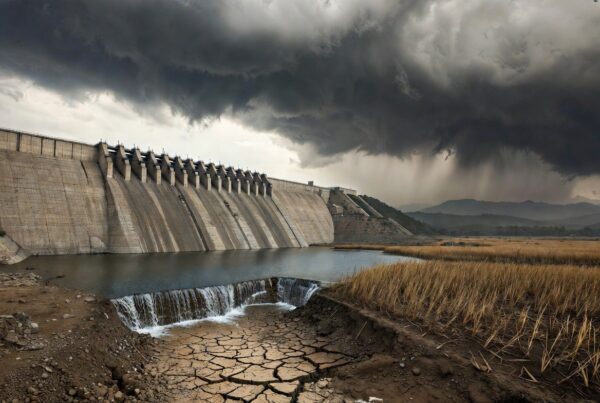
 The Bhakra Dam, often described as the lifeline of northern India, is once again at the center of a major water management debate. As the 2026 monsoon season approaches, concerns are mounting over rising inflows into the Bhakra reservoir and the challenges associated with balancing irrigation requirements, power generation, flood control, and inter-state water distribution. Recent data from the Bhakra Beas Management Board (BBMB) shows that reservoir levels are significantly higher than they were during the same period last year, prompting authorities to increase water releases to create storage space for expected monsoon inflows.
The crisis is not merely about excess water; it reflects the growing difficulty of managing a river system under changing climatic conditions. Snowmelt from the Himalayas, erratic rainfall patterns, and sudden cloudbursts have made inflows increasingly unpredictable. BBMB officials have warned that if sufficient storage capacity is not maintained before the onset of heavy rains, the reservoir may face severe pressure, increasing the risk of emergency water releases and downstream flooding.
Punjab has bitter memories of recent flood disasters. During the 2025 monsoon season, heavy rainfall in the Himalayan catchment areas caused unprecedented inflows into several reservoirs, including Bhakra and Pong dams. Water levels approached critical limits, forcing authorities to open floodgates and release large quantities of water into downstream rivers. The resulting floods damaged villages, agricultural land, roads, schools, and public infrastructure across the state.
Experts argue that the present inflow crisis is not solely the result of natural factors. One of the major concerns is the gradual reduction in reservoir storage capacity due to silt accumulation. Studies and analyses of the 2025 flood situation suggested that a significant portion of Bhakra’s storage capacity has been lost because of sediment deposits accumulated over decades. Reduced storage means that reservoirs can hold less water, leaving authorities with fewer options when sudden inflows occur.
The challenge is further complicated by competing demands for water. Punjab and Haryana require substantial quantities of water for paddy cultivation during the summer months. At the same time, dam managers must preserve enough storage space to absorb monsoon inflows safely. When water releases are delayed to conserve supplies, reservoirs may fill rapidly during heavy rains. Conversely, releasing too much water in advance can trigger political disputes over water sharing and irrigation needs.
Another concern is the lack of long-term planning for climate resilience. Scientific evidence increasingly suggests that extreme weather events are becoming more frequent across the Himalayan region. Cloudbursts, intense rainfall episodes, and accelerated snowmelt can generate inflows far beyond historical averages. Traditional reservoir management practices based on past weather patterns may no longer be sufficient to handle future challenges.
The Bhakra inflow crisis also highlights the need for greater transparency and coordination among stakeholder states. Water management decisions affect millions of people in Punjab, Haryana, Himachal Pradesh, Rajasthan, and Chandigarh. Public access to real-time inflow, outflow, reservoir-level, and weather data can help build trust and improve preparedness. Environmental groups and experts have repeatedly emphasized the importance of advance warnings, gradual water releases, and stronger disaster management mechanisms to avoid sudden flood emergencies.
Looking ahead, Punjab must treat the Bhakra inflow crisis as a wake-up call. The state requires a comprehensive strategy that includes reservoir desiltation, modernization of flood forecasting systems, strengthening of river embankments, improved drainage infrastructure, groundwater recharge projects, and crop diversification to reduce excessive dependence on water-intensive paddy cultivation. Without such reforms, Punjab may continue to face the paradox of suffering from both water scarcity and devastating floods in the same year.
The Bhakra Dam remains one of India’s greatest engineering achievements, but engineering alone cannot solve today’s challenges. Effective governance, scientific planning, climate adaptation, and inter-state cooperation will determine whether the reservoir remains a symbol of prosperity or becomes a recurring source of crisis. The current inflow situation serves as a reminder that water management in the 21st century requires foresight, accountability, and a commitment to protecting both livelihoods and lives.
Referance:Punjabnewsline.Times of India